Cold calling mistakes silently damage your sales performance, and that is not because cold calling doesn’t work. Rather, small missteps can quickly turn prospects off. The same sales reps struggle to build rapport and handle objections, or simply time calls wrong.
Knowing what goes wrong-and how to fix it fast-can turn your sales upside down. In this article, we have outlined the 10 most common cold calling mistakes, practical fixes, and the newest cold calling best practices that you can apply.
Whether you're starting or an experienced rep, these insights will help you build confidence, improve communication, and ultimately close more deals.
Why Cold Calling Still Matters
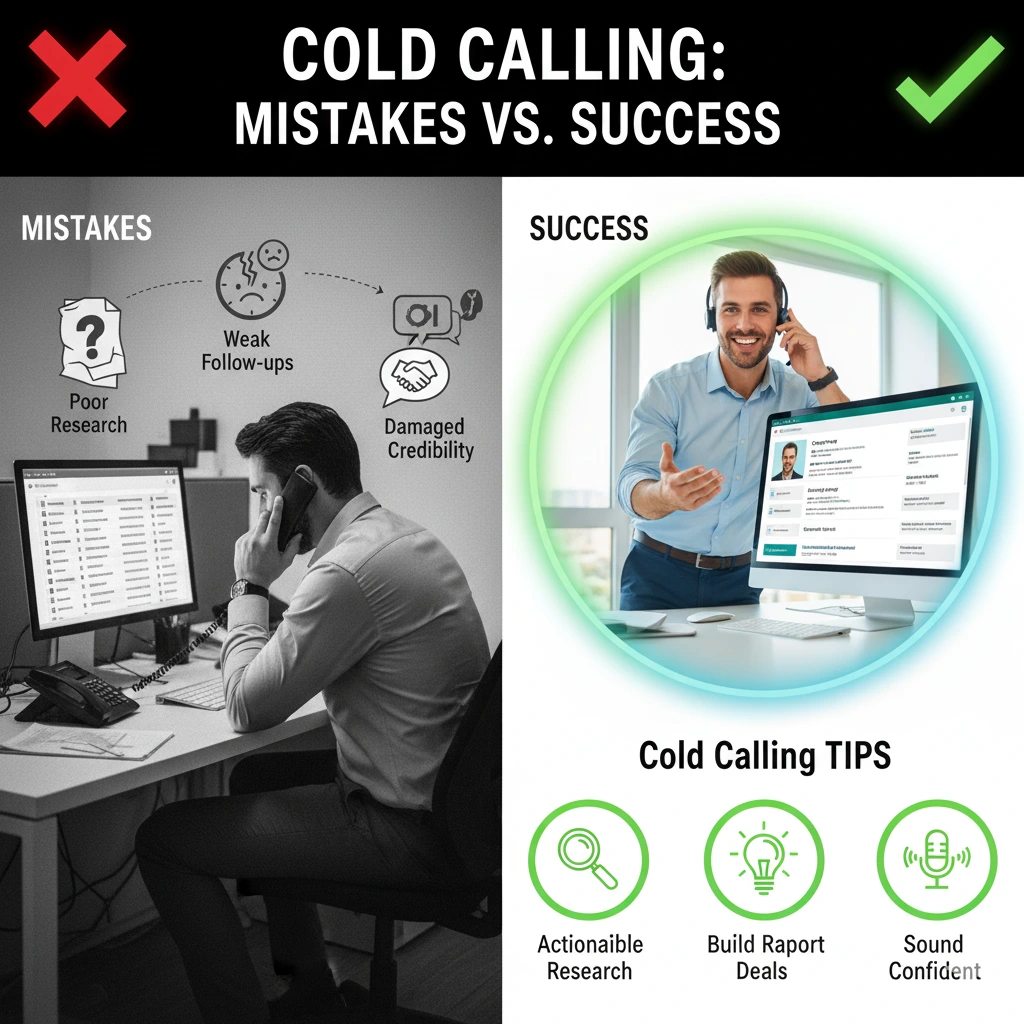
Even in an era of automation, B2B sales calls remain among the most direct yet powerful ways to start meaningful conversations. A cold call lets you connect with decision-makers in real time, something that emails and LinkedIn messages can't always achieve.
Importance of Personal Outreach in B2B Sales
Cold calling adds the human touch to your outreach strategy. It helps sales representatives understand emotional clues, respond immediately to objections, and adjust the pitch based on the tone of the listener. This often expedites trust-building in business relationships.
Cold calling is a significant element involved in multichannel sales strategies:
Today's top-performing sales teams blend cold calls with emails, social selling, and retargeting ads. When deployed strategically, cold calls serve as conversation starters that make subsequent emails more successful.
How Cold Calling Complements Email and Social Selling
Digital campaign-generated leads can be verified through cold calls. A quick call following the engagement with emails or LinkedIn content creates familiarity and builds a personal bond. It's an excellent way to move the prospect from curiosity to commitment.
10 Common Cold Calling Mistakes and How to Fix Them
1. Not researching the prospect prior to calling
Why It's a Mistake
When you jump on a call without knowing who you're talking to, your conversation lacks context. A prospect can tell immediately if your pitch is generic. This damages credibility and makes you sound like every other salesperson.
The Fix: Research = Respect
- Spend 3-5 minutes before every call researching your lead.
- Check their current position and responsibilities on their LinkedIn profile.
- Go to their company website to understand their product, target market, or pain points.
- Check for any recent updates or press releases that include funding rounds or team expansions.
Pro Tip: Add short notes in your CRM, such as "recently expanded sales team", so your opener sounds personalised. This simple prep shows respect for their time and makes your pitch more relevant.
2. Sounding Too Scripted
Why It's a Mistake
Reading from a rigid script kills authenticity. Prospects quickly sense when your pitch is robotic, making them defensive or disinterested.
The Fix: Use Frameworks, Not Scripts
- Use bulleted prompts, rather than complete sentences to help lead a discussion.
- Focus on the flow of the conversation rather than the exact words used.
- Practice your tone and pacing to make your voice sound confident, not rehearsed.
- Empathize and understand; ask questions that come naturally in the conversation.
Example: Instead of “We offer a complete lead generation platform,” use
"Many teams I talk to struggle with managing outreach efficiently. How are you currently handling that?"
This human tone builds rapport and trust instantly.
3. Opening 10 Seconds Ignored
Why It's a Mistake
That first 10 seconds determines whether your prospect will keep listening or hang up. Weak intros, rushed greetings, or pushy energy can screw up your chance immediately.
The Fix: Begin with Relevance
Start by referring to something specific about their business or a relatable challenge.
Example:
“Hi [Name], I saw that your team is hiring more SDRs - are you finding it hard to keep lead quality consistent?”
This shows you have done your research and positions you as a problem-solver, not a time-waster.
Pro Tip: Keep your tone calm, confident, and natural. A real smile can be "heard" over the phone, making you sound approachable and trustworthy.
4. Talking Too Much, Listening Too Little
Why It's a Mistake
Most reps think their job is to talk, but in reality, it's about listening. Talking too much prevents prospects from sharing pain points and breaks connection.
The Fix: Apply the 70/30 Rule
- Let the prospect do 70% of the talking.
- Ask open-ended questions like, “What’s your biggest challenge in lead management?”
- Take notes during the call; this helps personalize your follow-up.
- Remember, active listening is to make prospects feel heard; it is about creating emotional trust that will help you build solutions tailored towards actually closing deals.
5. Focus on the Product, Not the Problem
Why It's a Mistake
The problem is, when you pitch product features too early, the conversation becomes about you, not them. People don't buy tools; they buy outcomes and solutions.
The Fix: Focus on Pain and Results
- Instead of listing what your software does, connect it to specific results.
- Incorrect: “Our CRM automates follow-up emails.”
- Our CRM helps teams to re-engage 40% more dormant leads without extra manual efforts.
- Reframe your product as a solution to their pain instead of just a shiny feature. And the more you talk about measurable outcomes, the more value you show.
6. Poor Call Timing
Why It's a Mistake
And even the perfect pitch fails if you call at the wrong time. In general, Mondays and lunch hours are not productive windows.
The Fix: Call when prospects are most active.
- According to research, the time frames best suited for engagement are: Tuesday–Thursday from 10–11 AM and 2–4 PM.
- Avoid early mornings and late evenings unless your target audience works in different time zones.
- Analyze performance heatmaps and find the best hours of responsiveness from your team using tools like PowerDialer.ai.
- Data-driven timing means higher connect rates. Schedule a demo with PowerDialer.ai to see how your call strategy can be optimized on a scientific basis.
7. Not Handling Objections Confidently
Why It's a Mistake
Objections like "Send me an email" or "We already use another provider" aren't rejections - they are opportunities to clarify value. Nervous or defensive responses can ruin your credibility.
The Fix: Use the Feel–Felt–Found Method
- “I understand how you feel. Others felt the same way before they found that our tool actually helped them cut manual dialing time by 25%.”
- This empathetic structure builds rapport and reduces conflict. Practice handling objections through role-plays so that confidence and natural-sounding responses result.
Pro Tip: Keep a library of common objections and ideal responses in your sales playbook to expedite team learning.
8. Not Asking for the Next Step
Why It's a Mistake
You are rendering all your efforts meaningless by ending this call without a next step. People forget conversations that don’t lead to anything.
The Fix: Always end with a CTA
Lead them onward. Try:
“Would you be open to a quick 15-minute walk-through to see if this fits your workflow?”
- Keep the task specific and low-commitment.
- Schedule a demo
- Send case studies
- Confirm a follow-up call
Every call should end with clarity on what happens next. That's how you go from a cold call to a warm relationship.
9. Poor Follow-Up Strategy
Why It's a Mistake
Most sales happen after 5-7 touchpoints. One of the worst cold calling mistakes is stopping after one attempt.
The Fix: Build a multi-touch follow-up cadence.
Combine calls, emails, and LinkedIn messages for 10-14 days post-call.
Example follow-up sequence:
- Day 1: Thank-you email + LinkedIn connect
- Day 3: Share a relevant case study
- Day 7: Follow-up call
- Day 10: Send success story/testimonial
Consistency is a signal of professionalism and persistence, key traits buyers respect.
Tip: Use CRM workflow automations to streamline your follow-up process, but make sure to tailor each and every message if you want to see real results.
10. Not tracking or reviewing calls
Why It's a Mistake
You can't improve what you don't measure. If you're not reviewing your calls, you'll just keep making the same mistakes over and over again.
The Fix: Record, Review, and Refine
- Utilize tools like PowerDialer.ai or Gong.io to:
- Analyze call recordings
- Assess tone, pace, and objection handling
- Identify what top performers do differently
Hold weekly reviews of teams and celebrate moments of learning therein. Over time, this builds a feedback-rich culture that drives constant performance improvement. Data-backed insight beats guesswork anytime.
Cold Calling Best Practices for Sales Reps
Prepare with a short research checklist before every call. Personalize your approach according to industry and buyer persona.
- CRM allows tracking of notes, responses, and follow-ups.
- Time your calls with engagement data and analytics.
- Then, regular training to improve tone, objection handling, and listening.
- Continue learning from peers and mentors; experience is what sharpens intuition.
These cold calling tips will help not only boost your confidence but also build up trust and credibility on prospecting calls.
Tools to Improve Your Cold Calling Performance
- PowerDialer.ai: For call heatmaps, analytics, and performance optimization.
- HubSpot CRM: for tracking leads and workflow automation.
- Gong.io: For conversation intelligence and performance insights.
- Calendly: This is for frictionless meeting scheduling.
These tools will let your team develop stronger sales conversation techniques while driving productivity through automation and analytics.
Conclusion
Success in cold calling is not luck but preparation, persistence, and self-improvement. By recognizing and fixing these cold call mistakes, the sales representatives would be able to transform rejections into opportunities. Each call you make gets you closer to mastery. Keep being curious. Keep perfecting that pitch. Let data-driven tools guide you toward better performance. Remember, each "no" gets you one step closer to "yes." Ready to take your calling strategy to the next level? Book a free demo with PowerDialer.ai today and find out how real-time analytics will help you connect with more prospects and close more deals.
Frequently Asked Questions
Q1: What's the biggest cold calling mistake a beginner makes?
Jumping into a pitch without understanding the prospect’s challenges or goals.
Q2: How long should a cold call last?
About 3–7 minutes, interesting enough to spark interest yet short enough to respect their time. Q3: How can I overcome the fear of rejection in cold calling?
It is essential to remember that progress is important, but perfection is optional. Rejection brings in feedback; hence, use it as a mechanism to refine your prospecting calls and approach.
Q4: What are the best times to make cold calls?
The best time to reach a decision-maker is mid-morning around 10–11 AM, and mid-afternoon from 2 to 4 PM.
Q5: Can AI tools really help improve cold calling?
Yes, definitely. Tools like PowerDialer.ai and Gong.io use AI to track tone, timing, and engagement, thus, helping sales reps overcome sales call mistakes faster and build lasting success.