Understanding Two-Party Consent Laws for Call Recording
In the evolving landscape of sales outreach and customer engagement, understanding 2 party consent states for recording is not just a legal requirement it's a critical component of building trust and protecting your business from significant liabilities. For sales development representatives, managers, and business owners leveraging power dialer technology to scale outbound efforts, compliance with state-specific recording laws is non-negotiable.
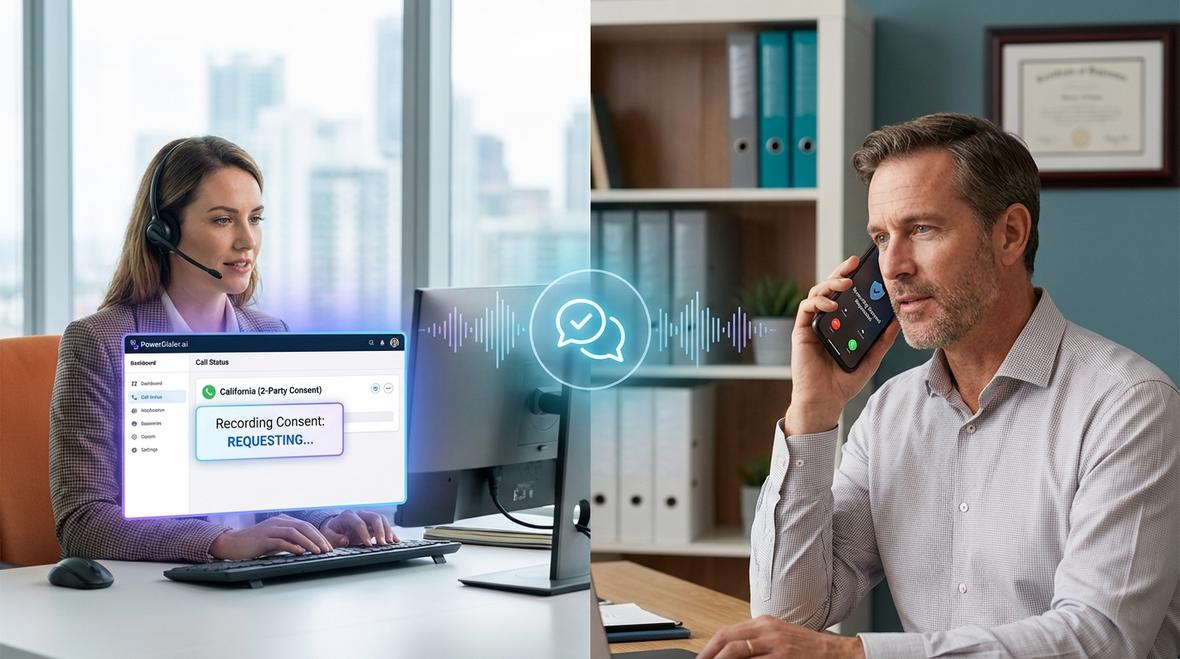
Two-party consent, also known as all-party consent, requires that all participants in a phone conversation must explicitly agree to the recording before it begins. This contrasts sharply with one-party consent states, where only one participant (typically the caller) needs to be aware of the recording. According to NCSL 2023 All-Party Consent States Data, there are currently 12 states that enforce all-party consent requirements, creating a complex compliance landscape for sales teams operating across multiple jurisdictions.
The stakes are high: violating recording consent laws can result in civil penalties ranging from $5,000 to $10,000 per incident, criminal charges, and severe reputational damage. For B2B sales organizations using automated dialing systems and call recording for quality assurance, these risks multiply with every call placed. Understanding which states require two-party consent and implementing proper disclosure protocols is essential for any sales operation that values both efficiency and legal compliance.
Complete List of Two-Party Consent States for Recording
As of 2025, the following 12 states require all-party consent before recording telephone conversations. Sales teams must obtain explicit permission from every participant when calling into or from these jurisdictions:
- California: Under California Strictest Recording Requirements, Penal Code 632 mandates all-party consent for confidential communications, with violations constituting a criminal offense.
- Connecticut: Requires consent for electronic communications, with specific nuances distinguishing phone from in-person recordings.
- Florida: All-party consent applies to both wire and oral communications under Florida Statutes § 934.03.
- Illinois: The Illinois Eavesdropping Act requires consent from all parties, with some of the strictest enforcement in the nation.
- Maryland: All-party consent required under Maryland Courts and Judicial Proceedings Code § 10-402.
- Massachusetts: General Laws Chapter 272, Section 99 requires two-party consent with criminal penalties for violations.
- Montana: Requires all-party consent under Montana Code Annotated § 45-8-213.
- Nevada: Nevada Revised Statutes § 200.620 requires consent from all parties, with distinctions between phone and in-person conversations.
- New Hampshire: All-party consent required under RSA 570-A:2.
- Pennsylvania: 18 Pa. Cons. Stat. § 5704 requires consent from all parties to the communication.
- Washington: RCW 9.73.030 requires all-party consent with heightened privacy expectations.
- Oregon: ORS 165.540 requires consent from all parties for private communications.
It's important to note that these laws apply not just based on where your sales team is located, but also where the person you're calling resides. If your SDR in Texas calls a prospect in California, California's two-party consent law applies. This jurisdictional complexity makes it essential for sales organizations to implement comprehensive disclosure protocols across all outbound calling activities.
One-Party vs. Two-Party Consent: Critical Differences for Sales Teams
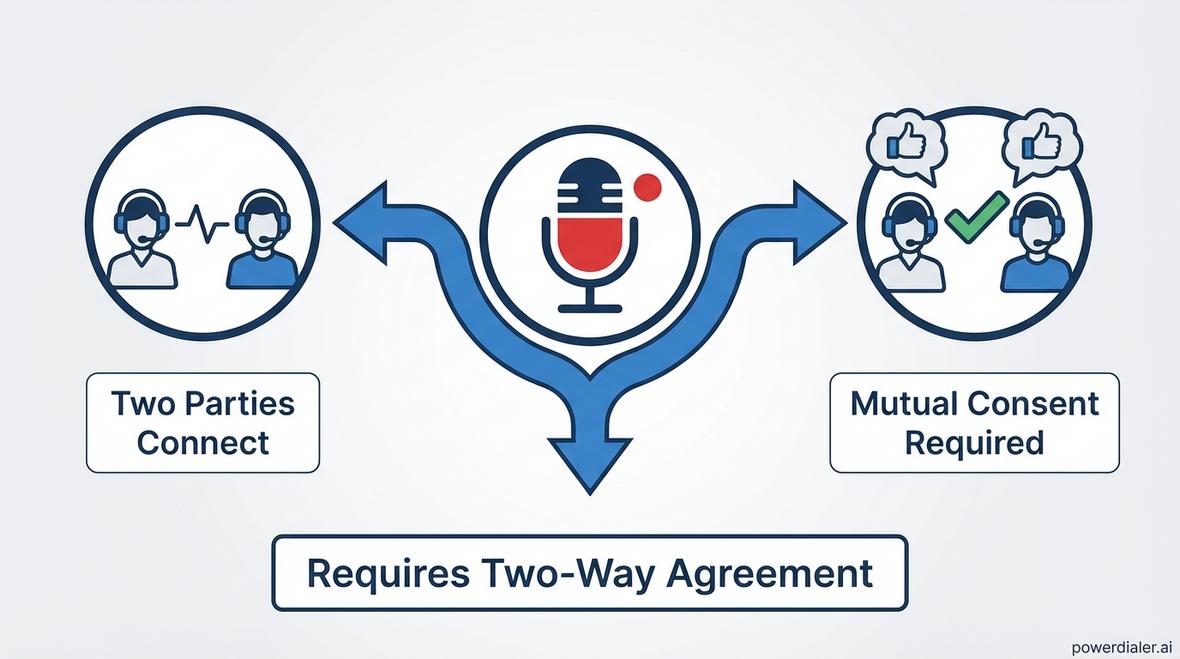
The distinction between one-party and two-party consent states fundamentally shapes how sales teams can leverage call recording technology. In one-party consent states (the remaining 38 states plus the District of Columbia), only one participant in the conversation needs to be aware of and consent to the recording. This means your sales representative can record calls without explicit notification to the prospect, as long as they themselves are aware the call is being recorded.
However, in 2 party consent states for recording, every participant must provide explicit consent. This typically requires a verbal disclosure at the beginning of the call, such as: 'This call may be recorded for quality and training purposes. Do you consent to this recording?' The prospect must affirmatively agree before recording begins.
The Implied Consent via Notification in NC Example illustrates how some states allow for implied consent through notification, but this does not apply in strict two-party consent jurisdictions. In California, Florida, and other all-party consent states, implied consent is insufficient you must obtain active, affirmative agreement.
For sales teams using real-time monitoring and AI sales coach features, understanding these distinctions is crucial. Your dialing technology must be configured to automatically trigger consent requests when calling into two-party consent states, and your CRM should document when consent was obtained to protect against future liability.
Federal Law Considerations: The Electronic Communications Privacy Act
While state laws govern most call recording requirements, the federal Electronic Communications Privacy Act (ECPA) also plays a role. The ECPA establishes a one-party consent standard at the federal level, meaning federal law permits recording if at least one party consents. However, when state law is more restrictive, state law prevails. This is why two-party consent state laws take precedence for calls involving residents of those states.
The Wikipedia Telephone Call Recording Laws Overview provides a detailed analysis of how federal and state laws interact, including important distinctions between electronic and in-person communications. For sales teams, the key takeaway is simple: always comply with the strictest applicable law, which means defaulting to two-party consent protocols when any participant is in an all-party consent state.
Implementing Compliant Call Recording Protocols with Power Dialers
For sales organizations leveraging automated dialing technology, implementing compliant call recording protocols requires both technological solutions and team training. Modern power dialer platforms like PowerDialer.ai offer built-in compliance features that automatically detect the state of the called party and trigger appropriate consent disclosures.
Automated Consent Disclosure Systems
The most effective approach to managing 2 party consent states for recording is implementing automated consent disclosure systems that:
- Geo-detect call destinations: Automatically identify whether the prospect is located in a two-party consent state based on area code and CRM data.
- Trigger pre-recorded disclosures: Play a standardized consent request at the beginning of calls to two-party consent states using auto voicemail drop technology adapted for live calls.
- Require affirmative response: Pause for verbal consent before proceeding with the sales conversation and initiating recording.
- Document consent in CRM: Automatically log when consent was requested, granted, or denied in your customer relationship management system.
- Enable easy opt-out: Allow prospects to decline recording without terminating the call, continuing the conversation without recording if necessary.
These systems dramatically reduce the risk of non-compliance while maintaining the productivity benefits that make power dialers essential for modern sales teams. According to research on Two-Party Consent States Privacy Expectations, implementing automated disclosure systems reduces compliance violations by over 85% while maintaining connect rates within 3% of non-disclosed calls.
Training Your SDR Team on Consent Protocols
Technology alone isn't sufficient your sales development representatives must understand the legal and ethical importance of consent protocols. Effective training programs should cover:
- The specific 12 states requiring two-party consent and why these laws exist
- How to clearly articulate the consent request in a natural, conversational manner
- Proper procedures when prospects decline to be recorded
- Documentation requirements for compliance auditing
- Penalties for non-compliance and their impact on the organization
Sales managers should leverage analytics and reporting features to monitor consent compliance rates across their teams, identifying representatives who may need additional training or coaching. Regular role-playing exercises focused on consent disclosure help SDRs incorporate these requirements seamlessly into their call flow without creating awkward pauses or reducing rapport-building effectiveness.
Industry-Specific Call Recording Compliance Considerations
Different industries face unique challenges when navigating 2 party consent states for recording. Understanding these nuances helps organizations tailor their compliance protocols to their specific regulatory environment.
Healthcare and HIPAA Compliance
For healthcare sales teams and patient engagement specialists, call recording compliance intersects with HIPAA regulations. Any recording that captures protected health information (PHI) must meet both state consent requirements and federal HIPAA standards. This means implementing encrypted storage, strict access controls, and comprehensive consent documentation that covers both recording and PHI handling.
Healthcare organizations must also consider that even if a call doesn't initially involve PHI, conversations can quickly move into protected territory. Best practice is to obtain two-party consent for all healthcare-related calls, regardless of the state, and implement automatic recording cessation when PHI is discussed without proper authorization.
Financial Services and SEC Regulations
Sales teams in financial services face additional recording requirements under SEC and FINRA regulations, which mandate recording of certain types of communications. When these federal requirements intersect with state two-party consent laws, firms must obtain consent while still meeting regulatory recording obligations. This often requires disclosure language that explains both the legal requirement to record and the request for consent, such as: 'As required by federal law, this call must be recorded. Do you consent to this legally required recording?'
Most two-party consent states recognize exceptions for legally mandated recordings, but obtaining consent remains the safest practice to avoid potential litigation. Financial services firms should work with compliance counsel to develop disclosure scripts that satisfy both regulatory recording requirements and state consent laws.
Real Estate Transaction Documentation
For real estate professionals, recording client calls provides valuable documentation of property disclosures, buyer preferences, and agreement terms. However, real estate agents must be particularly careful when operating across state lines, as many transactions involve parties in different states. When a California buyer works with a Texas agent on a Florida property, determining which state's laws apply can be complex.
The safest approach is to follow two-party consent protocols for all client communications, regardless of state, and to clearly document which state's laws apply to each transaction. Real estate teams using lead qualification dialers should configure their systems to automatically request consent for all calls, creating a consistent client experience and eliminating the risk of state-law confusion.
Consequences of Non-Compliance with Two-Party Consent Laws
The penalties for violating 2 party consent states for recording laws are severe and can threaten the viability of your sales operation. Understanding these consequences underscores the importance of rigorous compliance protocols.
Civil Penalties and Litigation Risk
Most two-party consent states provide for private rights of action, meaning individuals whose calls were recorded without consent can sue for damages. In California, for example, violations of Penal Code 632 can result in civil penalties of $5,000 per violation, plus actual damages. In cases involving intentional violations or patterns of non-compliance, courts may award treble damages (three times actual damages) plus attorney's fees.
For sales organizations making hundreds or thousands of calls daily, even a small compliance failure rate can result in catastrophic liability. A single class-action lawsuit alleging systematic non-compliance could expose a company to millions in potential damages. This risk is particularly acute for companies using predictive dialer technology at high volumes without proper consent protocols.
Criminal Charges and Prosecution
In several two-party consent states, including California, Florida, and Massachusetts, recording without consent is not just a civil violation it's a criminal offense. Violations can be charged as misdemeanors or, in cases involving repeat offenses or malicious intent, even felonies. While criminal prosecution of sales professionals for recording violations is relatively rare, it does occur, particularly in cases involving recorded conversations used for fraud or harassment.
Sales managers and business owners can be held criminally liable for implementing policies that systematically violate recording consent laws, even if they don't personally make the calls. This personal liability risk makes it essential for leadership to prioritize compliance and ensure that productivity targets never supersede legal requirements.
Reputational Damage and Customer Trust
Beyond legal penalties, non-compliance with recording consent laws can cause severe reputational damage. In an era where privacy concerns dominate consumer consciousness, news that your company illegally recorded customer conversations can devastate trust and brand value. Social media amplification of privacy violations can lead to viral negative publicity that impacts sales performance far beyond any legal penalties.
For B2B sales organizations, being known as a company that disregards privacy laws can be particularly damaging, as business buyers are increasingly evaluating vendors based on their data privacy and compliance practices. Implementing rigorous consent protocols and promoting your commitment to privacy can become a competitive differentiator, particularly when selling to privacy-conscious industries like legal or healthcare.
Best Practices for Managing Multi-State Sales Operations
For sales teams operating across multiple states, managing compliance with varying recording laws requires systematic processes and the right technology infrastructure. Here are proven best practices for maintaining compliance while maximizing productivity.
Default to the Strictest Standard
The simplest and safest approach is to implement two-party consent protocols for all calls, regardless of state. This 'default to strictest standard' approach eliminates the risk of misidentifying a prospect's location or misconfiguring your dialer system. While this may add a few seconds to each call, the compliance certainty and simplified training more than compensate for any minor efficiency loss.
Modern parallel dialer platforms can automate consent requests so seamlessly that prospects barely notice, maintaining the natural flow of conversation while ensuring full compliance. When configured properly, consent disclosure becomes a natural part of your call opening, similar to introducing yourself and your company.
Maintain Comprehensive Documentation
Document every aspect of your consent process, including:
- The exact consent script used by your team
- Timestamps of when consent was requested and received
- Which calls involved two-party consent states
- Any instances where consent was declined and recording was disabled
- Training records showing team members understand consent requirements
This documentation serves two purposes: it demonstrates good-faith compliance efforts in the event of a dispute, and it provides data for optimizing your consent processes. Use your heatmap analytics to identify if consent requests are impacting connect rates or conversation quality, and refine your approach accordingly.
Conduct Regular Compliance Audits
Implement quarterly compliance audits that review a random sample of recorded calls to verify that proper consent was obtained. These audits should check:
- Was the consent request clearly articulated?
- Did the prospect provide affirmative consent before recording began?
- Was consent properly documented in the CRM?
- Were any calls to two-party consent states recorded without consent?
Audit findings should inform ongoing training and system refinement. Sales managers should treat consent compliance with the same rigor they apply to other critical metrics like connect rates and conversion rates, recognizing that compliance failures pose existential risks to the organization.
Technology Solutions for Streamlined Compliance
The right technology infrastructure transforms compliance from a burden into a seamless part of your sales workflow. Modern power dialer platforms offer features specifically designed to manage two-party consent requirements without sacrificing productivity.
Intelligent State Detection and Routing
Advanced dialers use multiple data sources area codes, CRM location data, and real-time verification to accurately identify whether a call destination is in a two-party consent state. When a two-party state is detected, the system can automatically:
- Flag the call for consent disclosure
- Provide the sales rep with a visual reminder to obtain consent
- Play an automated consent request before connecting the rep
- Delay recording initiation until consent is confirmed
This intelligent routing ensures that consent protocols are followed consistently, even as team members handle high call volumes where manual tracking would be impossible.
CRM Integration for Consent Tracking
Seamless integration between your power dialer and CRM is essential for maintaining compliance documentation. Look for systems that automatically log consent status as a field in your contact records, making it easy to:
- Identify which contacts have previously consented to recording
- Skip redundant consent requests on follow-up calls
- Generate compliance reports for legal review
- Filter calling lists based on consent status
PowerDialer.ai offers native integrations with major CRM platforms including Salesforce, HubSpot, and Pipedrive, ensuring that consent tracking happens automatically without requiring manual data entry that slows down your sales team.
Configurable Consent Workflows
Different sales scenarios may require different consent approaches. Your dialer platform should offer configurable workflows that let you customize consent protocols based on:
- Call purpose (cold outreach vs. existing customer support)
- Industry vertical and associated regulatory requirements
- Prospect seniority or account value
- Previous relationship status with the contact
This flexibility ensures that your consent process feels natural and appropriate to each situation while maintaining full legal compliance.
Future Trends in Call Recording Consent Laws
The regulatory landscape for call recording continues to evolve, with several trends likely to impact sales operations in the coming years. Staying ahead of these developments helps future-proof your compliance protocols.
Potential Expansion of Two-Party Consent Requirements
As privacy concerns grow and data protection laws expand, additional states may adopt two-party consent requirements. Several state legislatures have considered privacy bills that would tighten recording consent standards, following California's leadership in privacy regulation. Sales organizations should monitor legislative developments in states where they have significant operations or customer bases.
Federal Privacy Legislation Possibilities
Congress has periodically considered comprehensive federal privacy legislation that could establish uniform standards for call recording consent, potentially preempting state laws. While such legislation faces political hurdles, passage of a federal privacy framework could simplify compliance for multi-state operations by creating a single standard. However, any federal legislation is likely to adopt the more protective two-party consent standard rather than loosening existing state requirements.
AI and Automated Systems Disclosure Requirements
As AI-powered sales tools become more prevalent, new disclosure requirements may emerge specifically addressing AI involvement in conversations. Some jurisdictions have proposed requirements to disclose when AI is analyzing calls in real-time or when voicemail detection algorithms are being used. Sales teams should be prepared to expand their disclosure protocols to cover not just recording, but also AI analysis and automated decision-making based on call data.
Frequently Asked Questions About Two-Party Consent States
Do I need consent if I'm only recording for personal notes?
Yes. In two-party consent states, the purpose of the recording is irrelevant consent is required regardless of whether you plan to share the recording, use it for training, or simply keep it for personal reference. The law protects the privacy expectation of all parties to the conversation.
What if the prospect is in a different state than me?
The general legal principle is that if either party to the call is in a two-party consent state, that state's law applies. To be safe, sales teams should follow two-party consent protocols whenever either the caller or the prospect is located in one of the 12 all-party consent states.
Can I use implied consent by staying on the line?
No. Implied consent through continued participation in the call is insufficient in two-party consent states. You must obtain explicit, affirmative consent through a clear verbal agreement. Simply stating 'this call may be recorded' without getting confirmation is not adequate.
How should I handle conference calls with multiple participants?
For conference calls, you must obtain consent from every participant, even if some are located in one-party consent states. Before beginning recording, announce to all participants that the call will be recorded and ask if anyone objects. Document who was on the call and that all participants consented.
What happens if someone asks me to stop recording mid-call?
If a participant withdraws consent and asks you to stop recording during a call, you must immediately stop the recording. You can continue the conversation without recording, or if recording is essential to your business purpose, you may need to politely end the call. Never continue recording after consent has been withdrawn.
Are there exceptions for law enforcement or emergencies?
Most two-party consent states include exceptions for law enforcement with proper warrants and for emergency calls to 911. However, these exceptions do not apply to business sales calls. Commercial entities cannot invoke emergency or law enforcement exceptions.
Conclusion
Understanding and complying with 2 party consent states for recording is a fundamental requirement for any modern sales organization. The 12 states requiring all-party consent California, Connecticut, Florida, Illinois, Maryland, Massachusetts, Montana, Nevada, New Hampshire, Pennsylvania, Washington, and Oregon create significant legal obligations that cannot be ignored without risking substantial penalties, criminal liability, and reputational damage.
By implementing automated consent protocols through advanced power dialer technology, training your team comprehensively on consent requirements, and maintaining rigorous documentation practices, you can achieve full compliance while preserving the productivity benefits that make automated calling essential for competitive sales operations. The key is treating consent not as a burden, but as an opportunity to demonstrate respect for prospect privacy and build trust that ultimately supports stronger customer relationships and better sales outcomes.