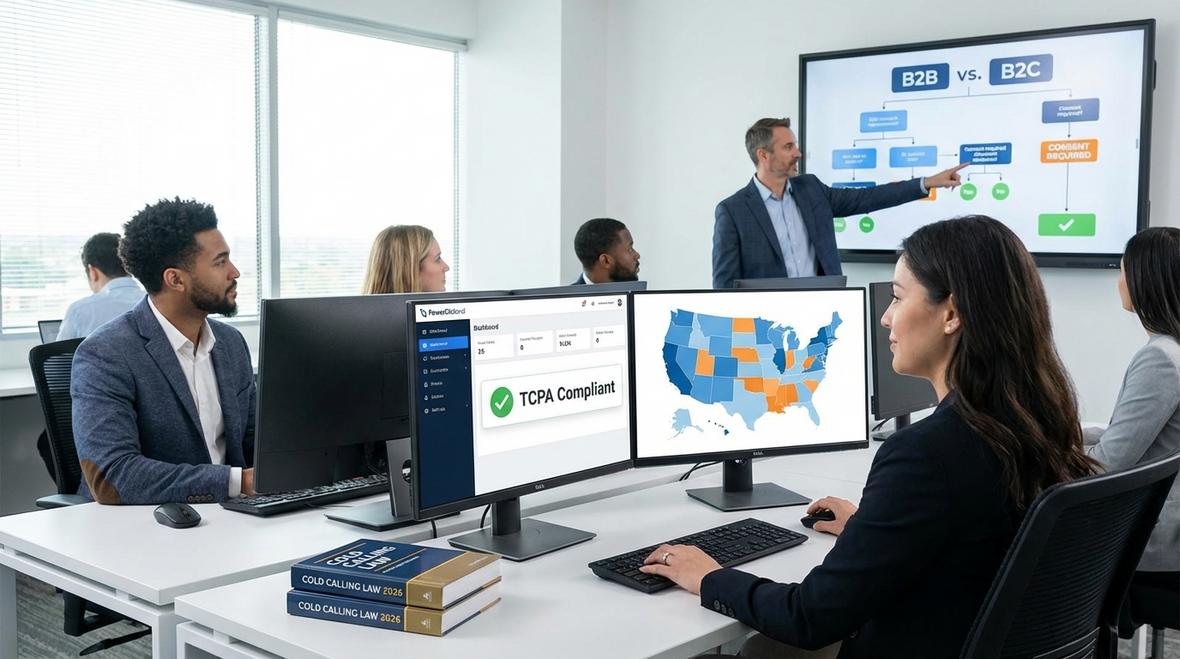
Understanding Cold Calling Legality in 2026
One of the most common questions among sales professionals is: are cold calls illegal? The short answer is no cold calling is not illegal in the United States or most countries worldwide. However, the practice is heavily regulated by federal and state laws designed to protect consumers from unwanted solicitations and fraudulent practices. Understanding these regulations is critical for any sales team engaged in outbound calling activities.
Cold calling remains a legitimate and effective sales strategy when conducted within legal boundaries. According to FTC Telemarketing Sales Rule Compliance Guidelines, businesses must adhere to specific requirements including honoring Do Not Call (DNC) registries, calling only during permitted hours, and providing clear caller identification. Violations can result in penalties up to $51,744 per call as of 2026, making compliance not just a legal obligation but a financial imperative.
The regulatory landscape varies significantly between B2B (business-to-business) and B2C (business-to-consumer) calling. While B2B cold calling enjoys more flexibility under federal law, B2C calls face stricter scrutiny. Sales development representatives and managers must understand these distinctions to build compliant outreach strategies that protect their organizations from legal exposure while maximizing connection rates.
Federal Laws Governing Cold Calls
The primary federal regulation governing cold calling in the United States is the Telephone Consumer Protection Act (TCPA), enacted in 1991 and amended multiple times to address evolving telecommunications technologies. The TCPA restricts the use of automated telephone equipment, artificial or prerecorded voices, SMS text messages, and fax machines to contact consumers without prior express consent.
Under TCPA provisions, businesses cannot use predictive dialers or other automated calling systems to reach cell phones without obtaining written consent from the recipient. This distinction is crucial because modern sales teams increasingly rely on mobile numbers rather than landlines. Violations carry statutory damages ranging from $500 to $1,500 per call, with potential for class-action lawsuits that can result in multi-million dollar settlements.
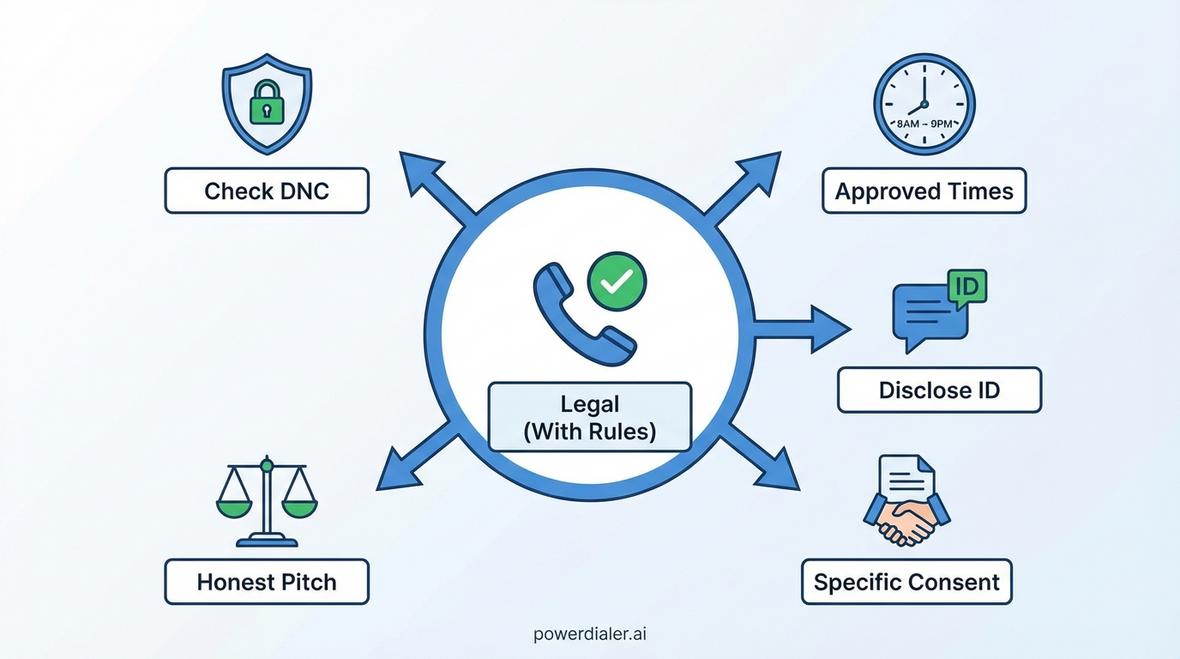
The Telemarketing Sales Rule (TSR), enforced by the Federal Trade Commission, works in conjunction with the TCPA to establish additional requirements for telemarketing calls. The TSR mandates that telemarketers must not call consumers who have registered their phone numbers on the National Do Not Call Registry, unless an established business relationship exists. It also prohibits calling before 8 AM or after 9 PM local time, requires disclosure of the seller's identity, and bans deceptive practices.
For sales teams operating in regulated industries like financial services, additional compliance layers apply. The SEC Cold Calling Regulations and Investment Protection guidelines impose specific restrictions on cold calling for investment products, requiring brokers to verify investor accreditation status and provide detailed disclosures about investment risks before soliciting sales.
Key TCPA Requirements for Sales Teams
To remain compliant with TCPA regulations, sales organizations must implement several operational safeguards. First, establish a robust consent management system that documents when and how consumers provided permission to be contacted. This documentation becomes critical evidence in the event of legal disputes. Second, implement caller ID authentication protocols to ensure your outbound calls display accurate identification information, not spoofed or misleading numbers.
Third, maintain an internal Do Not Call list that is updated within 30 days of a consumer's request to be removed from your calling list. This requirement exists separately from the National DNC Registry and applies even to businesses with established customer relationships. Fourth, ensure your power dialer or calling system includes compliance features like automatic time-zone detection to prevent calls outside permitted hours.
State-Level Cold Calling Regulations
Beyond federal requirements, individual states have enacted their own telemarketing and cold calling laws that often impose stricter standards than federal regulations. Sales teams must comply with both federal and state laws, and when conflicts arise, the more restrictive regulation typically applies. This creates a complex compliance landscape for organizations operating across multiple states.
Several states maintain their own Do Not Call registries in addition to the federal list. For example, states like Florida, Indiana, Missouri, and Wyoming require telemarketers to register separately and honor state-specific DNC lists. Failure to scrub calling lists against both federal and state registries can result in duplicate penalty exposure. Some states also impose additional licensing requirements for telemarketers, mandatory bonding, or registration fees that vary by jurisdiction.
California's regulations are particularly stringent, including requirements for specific disclosures during the first 30 seconds of a call and prohibitions on certain calling technologies. The California Consumer Privacy Act (CCPA) also impacts how sales teams can collect, store, and use consumer contact information obtained through cold calling activities. Texas has implemented aggressive enforcement of its telemarketing laws, with the Attorney General's office actively pursuing violators and imposing substantial penalties.
For sales teams in industries like real estate, additional state-specific rules apply. The National Association of REALTORS Telemarketing Compliance Standards provides guidance on navigating these requirements, which often include restrictions on calling homeowners whose properties are listed as 'do not disturb' or who have opted out through industry-specific registries.
Navigating Multi-State Compliance Challenges
Organizations conducting cold calling campaigns across multiple states should implement a compliance matrix that tracks state-specific requirements, calling time restrictions, registration obligations, and recordkeeping mandates. Utilize analytics and reporting features to monitor calling patterns by state and identify potential compliance gaps before they result in violations.
Many sales teams find that investing in compliance training and automated compliance tools yields significant returns by preventing costly legal disputes. Modern parallel dialer systems include built-in compliance features that automatically filter numbers against DNC registries, respect time zone restrictions, and maintain detailed call logs for audit purposes.
B2B vs. B2C Cold Calling Legal Distinctions
A critical distinction that dramatically affects whether cold calls are considered illegal involves the difference between business-to-business (B2B) and business-to-consumer (B2C) calling. The TCPA and TSR primarily focus on protecting individual consumers, which creates substantially more flexibility for B2B cold calling activities.
B2B cold calls to business phone numbers are generally exempt from National Do Not Call Registry requirements. This means sales teams targeting businesses can legally contact companies even if individual employees have registered their personal numbers on the DNC list provided the calls are made to dedicated business lines. However, this exemption does not extend to calls made to business owners' personal cell phones or residential numbers, even when used for business purposes.
The established business relationship (EBR) exemption provides additional flexibility for B2C calling. Under TSR rules, companies can call consumers with whom they have conducted a transaction within the past 18 months, or who have made an inquiry within the past 3 months, even if those consumers are on the DNC Registry. This exemption recognizes the value of ongoing customer relationships but requires careful recordkeeping to document the basis for each exemption claim.
For B2B sales teams, the more relaxed regulatory environment enables aggressive prospecting strategies using sales dialers to maximize outreach volume. However, B2C teams must implement more restrictive calling protocols, including comprehensive list scrubbing, consent verification, and enhanced compliance monitoring to avoid TCPA violations.
Industry-Specific Calling Regulations
Certain industries face additional regulatory layers beyond general telemarketing laws. Healthcare organizations must comply with HIPAA privacy requirements when conducting outbound calls, limiting the information that can be left in voicemails or discussed with third parties. Financial services firms face scrutiny from multiple regulators including the SEC, FINRA, and CFPB, each imposing unique calling restrictions.
Education and e-learning institutions must navigate Department of Education regulations regarding student recruitment calls, while legal service providers face bar association rules governing attorney solicitation. Understanding these industry-specific requirements is essential for compliance and effective outreach.
Cold Calling Compliance Best Practices
Building a compliant cold calling operation requires implementing systematic processes and leveraging technology to automate compliance checks. Start by establishing a comprehensive compliance program that includes written policies, regular training for sales representatives, and designated compliance officers responsible for monitoring adherence to regulations.
Your compliance program should address several core elements: list management (scrubbing against federal and state DNC registries every 31 days), consent documentation (maintaining records of express written consent for calls to cell phones), time restrictions (implementing time-zone aware calling to respect 8 AM - 9 PM local time limits), caller ID accuracy (ensuring displayed numbers are valid and can receive return calls), and script compliance (requiring disclosures of company identity and purpose within the first seconds of each call).
Leverage AI-powered coaching tools to monitor calls in real-time and provide immediate feedback when representatives deviate from compliant scripts or fail to make required disclosures. Implement real-time monitoring capabilities that allow managers to identify and correct compliance issues before they escalate into systematic violations.
Document everything. Maintain detailed records of all calling activities, including call recordings (where legally permitted), time stamps, numbers dialed, consent records, and DNC scrubbing dates. These records serve as your primary defense in the event of regulatory inquiries or litigation. Modern analytics platforms can automate much of this recordkeeping while providing valuable insights into calling performance and compliance metrics.
Technology Solutions for Automated Compliance
Modern power dialer platforms incorporate compliance features designed to prevent violations before they occur. Look for systems that offer automatic DNC scrubbing, time-zone detection, call recording with consent management, and integration with CRM systems to track established business relationships. PowerDialer.ai provides comprehensive compliance tools specifically designed for regulated industries, helping sales teams maximize productivity while minimizing legal risk.
Implement spam blocking AI to protect your outbound caller reputation and prevent your numbers from being flagged as spam by carrier networks. This technology not only improves connection rates but also demonstrates your commitment to legitimate calling practices, which can be valuable evidence of good faith compliance efforts.
Penalties and Consequences of Non-Compliance
The financial and reputational costs of cold calling violations can be devastating for businesses of all sizes. TCPA violations carry statutory damages of $500 per violation, which triples to $1,500 per call for willful or knowing violations. Given that sales teams often make hundreds or thousands of calls daily, even a short period of non-compliant calling can result in millions of dollars in potential liability.
Class-action lawsuits represent the greatest financial threat from TCPA violations. Plaintiffs' attorneys actively recruit consumers who received allegedly illegal calls, and courts have certified classes involving hundreds of thousands of call recipients. Notable settlements in recent years have exceeded $20 million, with some reaching over $100 million for large-scale violations involving automated calling systems.
Beyond direct financial penalties, regulatory enforcement actions can result in cease-and-desist orders that halt calling operations entirely, mandatory compliance audits, required implementation of expensive monitoring systems, and reputational damage that impacts customer relationships and business development efforts. State attorneys general have become increasingly aggressive in pursuing telemarketing violations, viewing enforcement as both consumer protection and revenue generation for state coffers.
Individual sales representatives can also face personal liability under certain circumstances, particularly when acting outside the scope of company policies or engaging in knowingly deceptive practices. This personal exposure creates additional incentive for representatives to understand and follow compliance requirements rather than pursuing short-term sales gains through questionable tactics.
International Cold Calling Considerations
For organizations conducting international cold calling, compliance complexity multiplies as different countries maintain vastly different regulatory frameworks. The European Union's General Data Protection Regulation (GDPR) imposes strict requirements on processing personal data, including phone numbers, and generally requires explicit opt-in consent before making marketing calls to EU residents.
Canada's Anti-Spam Legislation (CASL) and National Do Not Call List rules create compliance obligations similar to U.S. regulations but with important differences in consent requirements and exemptions. Organizations calling Canadian prospects must navigate these rules carefully, as Canadian regulators have imposed substantial penalties for violations.
Other jurisdictions including the United Kingdom, Australia, and many Asian countries maintain their own telemarketing regulations and opt-out registries. Sales teams operating globally should conduct jurisdiction-specific legal reviews and implement country-specific compliance protocols rather than assuming U.S. rules apply internationally.
Building Effective, Compliant Calling Strategies
Compliance should not be viewed merely as a legal obligation but as a foundation for building sustainable, effective sales processes. Companies that prioritize compliance typically experience higher connection rates, better customer relationships, and more predictable revenue growth because their calling practices focus on reaching genuinely interested prospects rather than maximizing raw call volume.
Start by refining your targeting criteria to focus on prospects most likely to benefit from your solution. Use lead enrichment techniques to verify contact information, identify decision-makers, and gather contextual information that enables more relevant, valuable conversations. This approach naturally reduces compliance risk by ensuring calls reach appropriate business contacts during suitable times with relevant offers.
Implement multi-touch sales cadences that combine cold calling with email, social selling, and other outreach methods. This diversified approach reduces dependence on any single channel while creating multiple opportunities to obtain consent for future communications. When prospects respond positively to emails or social messages, subsequent phone calls benefit from established interest that supports exemptions from certain calling restrictions.
Invest in ongoing training that emphasizes both the 'how' and 'why' of compliance. Representatives who understand the regulatory framework and the business logic behind compliance rules are more likely to internalize best practices and apply them consistently. Use proven training methodologies that combine regulatory education with practical skill development.
Frequently Asked Questions
Can I cold call cell phones legally?
Yes, but with significant restrictions. Under the TCPA, you can call cell phones if you have prior express written consent from the recipient, if an established business relationship exists, or if you are making a non-commercial call. For B2B calling, you can contact business cell phones provided to employees for work purposes, but personal cell phones used for business require consent.
What is the National Do Not Call Registry?
The National Do Not Call Registry is a federal database maintained by the FTC where consumers can register their phone numbers to opt out of most telemarketing calls. Telemarketers must scrub their calling lists against this registry every 31 days and cannot call registered numbers unless an exemption applies, such as an established business relationship.
How long does an established business relationship last?
Under TSR rules, an established business relationship lasts for 18 months after a customer's last purchase, payment, or delivery, or for 3 months after a customer makes an inquiry or application. This EBR exemption allows companies to call customers even if they are on the DNC Registry, but it expires after these time periods unless renewed through additional transactions or inquiries.
Are B2B cold calls exempt from DNC requirements?
Yes, generally. Calls made to business phone numbers are exempt from National Do Not Call Registry requirements. However, this exemption does not extend to personal cell phones or residential numbers, even when used for business purposes. Companies must still honor internal do-not-call requests and respect other TCPA provisions.
What are the calling time restrictions?
Federal law prohibits telemarketing calls before 8 AM or after 9 PM in the recipient's local time zone. Some states impose more restrictive hours. Sales teams must implement time-zone detection technology to ensure compliance across multiple regions, particularly when using AI dialers for multi-state campaigns.
Can I use automated dialers for cold calling?
It depends on the type of dialer and recipient. Predictive dialers and other systems that dial numbers automatically before connecting to a live agent generally cannot be used to call cell phones without prior express written consent under the TCPA. However, power dialers that dial only after a representative initiates the call face fewer restrictions for B2B calling.
Conclusion
So, are cold calls illegal? No, but they are heavily regulated, and compliance is non-negotiable for sustainable sales operations. Understanding federal TCPA and TSR requirements, state-specific regulations, and industry-specific rules is essential for every sales team engaged in outbound calling. The distinction between B2B and B2C calling creates different compliance obligations, with B2B teams enjoying more flexibility while B2C calling faces stricter scrutiny. By implementing comprehensive compliance programs, leveraging technology for automated safeguards, and building calling strategies that prioritize reaching genuinely interested prospects, sales organizations can conduct effective cold calling campaigns while minimizing legal risk. The investment in compliance infrastructure pays dividends through reduced legal exposure, improved caller reputation, and higher-quality prospect conversations that drive sustainable revenue growth.