
In today's competitive B2B landscape, the Business Development Manager (BDM) has emerged as a pivotal role driving revenue growth, strategic partnerships, and market expansion. Whether you're an aspiring BDM, a sales leader looking to hire one, or a business owner seeking to understand how this role integrates with modern sales technology, this comprehensive guide will walk you through everything you need to know about the BDM function and how to excel in it.
What Is a BDM (Business Development Manager)?
A Business Development Manager (BDM) is a strategic sales professional responsible for identifying new business opportunities, building relationships with potential clients, and driving revenue growth through partnerships, lead generation, and deal closure. Unlike traditional sales roles that focus solely on closing deals, BDMs operate at the intersection of sales, marketing, and strategy conducting market research, nurturing long-term client relationships, and aligning sales efforts with broader business objectives.
BDMs typically work in B2B environments across industries such as SaaS, financial services, healthcare, real estate, legal, HVAC, and education. According to the BLS business development employment data, business development roles are projected to grow steadily, with median wages reflecting the high-value nature of this position in driving organizational success.
Core Responsibilities of a Business Development Manager
The BDM role is multifaceted, requiring a blend of strategic thinking, relationship management, and tactical execution. Here are the primary responsibilities:
1. Prospecting and Lead Generation
BDMs are tasked with identifying and qualifying potential clients who fit the company's ideal customer profile (ICP). This involves leveraging tools like CRM systems, LinkedIn Sales Navigator, and power dialers to build robust pipelines. Effective prospecting requires understanding buyer personas, pain points, and market trends to target high-value accounts.
2. Relationship Building and Networking
Building trust with decision-makers is central to the BDM role. This includes attending industry events, conducting discovery calls, and maintaining consistent communication with prospects. BDMs often engage in multithreading—connecting with multiple stakeholders within a target account to de-risk deals and accelerate sales cycles.
3. Market Research and Competitive Analysis
Staying informed about industry trends, competitor strategies, and emerging opportunities allows BDMs to position their offerings effectively. This intelligence informs go-to-market strategies and helps refine value propositions.
4. Partnership Development
BDMs often explore strategic partnerships, channel relationships, and alliances that can open new revenue streams or expand market reach. This requires negotiation skills, contract management, and alignment with internal stakeholders.
5. Sales Pipeline Management
Using CRM platforms like Salesforce, HubSpot, or Apollo.io, BDMs track opportunities through each stage of the sales funnel, forecast revenue, and report on key performance indicators (KPIs) such as lead conversion rates, deal velocity, and quota attainment.
BDM vs. SDR vs. Account Executive: Understanding the Differences
While the terms BDM, Sales Development Representative (SDR), and Account Executive (AE) are sometimes used interchangeably, they represent distinct roles within the sales organization:
| Role | Primary Focus | Key Activities |
|---|---|---|
| BDM | Strategic growth, partnerships, market expansion | Market research, prospecting, relationship management, pipeline building |
| SDR | Outbound prospecting, lead qualification | Cold calling, email outreach, booking meetings for AEs |
| AE | Deal closure, revenue generation | Product demos, negotiations, contract finalization |
BDMs often operate at a more strategic level, focusing on long-term growth rather than immediate quota fulfillment. However, in smaller organizations, BDMs may perform overlapping functions with SDRs and AEs.
Essential Skills for Business Development Managers
Success as a BDM requires a diverse skill set that balances strategic vision with tactical execution:
Communication and Negotiation
BDMs must articulate value propositions clearly, navigate objections, and close deals. Strong written and verbal communication is non-negotiable.
Analytical Thinking
Interpreting data from CRM dashboards, analytics reporting, and market research helps BDMs make informed decisions and optimize strategies.
Relationship Management
Building rapport with C-level executives, maintaining long-term accounts, and managing stakeholder expectations are critical competencies.
Tech-Savviness
Modern BDMs leverage sales enablement tools such as AI-powered dialers, CRM integrations, and automation platforms. Familiarity with AI sales coaching and conversation intelligence can significantly enhance performance.
Resilience and Adaptability
Rejection is inherent in business development. Top performers exhibit resilience, learn from setbacks, and adapt strategies based on feedback and results.
How BDMs Leverage Power Dialers to Accelerate Outreach
One of the biggest challenges BDMs face is efficiently reaching a high volume of prospects without sacrificing personalization or quality. This is where power dialers become indispensable.
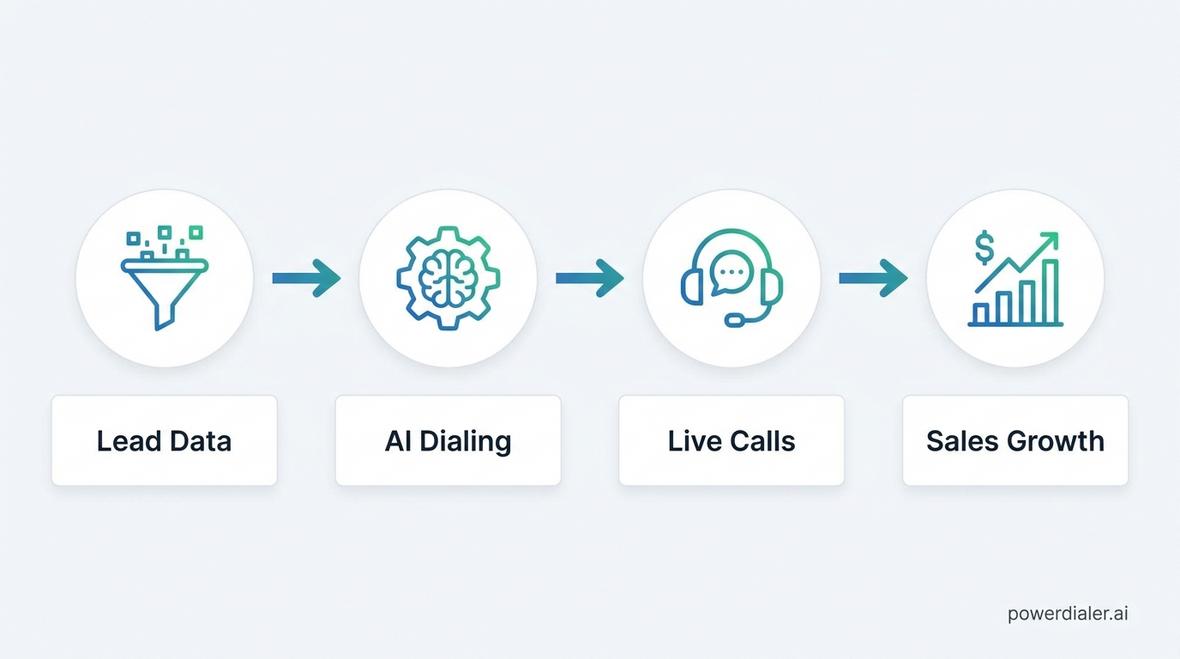
A power dialer automates the dialing process, connecting BDMs only to answered calls while skipping voicemails, busy signals, and disconnected numbers. Research from Forrester B2B revenue teams report finds that top B2B sales teams achieve 2.5x higher quota attainment with dialer technology, improving connect rates from 8% manual to 22% automated.
For BDMs operating in B2B sales, financial services, or real estate, power dialers offer:
- Time Efficiency: Dial 3-4x more prospects per hour compared to manual dialing.
- Enhanced Connect Rates: Features like local presence dialing and spam detection improve answer rates.
- Real-Time Coaching: AI-driven tools provide live feedback during calls, helping BDMs refine their pitch on the fly.
- CRM Integration: Automatically log calls, update records, and trigger follow-up tasks without manual data entry.
Platforms like PowerDialer.ai enable BDMs to scale outbound efforts while maintaining a personalized touch, making them ideal for teams focused on high-volume prospecting and lead qualification.
The BDM Sales Process: From Prospecting to Deal Closure
A structured sales process is essential for BDM success. Here's a step-by-step breakdown:
Step 1: Define Your Ideal Customer Profile (ICP)
Identify the characteristics of your best-fit customers industry, company size, pain points, and buying behavior. This ensures your outreach is targeted and relevant.
Step 2: Generate and Qualify Leads
Use a combination of inbound marketing, outbound prospecting, referrals, and partnerships to build your pipeline. Qualify leads using frameworks like BANT (Budget, Authority, Need, Timing) to prioritize high-intent opportunities.
Step 3: Conduct Discovery Calls
Discovery calls are critical for understanding prospect needs, uncovering pain points, and positioning your solution. BDMs should ask open-ended questions, actively listen, and tailor their messaging based on the conversation.
Step 4: Present Solutions and Demos
Based on discovery insights, demonstrate how your product or service addresses the prospect's challenges. Use case studies, ROI calculators, and customer testimonials to build credibility.
Step 5: Handle Objections and Negotiate
Address concerns around pricing, implementation, or competitive alternatives. BDMs must be prepared with data-driven responses and flexible solutions that align with prospect priorities.
Step 6: Close the Deal
Once consensus is reached, finalize contracts, coordinate with legal and finance teams, and ensure a smooth handoff to customer success or account management.
BDM Roles Across Key Industries
The responsibilities and strategies of a BDM can vary significantly depending on the industry. Here's how BDMs operate in different sectors:
BDM in SaaS and Technology
In SaaS, BDMs focus on building strategic partnerships, expanding into new verticals, and driving enterprise sales. They often collaborate with marketing on account-based marketing (ABM) campaigns and leverage product-led growth strategies.
BDM in Healthcare
Healthcare BDMs navigate complex regulatory environments, engage with hospital administrators and procurement teams, and emphasize compliance and patient outcomes in their value propositions.
BDM in Financial Services
BDMs in finance focus on relationship-driven sales, trust-building, and navigating lengthy sales cycles. They often target wealth management firms, insurance companies, and fintech platforms.
BDM in Real Estate
Real estate BDMs connect with brokers, property developers, and investors. They emphasize local market knowledge, transaction support, and technology solutions that streamline operations.
Key Metrics and KPIs for BDM Performance
Tracking the right metrics is essential for evaluating BDM effectiveness and identifying areas for improvement. Key performance indicators include:
- Lead-to-Opportunity Conversion Rate: Percentage of qualified leads that advance to the opportunity stage.
- Pipeline Value: Total dollar value of active opportunities in the sales pipeline.
- Sales Cycle Length: Average time from initial contact to deal closure.
- Win Rate: Percentage of opportunities that result in closed-won deals.
- Connect Rate: Ratio of successful prospect conversations to total outreach attempts.
- Revenue Attainment: Actual revenue generated compared to quota or target.
Modern BDMs leverage heatmap analytics and real-time dashboards to monitor these metrics and adjust strategies dynamically.
Common Challenges BDMs Face and How to Overcome Them
Despite the strategic importance of the BDM role, professionals in this position encounter several obstacles:
Low Connect Rates
Manual dialing and poorly timed outreach result in low answer rates. Solution: Use AI-powered dialers with local presence dialing and optimal call timing features.
Long Sales Cycles
Enterprise deals often take months to close. Solution: Implement multithreading strategies and maintain consistent touchpoints with stakeholders.
Navigating Gatekeepers
Reaching decision-makers can be difficult. Solution: Develop rapport with gatekeepers, use referrals, and leverage LinkedIn for direct outreach.
Data Overload
Managing large volumes of prospect data can be overwhelming. Solution: Integrate CRM systems with automation tools to streamline data management and prioritize high-value leads.
The Future of BDM: AI, Automation, and Data-Driven Sales
The BDM role is evolving rapidly with advancements in artificial intelligence, sales automation, and predictive analytics. Emerging trends include:
- AI-Powered Prospecting: Machine learning algorithms identify high-intent leads based on behavioral signals and historical data.
- Conversation Intelligence: AI analyzes call recordings to surface insights, coach reps, and improve messaging.
- Revenue Orchestration: Integrated platforms coordinate marketing, sales, and customer success efforts to optimize the buyer journey.
- Predictive Dialing: Advanced dialers use predictive algorithms to maximize agent productivity and minimize idle time.
BDMs who embrace these technologies and continuously upskill will be best positioned to drive growth in an increasingly competitive market.
Frequently Asked Questions About BDM Roles
What qualifications do you need to become a BDM?
Most BDM roles require a bachelor's degree in business, marketing, or a related field, along with 3-5 years of sales or business development experience. Strong communication, analytical, and CRM skills are essential.
How much does a BDM earn?
Salaries vary by industry and location, but according to industry benchmarks, BDMs typically earn a base salary ranging from $60,000 to $90,000, with on-target earnings (OTE) reaching $120,000 to $150,000 or higher with commissions and bonuses.
What's the difference between a BDM and a Sales Manager?
A BDM focuses on generating new business opportunities and strategic partnerships, while a Sales Manager oversees a team of sales reps, manages performance, and ensures quota attainment.
How do BDMs measure success?
Success is measured through KPIs such as pipeline growth, lead conversion rates, revenue attainment, and customer acquisition metrics.
Can BDMs work remotely?
Yes, many BDM roles are now remote or hybrid, especially in industries like SaaS and technology. Remote BDMs rely heavily on digital communication tools, CRM systems, and virtual meeting platforms.
Conclusion
The Business Development Manager (BDM) is a critical driver of revenue growth, market expansion, and strategic partnerships in modern B2B organizations. By combining strategic thinking with tactical execution leveraging tools like predictive dialers and AI-powered analytics BDMs can scale their outreach, improve connect rates, and close more deals. Whether you're entering the field or optimizing your current approach, understanding the core responsibilities, essential skills, and emerging technologies will position you for long-term success in this dynamic role.