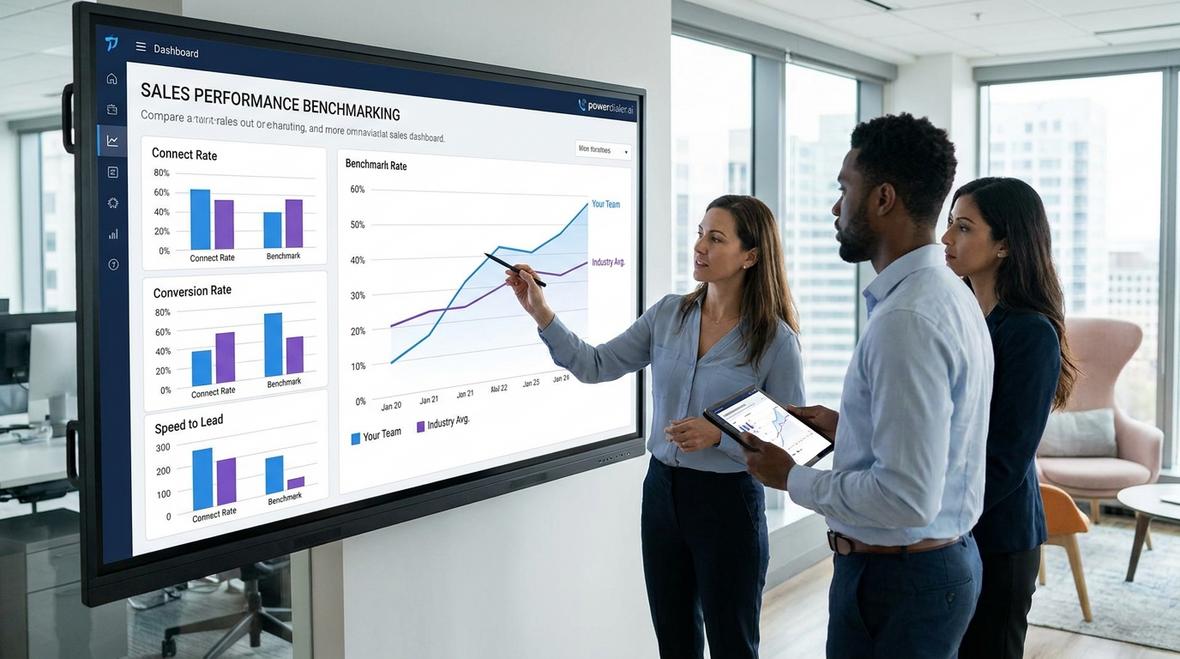
In today's competitive business landscape, call center benchmarking has become a critical practice for sales teams, SDRs, and business owners who want to measure performance, identify gaps, and drive continuous improvement. Whether you're running an outbound sales operation, managing a customer support team, or scaling a B2B sales environment, understanding how your metrics stack up against industry standards is essential for optimizing efficiency and maximizing ROI.
This comprehensive guide will walk you through everything you need to know about call center benchmarking from defining key performance indicators (KPIs) to implementing data-driven strategies that elevate your team's performance. You'll discover how to collect and analyze data, compare your results against global benchmarks, and leverage AI-powered tools like PowerDialer.ai to automate repetitive tasks and improve connect rates.
What Is Call Center Benchmarking?
Call center benchmarking is the process of measuring your contact center's performance against established industry standards, competitors, or internal goals. It involves collecting quantitative data on key metrics such as average handle time, first call resolution, service level, and cost per contact and comparing them to external or historical baselines to identify areas for improvement.
For sales development representatives and outbound sales teams, benchmarking goes beyond traditional customer service metrics. It includes tracking outbound-specific KPIs like connect rates, conversion rates, calls per agent, and speed to lead. By establishing clear benchmarks, you can set realistic targets, coach your team more effectively, and make informed decisions about technology investments and process changes.
According to BenchmarkPortal's industry database of contact center benchmarking metrics, organizations that regularly benchmark their performance against a global dataset are better positioned to identify operational inefficiencies and implement best practices that drive measurable results.
Why Call Center Benchmarking Matters for Sales Teams
Understanding where your team stands relative to industry norms is not just about keeping score it's about unlocking actionable insights that lead to higher productivity, better customer experiences, and increased revenue. Here are four compelling reasons why call center benchmarking should be a priority:
- Identify Performance Gaps: Benchmarking reveals where your team is underperforming compared to industry averages, allowing you to focus improvement efforts on the areas that matter most.
- Set Realistic Goals: When you know what 'good' looks like across your industry, you can establish attainable targets for your SDRs and sales managers, fostering accountability and motivation.
- Optimize Resource Allocation: Data-driven benchmarking helps you determine whether you need to invest in additional headcount, training, or technology to meet your performance objectives.
- Enhance Coaching and Training: By comparing individual agent performance to team and industry benchmarks, you can deliver personalized coaching that addresses specific skill gaps and accelerates ramp time.
For B2B sales environments where every conversation counts, leveraging benchmarking data to fine-tune your outbound strategy can significantly improve your team's efficiency and connect rates. Tools like power dialers and parallel dialers can help you automate manual dialing and reach more prospects in less time, making it easier to achieve and exceed your benchmarks.
Key Metrics for Call Center Benchmarking
Successful call center benchmarking starts with defining the right metrics. While inbound and outbound operations may prioritize different KPIs, the following metrics are universally important for measuring performance and driving improvement:
Service Level
Service level measures the percentage of calls answered within a specified time frame. The most commonly cited benchmark is 80% of calls answered within 20 seconds. Research from Verint on global call center benchmarks indicates that this standard is widely used across industries to gauge responsiveness and customer satisfaction.
For outbound sales teams, service level is less relevant, but the underlying principle speed and responsiveness still applies. Reducing the time it takes to connect with a lead after they express interest (speed to lead) is a critical benchmark for conversion optimization.
Average Speed of Answer (ASA)
ASA tracks the average time a caller waits before an agent picks up. According to Verint, the global average speed of answer is approximately 28 seconds. Lower ASA values indicate efficient call routing and adequate staffing levels.
In outbound scenarios, this metric is replaced by the time it takes for a sales rep to initiate a call after a lead enters the pipeline, which is where speed-to-lead analytics become invaluable.
Abandonment Rate
Abandonment rate measures the percentage of callers who hang up before reaching an agent. A target abandonment rate below 5% is considered best practice. High abandonment rates often signal understaffing, long wait times, or poor call routing.
For outbound teams, this metric translates to the number of unanswered calls or voicemails left without engagement. Reducing abandonment requires optimizing dialing strategies and ensuring that your team is equipped with tools like voicemail detection to skip unproductive interactions.
Average Handle Time (AHT)
AHT is the average duration of a customer interaction, including talk time, hold time, and after-call work. Global benchmarks suggest an average handle time of around 6 minutes, though this varies by industry and call type.
For sales teams, shorter handle times on qualification calls can indicate efficient lead scoring, while longer conversations on discovery calls may reflect deeper engagement. Balancing efficiency with quality is key, and leveraging AI sales coaching can help reps improve their talk tracks without sacrificing rapport.
First Call Resolution (FCR)
FCR measures the percentage of issues resolved on the first call, reducing the need for follow-ups. High FCR rates correlate with customer satisfaction and operational efficiency.
In outbound sales, a similar metric is the percentage of calls that result in a qualified meeting or next step. Tracking this KPI helps you understand the effectiveness of your messaging and objection handling.
Cost Per Contact
This metric calculates the total cost of handling a single interaction, including labor, technology, and overhead. Benchmarking your cost per contact against industry averages helps you assess operational efficiency and identify opportunities for cost reduction through automation.
Adopting AI-powered dialing solutions like predictive dialers can significantly lower cost per contact by increasing the number of conversations per agent without adding headcount.
Connect Rate
Connect rate is the percentage of dialed calls that result in a live conversation. For outbound sales teams, this is one of the most critical benchmarks. Industry averages vary, but top-performing teams often achieve connect rates above 10% by using local presence dialing and spam-blocking AI.
Improving your connect rate starts with ensuring your caller ID reputation is intact. Learn more about maintaining a strong caller ID with spam-blocking AI to avoid being flagged as spam.
Calls Per Agent
This metric tracks the average number of calls each agent completes in a given period. Higher calls per agent can indicate greater productivity, but it's important to balance volume with quality. Over-dialing without strategic targeting can lead to burnout and lower conversion rates.
How to Conduct Call Center Benchmarking: A Step-by-Step Process
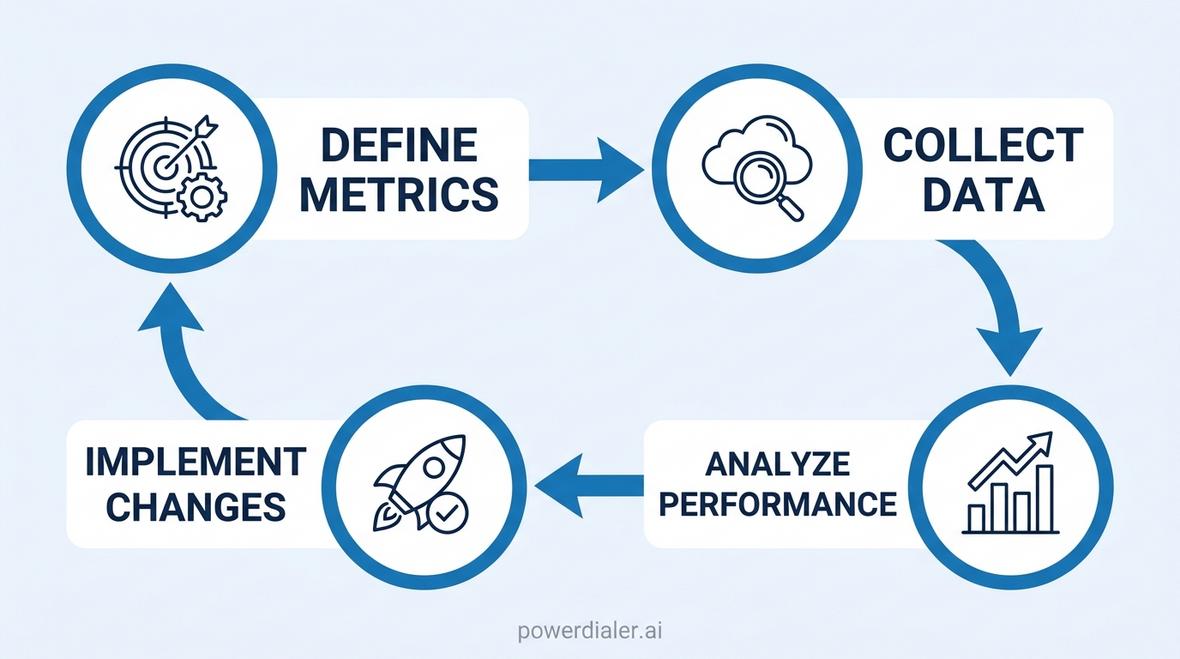
Implementing a robust call center benchmarking program requires a structured approach. Follow these four steps to ensure your benchmarking efforts deliver actionable insights and drive continuous improvement.
Step 1: Define Metrics and Goals
Start by identifying which KPIs are most relevant to your business objectives. For outbound sales teams, focus on metrics like connect rate, conversion rate, calls per agent, and speed to lead. Establish clear, measurable goals for each metric based on your current performance and industry benchmarks.
For example, if your current connect rate is 7% and industry benchmarks suggest top performers achieve 12%, set a realistic interim target of 9% and outline the steps needed to get there.
Step 2: Collect Data
Gather quantitative data from your call center platform, CRM, and any integrated analytics tools. Ensure your data collection process is consistent and captures all relevant dimensions, including call outcomes, agent performance, and time-based trends.
Modern sales engagement platforms like PowerDialer.ai offer built-in analytics and reporting that automatically track key benchmarking metrics, making it easier to collect and visualize data without manual spreadsheets.
Step 3: Analyze Performance
Compare your internal data against external benchmarks from sources like BenchmarkPortal, Verint, and industry reports. Identify areas where your team exceeds standards and areas where there is room for improvement.
Use segmentation to drill down into performance by agent, time of day, campaign, or lead source. This granular analysis can reveal patterns and opportunities that aggregate data might obscure.
Step 4: Implement Changes and Monitor Progress
Based on your analysis, develop and execute an action plan that addresses performance gaps. This might include additional training, process changes, or technology investments. Continuously monitor your metrics to assess the impact of your interventions and iterate as needed.
Remember, call center benchmarking is not a one-time project it's an ongoing cycle of measurement, analysis, and improvement. Regularly revisiting your benchmarks ensures your team stays competitive and aligned with evolving industry standards.
Industry Benchmarks and Best Practices
Understanding the specific benchmarks for your industry is essential for setting realistic targets and making meaningful comparisons. Here are some widely recognized benchmarks and best practices:
Global Averages
As reported by multiple industry sources, including research from Giva and NovelVox, global call center benchmarks typically include:
- Service Level: 80% of calls answered within 20 seconds
- Average Speed of Answer: Approximately 28 seconds
- Abandonment Rate: Target below 5%
- Average Handle Time: Around 6 minutes globally, though outbound sales calls may be shorter
- First Call Resolution: Varies by industry, but higher is always better
- Cost Per Contact: Industry-specific, but automation can reduce costs by 20-40%
B2B Sales-Specific Benchmarks
For B2B sales teams, especially those in industries like financial services, healthcare, and real estate, benchmarks should also include:
- Connect Rate: 8-12% for cold calling campaigns
- Conversion Rate: 1-3% from initial contact to qualified meeting
- Speed to Lead: Response within 5 minutes dramatically increases conversion likelihood
- Calls Per Day Per Rep: 80-120 calls for manual dialing, 150-250+ with power or parallel dialers
Best Practices for Effective Benchmarking
- Use Multiple Data Sources: Combine internal data with external benchmarks from trusted sources to get a complete picture.
- Segment Your Data: Compare apples to apples by segmenting performance by campaign type, lead quality, and agent experience level.
- Automate Data Collection: Manual tracking is error-prone and time-consuming. Invest in technology that automatically captures and reports on key metrics.
- Benchmark Continuously: Set a regular cadence (monthly or quarterly) to review your metrics and adjust your strategies accordingly.
- Focus on Actionable Metrics: Not all data points are equally useful. Prioritize metrics that directly influence your business goals and are within your control to change.
Leveraging Technology for Call Center Benchmarking
Modern sales teams have access to powerful AI-driven tools that make call center benchmarking faster, more accurate, and more actionable. Here's how technology can enhance your benchmarking efforts:
AI-Powered Dialers
AI-powered dialers like PowerDialer.ai automate manual dialing, detect voicemails, and optimize call pacing, enabling your team to complete more calls per day while maintaining high connect rates. By integrating with your CRM, these tools automatically log call outcomes and generate real-time performance dashboards, making it easy to track benchmarking metrics without additional administrative work.
Analytics and Reporting Tools
Advanced analytics platforms provide visual dashboards that display your KPIs in real time, allowing managers to spot trends, identify outliers, and coach reps more effectively. Features like heatmap analytics can reveal the best times to call and which lead sources yield the highest conversion rates, informing your benchmarking strategy.
Integration with CRM and Sales Engagement Platforms
Seamless integration between your dialer, CRM, and sales engagement platform ensures that all data is centralized and accessible. This eliminates data silos and makes it easier to perform comprehensive benchmarking analyses across your entire sales funnel.
Common Challenges in Call Center Benchmarking and How to Overcome Them
While call center benchmarking offers significant benefits, it's not without challenges. Here are some common obstacles and strategies to address them:
Inconsistent Data Collection
Challenge: Different agents or systems may log data inconsistently, leading to inaccurate benchmarks.
Solution: Standardize your data collection processes and invest in technology that automates tracking and reporting. Provide training to ensure all team members understand how to log call outcomes correctly.
Comparing Apples to Oranges
Challenge: External benchmarks may not account for differences in industry, lead quality, or call type, making direct comparisons misleading.
Solution: Segment your data and seek out industry-specific benchmarks. Use internal historical data as a baseline and track improvement over time rather than relying solely on external comparisons.
Overemphasis on Metrics at the Expense of Quality
Challenge: Focusing too heavily on quantity metrics like calls per agent can lead to rushed conversations and lower conversion rates.
Solution: Balance efficiency metrics with quality indicators such as conversion rate, customer satisfaction, and first call resolution. Use AI coaching tools to help reps improve both speed and effectiveness.
Lack of Actionable Insights
Challenge: Collecting data is easy, but turning it into actionable insights requires skill and experience.
Solution: Partner with benchmarking experts or invest in analytics training for your leadership team. Use visualization tools to make data easier to interpret and share findings with your team in a way that inspires action.
Case Study: Benchmarking in Action
Consider a B2B SaaS company with a team of 20 SDRs making outbound calls to qualify leads. Before implementing call center benchmarking, the team averaged 60 calls per day per rep, with a 6% connect rate and a 1.5% conversion rate from call to qualified meeting.
After conducting a comprehensive benchmarking analysis, the sales manager discovered that the team's connect rate was below the industry average of 10%. By adopting a parallel dialer, implementing local presence dialing, and training reps on improved talk tracks, the team increased their connect rate to 11% within three months. This improvement, combined with better speed-to-lead practices, boosted their conversion rate to 2.8%, resulting in a 60% increase in qualified meetings booked.
The company also used benchmarking data to identify that certain lead sources consistently underperformed. By reallocating resources to higher-quality channels, they further optimized their cost per contact and overall ROI.
Frequently Asked Questions About Call Center Benchmarking
What is call center benchmarking?
Call center benchmarking is the process of measuring your contact center's performance against industry standards, competitors, or internal goals. It involves tracking KPIs such as service level, average handle time, connect rate, and cost per contact to identify areas for improvement.
Why is benchmarking important for sales teams?
Benchmarking helps sales teams identify performance gaps, set realistic goals, optimize resource allocation, and enhance coaching and training. It provides a data-driven foundation for continuous improvement and ensures your team stays competitive.
What are the most important metrics to benchmark?
The most critical metrics vary by operation, but typically include service level, average speed of answer, abandonment rate, average handle time, first call resolution, cost per contact, connect rate, and calls per agent. For outbound sales, focus on connect rate, conversion rate, and speed to lead.
How often should I conduct call center benchmarking?
Benchmarking should be an ongoing process. Most organizations review their metrics monthly or quarterly to track progress and make timely adjustments. Regular benchmarking ensures you stay aligned with industry standards and respond quickly to changes.
Where can I find reliable industry benchmarks?
Reliable sources for industry benchmarks include BenchmarkPortal, Verint, Giva, NovelVox, and Forrester. These organizations maintain extensive databases of contact center metrics and publish research that can help you compare your performance.
Can automation help with call center benchmarking?
Yes, automation significantly enhances benchmarking by streamlining data collection, reducing errors, and providing real-time analytics. AI-powered dialers and sales engagement platforms automatically track and report on key metrics, making it easier to benchmark and optimize performance.
Conclusion
Call center benchmarking is a powerful tool for sales teams, SDRs, and business owners who want to measure performance, drive continuous improvement, and stay competitive in today's fast-paced B2B sales environment. By defining the right metrics, collecting consistent data, analyzing performance against industry standards, and implementing data-driven changes, you can unlock significant gains in efficiency, connect rates, and revenue.
Leveraging modern technology such as AI-powered dialers, real-time analytics, and integrated CRM platforms makes benchmarking faster, more accurate, and more actionable. Whether you're in financial services, healthcare, real estate, or any other industry, adopting a structured benchmarking process will position your team for long-term success. Start benchmarking today and transform your sales performance with insights that matter.