
What Are Closing Skills and Why Do They Matter?
Closing skills represent the strategic abilities and techniques that sales professionals use to secure commitment from prospects and turn opportunities into revenue. In B2B sales environments, these skills determine whether months of prospecting, qualifying, and nurturing efforts translate into actual deals or missed opportunities. For sales development representatives (SDRs), account executives, and sales managers, mastering closing skills is not optional it's the difference between hitting quota and falling short.
According to research from FinancesOnline, average sales win rates hover around 47% for forecasted deals, meaning that even well-qualified opportunities fail more than half the time. This statistic underscores why developing advanced closing skills is critical for anyone in outbound sales, lead generation, or B2B sales roles across industries like pharma, legal, HVAC, car dealerships, retail, travel, financial services, marketing, education, real estate, and healthcare.
Modern closing skills go beyond traditional 'hard close' tactics. Today's buyers expect consultative approaches, value-driven conversations, and solutions that align with their business objectives. Sales professionals who develop nuanced closing skills can navigate complex buying committees, handle objections with confidence, and create urgency without pressure. This comprehensive guide explores the essential closing skills every sales professional needs, how to develop them, and how technology like PowerDialer.ai can accelerate your team's closing performance.
The 8 Core Closing Skills Every Sales Professional Needs
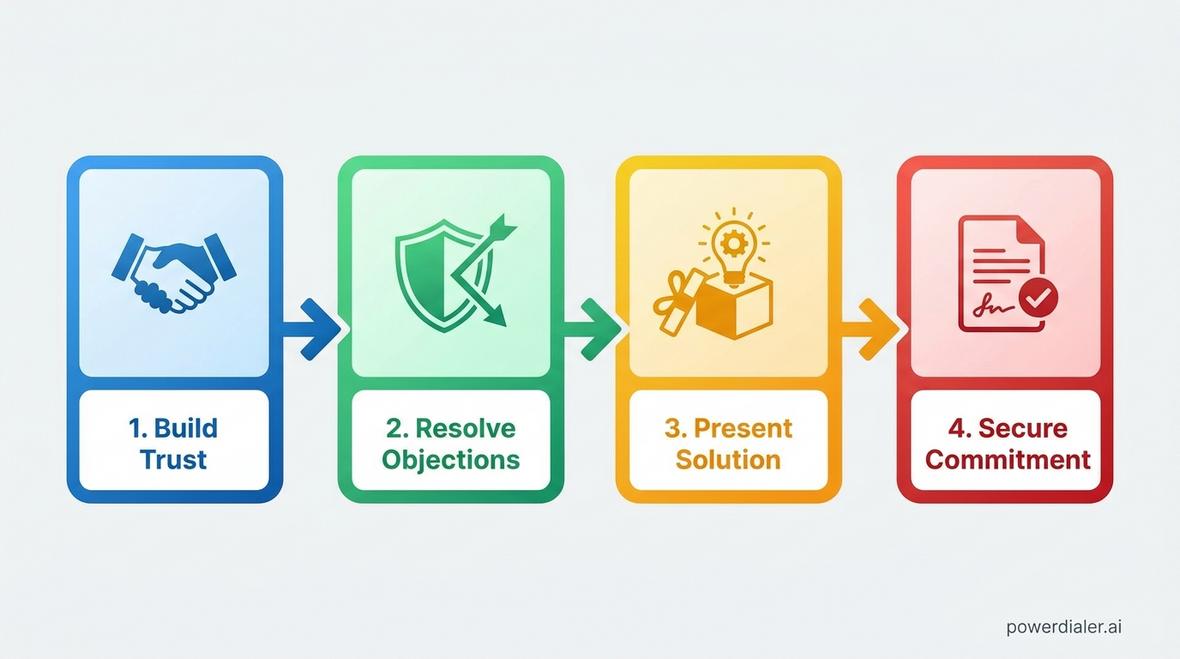
Effective closing isn't a single moment it's the culmination of strategic behaviors throughout the sales cycle. Here are the fundamental closing skills that separate top performers from average reps:
1. Active Listening and Discovery
The foundation of strong closing skills begins with active listening. Sales professionals who ask probing questions and genuinely listen to prospect responses can identify the specific pain points, business drivers, and decision criteria that matter most. This intelligence becomes critical when presenting your solution and addressing objections during the close.
Active listening means taking detailed notes, asking clarifying questions, and repeating back what you've heard to confirm understanding. When you demonstrate that you've truly listened to a prospect's challenges, they're far more likely to trust your recommendations and commit to the solution you're proposing.
2. Objection Handling Mastery
Every sales professional encounters objections concerns about price, timing, implementation, or competitive alternatives. Strong closing skills include the ability to anticipate common objections and prepare thoughtful, evidence-based responses. Rather than viewing objections as roadblocks, skilled closers recognize them as opportunities to provide additional clarity and build confidence.
Effective objection handling involves acknowledging the concern, asking questions to understand the root cause, providing relevant information or proof points, and confirming that the objection has been resolved. Sales teams can benefit from AI-powered sales coaching that analyzes call recordings and identifies patterns in how top performers handle objections.
3. Value Articulation and ROI Justification
In B2B sales, buyers need to justify purchases to multiple stakeholders. One of the most important closing skills is the ability to articulate value in quantifiable terms. This means translating your solution's features into specific business outcomes cost savings, revenue growth, efficiency gains, or risk mitigation.
Skilled closers use case studies, customer testimonials, and ROI calculators to build compelling business cases. When prospects can see exactly how your solution will impact their bottom line, the decision to move forward becomes significantly easier. This is particularly important in industries like financial services and healthcare where budget scrutiny is intense.
4. Creating Genuine Urgency
Timing is everything in sales. Strong closing skills include the ability to create legitimate urgency without resorting to manipulative tactics. This involves understanding the prospect's timeline, identifying compelling events (fiscal year-end, product launches, regulatory deadlines), and articulating the cost of inaction.
Rather than artificial deadlines, effective urgency creation focuses on helping prospects understand what they're losing by delaying a decision. For example, quantifying the ongoing cost of an inefficient process or the competitive risk of not adopting your solution can motivate action more effectively than limited-time discounts.
5. Using Trial Closes Throughout the Sales Cycle
Trial closes are preliminary questions that gauge a prospect's readiness to move forward. They're essential closing skills because they provide early warnings about potential issues and allow you to address concerns before the final ask. Questions like 'Does this approach align with what you were hoping to achieve?' or 'How does this timeline work for your team?' serve as checkpoints throughout the sales process.
Sales professionals who use trial closes effectively can identify and resolve objections early, build incremental commitment, and make the final close feel like a natural next step rather than a high-pressure moment.
6. Multi-Threading and Stakeholder Management
In complex B2B sales, deals rarely involve a single decision maker. Advanced closing skills include the ability to identify all stakeholders, understand their individual priorities, and build consensus across the buying committee. This multi-threading approach ensures that you're not surprised by last-minute objections from stakeholders you didn't know existed.
Effective stakeholder management involves mapping the organizational chart, identifying champions and blockers, and tailoring your messaging to address each stakeholder's unique concerns. Tools like analytics and reporting platforms can help track engagement across different contacts within an account.
7. Strategic Negotiation
Closing often involves negotiation whether it's about price, contract terms, implementation timelines, or service levels. Strong closing skills include knowing when to hold firm, when to offer concessions, and how to structure trade-offs that protect your margins while addressing customer concerns.
Skilled negotiators prepare thoroughly, understand their walk-away point, and focus on creating win-win outcomes. They also know that negotiation isn't just about price it might involve payment terms, pilot programs, or phased implementations that reduce perceived risk for the buyer.
8. Confidently Asking for the Sale
It sounds simple, but many sales professionals struggle with actually asking for the business. Strong closing skills include the confidence to directly request commitment once you've addressed objections, demonstrated value, and confirmed fit. This might sound like: 'Based on everything we've discussed, I'd like to move forward with getting your team onboarded next week. Does that work for you?'
The assumptive close, where you speak as if the decision has already been made and focus on next steps, can be particularly effective when you've built strong rapport and addressed all concerns. The key is reading the situation and choosing a closing technique that matches the prospect's buying style.
How to Develop and Improve Your Closing Skills
Closing skills aren't innate they're learned through practice, feedback, and continuous improvement. Here are proven strategies for developing these critical abilities:
Role-Playing and Simulation
Regular role-playing sessions allow sales teams to practice closing scenarios in a low-stakes environment. Sales managers should create realistic scenarios based on common objections and buying situations, then provide constructive feedback on approach, language, and tactics. Recording these sessions enables reps to review their performance and identify areas for improvement.
Analyzing Successful Closes
Review recordings of successful closes both your own and those of top performers. Identify the specific language, questions, and techniques that led to commitment. What objections came up? How were they handled? What value propositions resonated most? This analysis transforms winning closes from lucky breaks into repeatable strategies.
Platforms with real-time monitoring capabilities allow managers to listen to calls as they happen and provide immediate coaching on closing opportunities.
Structured Sales Training Programs
Invest in formal training on proven sales methodologies like SPIN Selling, Challenger Sale, or Solution Selling. These frameworks provide structured approaches to discovery, value proposition development, and closing that can dramatically improve consistency. Understanding how to use SPIN selling effectively in B2B sales can provide a systematic approach to uncovering needs and closing deals.
Tracking Closing Metrics
You can't improve what you don't measure. Track metrics like close rate by stage, average time to close, objections encountered, and win/loss reasons. This data reveals patterns and opportunities for improvement. For example, if you're losing deals at the final stage due to pricing objections, you may need to strengthen your ROI justification earlier in the sales cycle.
Gathering Customer Feedback
Interview customers who recently closed both wins and losses. Ask what factors influenced their decision, what concerns almost derailed the deal, and what your team did particularly well. This direct feedback provides invaluable insights into how to refine your closing approach.
Proven Closing Techniques for Different Scenarios
Different sales situations call for different closing techniques. Here are proven approaches for common scenarios:
The Assumptive Close
This technique involves speaking as if the prospect has already decided to move forward. For example: 'Great, so I'll have our implementation team reach out next week to schedule your onboarding. Do mornings or afternoons work better?' This works well when you've built strong rapport and addressed all major objections.
The Alternative Close
Present two options, both of which involve moving forward: 'Would you prefer to start with the Professional plan or the Enterprise plan?' This technique works by shifting the conversation from whether to buy to which option to choose.
The Summary Close
Recap all the value points and agreements you've established throughout the sales cycle, then ask for commitment: 'So we've agreed that this solution will reduce your processing time by 40%, integrate seamlessly with your existing systems, and deliver ROI within six months. Are you ready to move forward?'
The Urgency Close
Create legitimate urgency based on external factors: 'Our implementation calendar is filling up quickly. If we can get your contract signed this week, we can guarantee a start date before your Q4 launch. After that, we're looking at January availability.'
The Trial Close
Test readiness without forcing a final decision: 'If we could address your concern about integration complexity, would you be ready to move forward?' This reveals remaining objections and provides a roadmap to closing.
How Technology Enhances Closing Skills
Modern sales technology can significantly amplify your closing skills and effectiveness. Here's how:
Power Dialers for Higher Connect Rates
The more conversations you have, the more opportunities you have to practice and refine your closing skills. Power dialers automate the dialing process, eliminating manual tasks and dramatically increasing the number of quality conversations per day. This increased volume provides more at-bats to practice closing techniques and build confidence.
AI-Powered Coaching and Conversation Intelligence
AI tools can analyze thousands of sales calls to identify patterns in successful closes. They can detect which questions correlate with wins, which objection-handling approaches work best, and which talk-to-listen ratios are optimal. This intelligence allows sales teams to continuously refine their closing skills based on data rather than intuition.
Analytics and Performance Tracking
Comprehensive analytics platforms reveal exactly where deals are getting stuck and why. If your close rate drops significantly at the proposal stage, you know where to focus improvement efforts. If certain industries or company sizes close at higher rates, you can refine your targeting strategy accordingly. Access to heatmap analytics can reveal the optimal times and days to reach prospects, improving your chances of having meaningful closing conversations.
CRM Integration for Context and Preparation
Having complete context before a closing conversation is critical. Integration with leading CRMs ensures that reps have full visibility into previous interactions, stakeholder relationships, and outstanding objections. This preparation enables more confident, informed closing conversations. PowerDialer.ai offers seamless integrations with major CRM platforms to ensure reps always have the context they need.
Industry-Specific Closing Considerations
Different industries require tailored approaches to closing:
B2B SaaS and Technology
In the SaaS world, closing often involves overcoming concerns about implementation complexity, data security, and integration capabilities. Strong closing skills in this sector include the ability to facilitate technical discussions, coordinate proof-of-concept trials, and build ROI models that account for both hard and soft benefits. Learn more about strategies for B2B sales success.
Healthcare and Pharma
Healthcare sales cycles tend to be longer with extensive stakeholder involvement and regulatory considerations. Closing skills in this industry require patience, the ability to navigate complex approval processes, and deep knowledge of compliance requirements. Understanding the unique needs of pharma sales can provide a competitive advantage.
Real Estate
Real estate closing skills focus heavily on emotional intelligence, urgency creation, and overcoming buyer hesitation. Successful real estate professionals excel at painting vivid pictures of future outcomes and making buyers feel confident in major financial decisions.
Financial Services
In financial services, trust and credibility are paramount. Closing skills in this sector emphasize education, risk mitigation, and long-term relationship building. The ability to simplify complex financial concepts and demonstrate fiduciary responsibility is critical.
Common Closing Mistakes to Avoid
Even experienced sales professionals make closing mistakes that cost them deals. Here are pitfalls to avoid:
Talking Past the Close
Once a prospect indicates readiness to move forward, stop selling. Many reps continue to present additional features or benefits, which can introduce new objections or create confusion. When you get a buying signal, move directly to next steps.
Closing Too Early
Attempting to close before you've established value, addressed objections, and confirmed fit will damage credibility. Effective closing skills include knowing when the prospect is ready. Pay attention to buying signals like detailed questions about implementation or requests for references.
Defaulting to Discounting
When faced with pricing objections, many reps immediately offer discounts. This undermines the value you've worked to establish and sets a bad precedent. Strong closing skills include exploring the root cause of price concerns and reinforcing value before considering any concessions.
Single-Threading
Relying on a single contact within an account creates risk. If that person leaves, changes priorities, or lacks authority, your deal stalls. Skilled closers always multi-thread, building relationships across the buying committee.
Lack of Preparation
Showing up to a closing conversation without reviewing account history, outstanding objections, and stakeholder priorities undermines confidence and effectiveness. Preparation is a fundamental closing skill that separates professionals from amateurs.
Measuring and Improving Your Closing Performance
Continuous improvement requires consistent measurement. Track these key closing metrics:
- Close Rate by Stage: What percentage of opportunities at each pipeline stage ultimately close? This reveals where deals are getting stuck.
- Average Sales Cycle Length: How long does it take from first contact to closed deal? Longer cycles may indicate issues with urgency creation or objection handling.
- Win Rate vs. Forecasted Deals: How often do deals you forecast actually close? Low accuracy suggests issues with qualification or pipeline management.
- Common Loss Reasons: Why do you lose deals? Understanding patterns in losses reveals specific closing skills to develop.
- Discount Frequency and Depth: How often do you discount, and by how much? High discount rates may indicate weak value articulation or negotiation skills.
Use these metrics to identify specific areas for improvement, then create targeted training and coaching interventions to address gaps.
Building a Culture of Closing Excellence
Individual closing skills matter, but organizational culture amplifies their impact. Here's how to build a culture that supports closing excellence:
Celebrate Wins and Learn from Losses
Publicly recognize successful closes and analyze what made them work. Create a culture where reps share winning strategies and learn from each other. Similarly, conduct blameless post-mortems on lost deals to extract lessons without creating fear.
Invest in Continuous Coaching
Make coaching a regular part of your sales rhythm, not a quarterly event. Sales managers should dedicate time each week to ride-alongs, call reviews, and one-on-one skill development sessions focused specifically on closing skills.
Provide the Right Tools and Technology
Equip your team with technology that removes friction and amplifies their abilities. This includes power dialers that maximize conversation volume, analytics platforms that reveal what's working, and AI coaching tools that provide real-time guidance. Investing in the right sales dialer technology can transform team performance.
Set Clear Standards and Expectations
Define what good looks like. Create documented best practices for different closing scenarios, establish quality standards for discovery and value articulation, and hold team members accountable to these benchmarks.
Frequently Asked Questions About Closing Skills
What are the most important closing skills for SDRs?
For SDRs focused on setting qualified appointments rather than closing deals, the most important closing skills include active listening to identify qualified prospects, effective objection handling to overcome initial resistance, creating urgency around booking a meeting, and confidently asking for commitment to a specific time slot. Since SDRs typically hand off qualified opportunities to account executives, their 'close' is securing the meeting, not the contract.
How long does it take to develop strong closing skills?
Developing competent closing skills typically takes 3-6 months of consistent practice and coaching for new sales professionals. However, mastery is an ongoing journey that continues throughout a sales career. Top performers continuously refine their approach based on changing buyer behaviors, new technologies, and market conditions. The key is deliberate practice with regular feedback rather than simply logging time.
Can closing skills be taught, or are they innate?
While some personality traits like confidence and resilience can make closing easier, the specific skills objection handling, value articulation, negotiation tactics, and stakeholder management are absolutely teachable and learnable. Structured training, role-playing, and consistent coaching can transform average performers into skilled closers. The belief that great closers are 'born, not made' is a myth that prevents organizations from investing in skill development.
How do closing skills differ between B2B and B2C sales?
B2B closing skills typically emphasize longer-term relationship building, committee-based decision making, ROI justification, and consultative approaches. B2C closing often focuses more on emotional triggers, immediate urgency, and individual decision makers. B2B cycles are generally longer and more complex, requiring stronger skills in multi-threading and stakeholder management, while B2C may emphasize rapport-building and handling price objections more heavily.
What role does technology play in improving closing skills?
Technology amplifies closing skills in several ways: power dialers increase conversation volume, providing more practice opportunities; conversation intelligence platforms analyze successful closes and provide data-driven coaching insights; CRM integration ensures reps have complete context before closing conversations; and analytics platforms reveal exactly where deals are getting stuck. Technology doesn't replace skill, but it accelerates development and removes friction that prevents reps from focusing on high-value activities like closing.
Conclusion
Mastering closing skills is non-negotiable for sales professionals who want to consistently hit quota and advance their careers. These skills from active listening and objection handling to value articulation and confident asks are learnable through deliberate practice, structured training, and continuous feedback. The most successful sales organizations recognize that closing excellence isn't about manipulative tactics or high-pressure moments, but rather the natural culmination of a consultative sales process that genuinely serves customer needs. By investing in skill development, leveraging modern sales technology, and creating cultures that celebrate continuous improvement, sales teams can dramatically improve their close rates and revenue outcomes. Whether you're an individual contributor looking to sharpen your approach or a sales leader building a high-performance team, focusing on closing skills development delivers measurable returns that directly impact the bottom line.