Understanding Connections Rating in Modern Sales
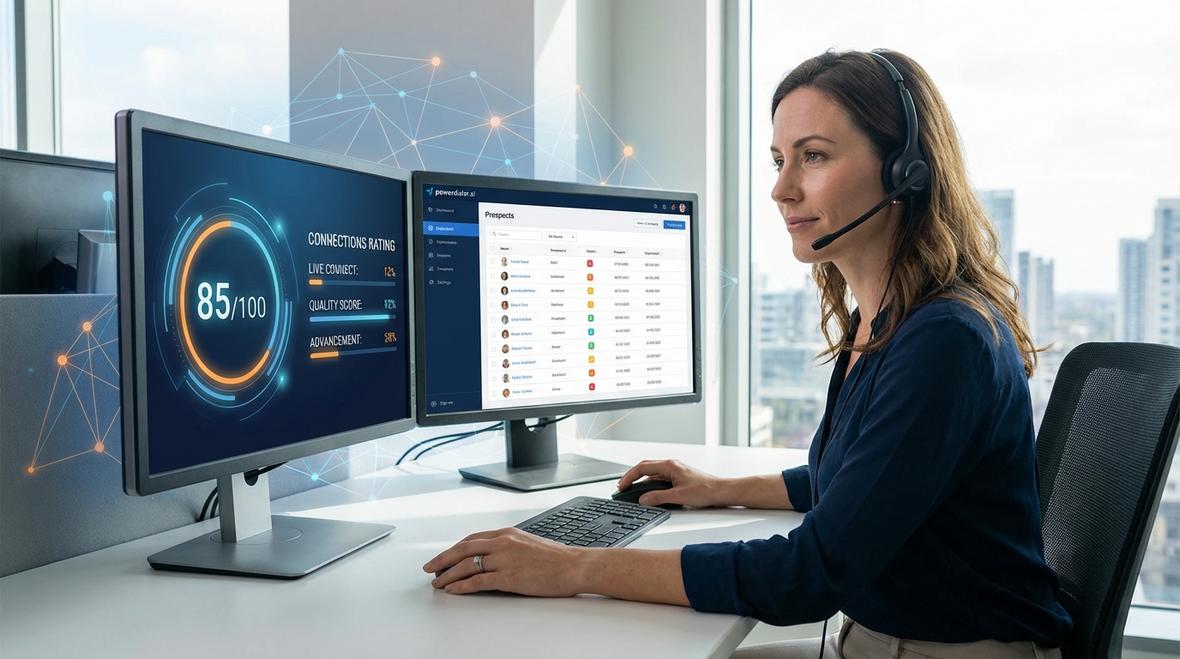
In the fast-paced world of B2B sales, measuring success goes far beyond counting the number of dials made. Sales development representatives (SDRs) and sales managers are increasingly focused on a critical metric known as connections rating—a comprehensive measure that evaluates not just whether a call connects, but the quality and outcome of that connection. For teams using power dialers and AI-driven sales tools, understanding and optimizing your connections rating has become essential to driving revenue and improving team performance.
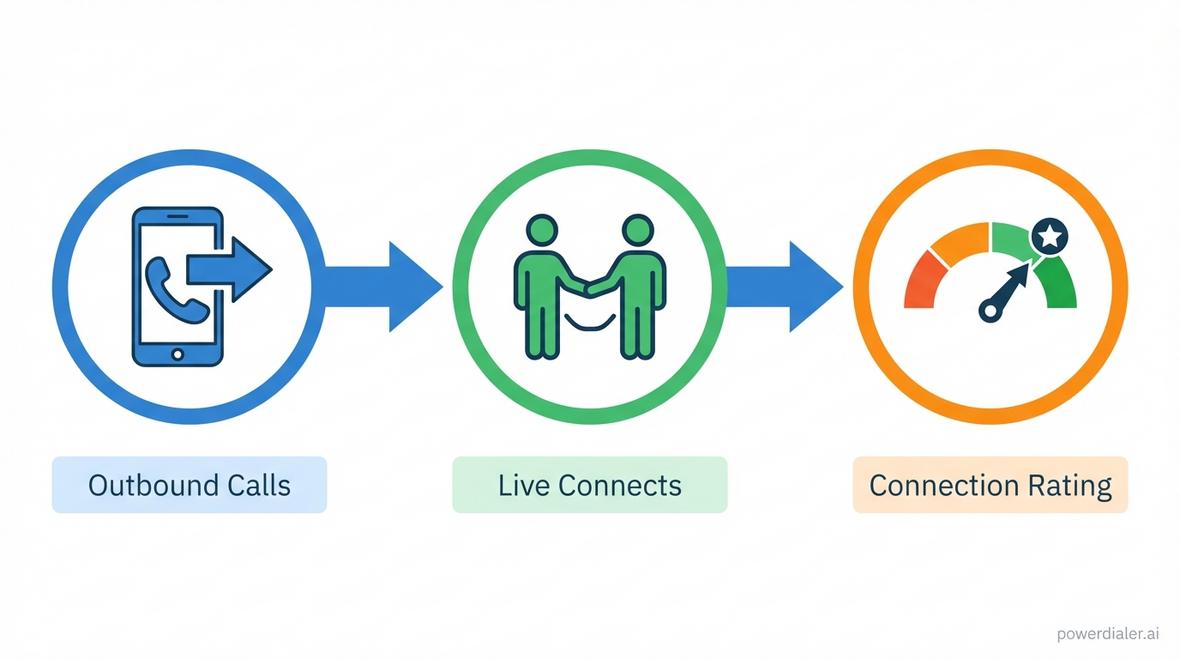
A connections rating is a composite metric that typically encompasses live connect rates, conversation quality scores, and the likelihood of converting a connected call into a qualified opportunity. Unlike simple answer rates, connections rating considers factors like call duration, engagement level, and whether the conversation advanced the sales process. According to research on B2B sales benchmarks, sophisticated outbound strategies achieve conversion rates of 1-3% in cold calling scenarios, making every quality connection critically important.
For sales teams in industries ranging from financial services to healthcare, optimizing connections rating directly impacts customer acquisition cost and overall sales efficiency. Teams that track and improve this metric consistently outperform those who focus solely on volume-based metrics. This comprehensive guide will walk you through everything you need to know about connections rating, from measurement methodologies to actionable strategies for improvement.
Why Connections Rating Matters More Than Ever
The landscape of outbound sales has fundamentally shifted in recent years. Prospects are more protective of their time, caller ID screening has become sophisticated, and spam labeling threatens legitimate business calls. In this environment, raw dial volume no longer correlates directly with sales success. Instead, connections rating has emerged as the north star metric for sales teams serious about efficiency and results.
Consider the economics: if your team makes 1,000 calls per day but only connects with 50 prospects at a meaningful level, your connections rating reveals the true efficiency of your outreach. When you factor in the time cost of your SDRs, the technology investment in power dialer software, and the opportunity cost of not reaching decision-makers, optimizing connections rating becomes a strategic imperative rather than just a vanity metric.
Research from industry analysts shows that comprehensive B2B sales statistics reveal that top-performing sales organizations achieve significantly higher connections ratings by combining technology, training, and strategic list segmentation. These teams understand that a 10% improvement in connections rating can translate to 30-40% more qualified opportunities without increasing headcount or call volume.
Key Components of a Strong Connections Rating
A robust connections rating system evaluates multiple dimensions of call success:
- Live Connect Rate: The percentage of calls that reach a real person rather than voicemail or no answer
- Conversation Quality Score: Duration and engagement level of the conversation
- Decision-Maker Reach Rate: How often you connect with the actual person who can make buying decisions
- Advancement Rate: The percentage of connections that move to the next stage in your sales process
- Sentiment Analysis: The tone and receptiveness of the prospect during the conversation
Modern analytics and reporting tools can track all these elements automatically, providing sales managers with real-time visibility into not just how many calls their team is making, but how effective those calls actually are. This data-driven approach transforms connections rating from a subjective assessment into a quantifiable metric that drives coaching and process improvement.
How to Accurately Measure Your Connections Rating
Measuring connections rating effectively requires both the right technology infrastructure and a clear methodology. The first step is establishing baseline metrics across your sales team. Begin by tracking your current live connect rate the foundation of any connections rating system. For most B2B sales environments, live connect rates typically range from 3-8%, though this varies significantly by industry, time of day, and list quality.
Once you have baseline connect rates, layer in qualitative measures. Modern AI-powered dialers like AI sales coach systems can automatically analyze call recordings to assess conversation quality, identifying patterns in successful versus unsuccessful connections. These systems can flag calls where the prospect showed buying signals, asked questions, or expressed interest all indicators of a high-quality connection beyond just answering the phone.
Connections Rating Calculation Methodology
A practical formula for calculating connections rating combines quantitative and qualitative factors:
Connections Rating = (Live Connects × Quality Multiplier × Advancement Weight) / Total Dials × 100
The Quality Multiplier considers factors like call duration (calls under 30 seconds receive a lower weight) and whether you reached a decision-maker versus a gatekeeper. The Advancement Weight gives additional credit to connections that result in appointments booked, follow-up commitments, or other tangible next steps. This weighted approach ensures your connections rating reflects true sales progress rather than just answering rate.
For example, if your team made 500 calls, achieved 40 live connects, 30 of those were quality conversations averaging over 2 minutes, and 12 resulted in scheduled follow-ups, your connections rating would reflect not just the 8% connect rate but the higher value of those 12 meaningful conversations. This nuanced view helps sales managers identify high-performing reps and coach those who may be connecting but not advancing opportunities.
Connections Rating Benchmarks by Industry
Understanding where your connections rating stands relative to industry benchmarks is crucial for setting realistic goals and identifying improvement opportunities. According to comprehensive sales statistics research, connections rating varies significantly across sectors based on factors like target persona seniority, regulatory environment, and typical decision-making complexity.
In the financial services industry, where trust and compliance are paramount, connections ratings tend to be lower initially but convert at higher rates once established. Top firms see 40%+ new business from referrals, demonstrating that relationship-based connections significantly outperform cold outreach in regulated sectors. This emphasizes the importance of measuring not just quantity but the quality component of your connections rating.
Industry-Specific Connections Rating Benchmarks
| Industry | Average Live Connect Rate | Quality Connection Rate | Advancement to Opportunity |
|---|---|---|---|
| B2B SaaS | 5-8% | 40-50% | 15-20% |
| Financial Services | 3-5% | 50-60% | 20-25% |
| Healthcare | 4-6% | 35-45% | 12-18% |
| Real Estate | 8-12% | 30-40% | 10-15% |
| HVAC/Home Services | 10-15% | 45-55% | 18-22% |
| Legal Services | 2-4% | 55-65% | 25-30% |
These benchmarks reveal important insights: industries with higher connect rates don't necessarily have better overall connections ratings if the quality of those connections is lower. Legal services, for example, show lower connect rates but higher quality and advancement percentages, resulting in comparable or superior overall connections ratings compared to higher-volume industries.
Proven Strategies to Boost Your Connections Rating
Improving connections rating requires a multi-faceted approach that addresses technology, process, and people. The most impactful strategy is implementing local presence dialing, which significantly increases answer rates by displaying a local area code to prospects. This simple technological enhancement can improve initial connect rates by 30-50%, forming the foundation for a stronger overall connections rating.
List quality and targeting represent another critical lever. Sales teams that invest in lead enrichment and segmentation consistently achieve higher connections ratings because they're calling prospects who are more likely to be in-market and receptive. Research indicates that referral leads achieve 26% conversion rates far higher than cold outreach emphasizing that relationship-based connection strategies dramatically improve both quantity and quality of connections.
Timing and Cadence Optimization
When you call matters as much as who you call. Data analysis across millions of sales calls reveals that connections rating varies significantly by time of day, day of week, and even season. Mid-morning (10-11 AM) and mid-afternoon (2-3 PM) in the prospect's local timezone typically yield the highest connections ratings, while Mondays and Fridays show lower performance across most industries.
Implementing an intelligent AI-powered dialing platform that automatically optimizes call timing based on historical success patterns can improve connections rating by 15-25% without any additional effort from your sales team. These systems learn which prospects are most likely to answer at specific times and automatically schedule outreach accordingly, maximizing the efficiency of every dial.
Leveraging the Right Technology Stack
The technology you use directly impacts your connections rating. Traditional manual dialing creates dead time between calls and doesn't provide the intelligence needed to optimize performance. Parallel dialing solutions can increase your live connect volume by simultaneously calling multiple numbers, though this approach requires careful compliance management and may not improve the quality component of your connections rating.
For most B2B sales teams, a sophisticated power dialer with built-in AI capabilities offers the best balance. These systems provide features like automatic voicemail detection, CRM integration, real-time coaching, and analytics that collectively improve both the quantity and quality aspects of connections rating. The key is selecting a platform that aligns with your specific industry requirements and compliance needs.
Using Connections Rating Analytics to Drive Performance
Once you're tracking connections rating consistently, the real power comes from using that data to drive continuous improvement. Top-performing sales organizations conduct weekly connections rating reviews where they analyze trends, identify outliers, and adjust strategy accordingly. This data-driven approach transforms sales management from gut-feel coaching to evidence-based performance optimization.
Advanced analytics platforms provide heatmap analytics that visualize when and where your connections rating is strongest. These insights might reveal that certain personas respond better at specific times, that particular industries have distinct optimal contact windows, or that individual sales reps achieve higher connections ratings with certain types of accounts. Armed with these insights, sales managers can make targeted adjustments that yield measurable improvement.
Individual Rep Performance Analysis
Connections rating metrics are invaluable for coaching individual sales reps. By comparing connections rating across your team, you can identify top performers whose techniques can be shared and struggling reps who need targeted development. Often, reps with similar dial volumes show dramatically different connections ratings, indicating that skills and approach not just effort drive results.
Modern real-time monitoring tools allow sales managers to listen to calls and provide immediate feedback, correlating specific behaviors with connections rating outcomes. Does the rep who asks for the decision-maker by name achieve better connections? Do openers that lead with value propositions result in longer, more productive conversations? These insights transform connections rating from a reporting metric into a coaching tool.
Common Connections Rating Mistakes to Avoid
Many sales teams make critical errors when implementing connections rating as a performance metric. The most common mistake is focusing exclusively on quantity measuring only live connect rates without considering quality or advancement. This leads to behaviors like rushing through conversations to maximize dials or treating every connection the same regardless of prospect fit or readiness.
Another pitfall is failing to account for industry and persona differences in your connections rating expectations. A team calling C-suite executives in enterprise accounts should have different connections rating targets than one focusing on small business owners. Setting uniform goals without considering these factors creates unfair comparisons and misaligned incentives that can actually harm overall sales performance.
Maintaining Data Integrity
Connections rating is only as valuable as the data underlying it. Many organizations struggle with inconsistent call disposition practices, where reps categorize calls differently, making cross-team or temporal comparisons meaningless. Implementing standardized disposition codes and automated call classification through AI significantly improves data quality and makes connections rating a reliable metric.
Additionally, ensure your technology stack properly integrates with your CRM and other sales tools. Disconnected systems create data silos where connections rating information doesn't sync with opportunity creation, revenue attribution, or customer lifecycle data. This fragmentation limits your ability to connect connections rating improvement to business outcomes, undermining buy-in for optimization initiatives.
The Future of Connections Rating: AI and Predictive Analytics
As artificial intelligence continues advancing, the future of connections rating measurement and optimization looks dramatically different than today's approaches. Emerging AI systems can predict in real-time which prospects are most likely to connect and engage, dynamically adjusting call lists and timing to maximize connections rating automatically. These predictive models consider hundreds of variables from past calling history to external signals like recent company news or job changes that would be impossible for human sales managers to process manually.
Voice AI technology is also transforming how we evaluate the quality component of connections rating. Instead of manual call reviews, AI can analyze 100% of conversations, scoring them on dozens of dimensions including prospect sentiment, objection handling effectiveness, and buying signal recognition. This comprehensive analysis provides unprecedented visibility into what drives high connections ratings and enables highly targeted coaching at scale.
Implementing Connections Rating in Your Organization
Rolling out connections rating as a core performance metric requires thoughtful change management. Begin by establishing baseline measurements and communicating why this metric matters more than traditional volume-based KPIs. Sales teams often resist new metrics if they perceive them as arbitrary or disconnected from compensation, so clearly linking connections rating improvement to revenue outcomes and recognition is essential.
Start with a pilot program involving your most analytically-minded sales leaders and reps. Use this group to refine your connections rating formula, test reporting cadences, and develop best practices before rolling out organization-wide. Document early wins specific examples where improved connections rating led to more opportunities or faster deals to build momentum and overcome skepticism from the broader team.
Selecting the Right Platform
Choosing technology that supports comprehensive connections rating tracking is critical to implementation success. Look for platforms that offer native CRM integration, automated call scoring, customizable reporting dashboards, and AI-powered insights. The investment in advanced dialing and analytics technology typically pays for itself within months through improved rep productivity and higher conversion rates.
Ensure your selected platform can track all components of connections rating not just whether calls connect, but quality indicators like duration, decision-maker reach, and advancement rates. The ability to segment and filter connections rating data by rep, campaign, industry, persona, time period, and other dimensions enables the deep analysis necessary to drive continuous improvement.
Frequently Asked Questions About Connections Rating
What is a good connections rating benchmark?
A good connections rating varies by industry, but generally includes a live connect rate of 5-10%, with 40-60% of those connections being quality conversations and 15-25% advancing to the next sales stage. Top-performing teams in B2B environments often achieve composite connections ratings 30-50% above industry averages through optimization.
How does connections rating differ from connect rate?
Connect rate simply measures what percentage of calls reach a live person, while connections rating is a more sophisticated metric that also evaluates conversation quality, decision-maker reach, and whether the connection advances the sales process. A team might have a high connect rate but poor connections rating if conversations are brief and unproductive.
Can connections rating be gamed?
Like any metric, poorly designed connections rating systems can incentivize counterproductive behavior. However, by incorporating quality measures (call duration, advancement rate) alongside quantity measures (connect rate), and by using AI to validate call quality automatically, you can create a connections rating system that accurately reflects true sales effectiveness.
How often should connections rating be reviewed?
Most high-performing sales organizations review connections rating data weekly at the team level and monthly at the organizational level. Real-time dashboards allow individual reps to monitor their own connections rating daily, enabling immediate course correction when performance dips.
What technology is required to track connections rating?
At minimum, you need a dialing platform with call logging and basic analytics. However, to track comprehensive connections rating including quality measures, you'll want a solution with AI-powered call analysis, CRM integration, and advanced reporting capabilities. Modern platforms like PowerDialer.ai offer these features natively, eliminating the need for complex integration projects.
Conclusion
Connections rating has emerged as the definitive metric for sales teams serious about optimizing outbound performance in 2026. By measuring not just how many calls connect, but the quality and outcome of those connections, sales organizations gain unprecedented visibility into what actually drives revenue. The most successful teams combine advanced technology like AI-powered dialers, strategic processes including timing optimization and list segmentation, and continuous coaching informed by detailed analytics. As buyer behavior evolves and competition for prospect attention intensifies, mastering connections rating will increasingly separate market leaders from those struggling to hit quota. Start measuring your connections rating today and unlock the insights needed to transform your sales performance.