Introduction
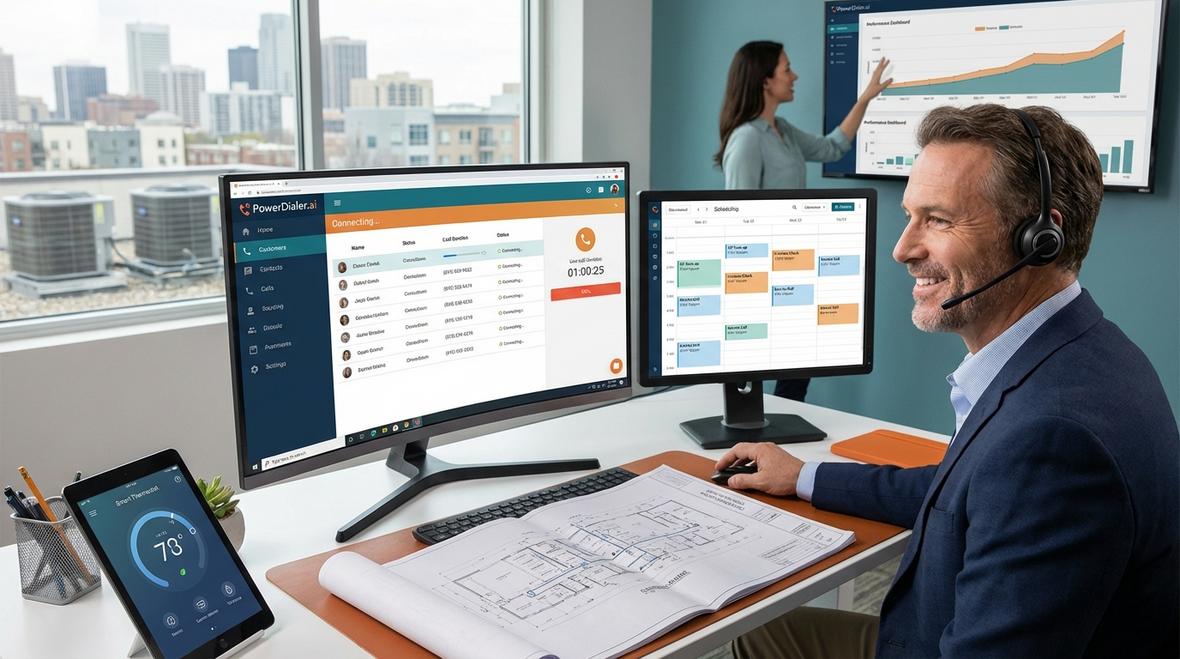
For HVAC service providers and contractors, time spent manually dialing leads is time lost. Whether you're reaching out to homeowners for seasonal maintenance, commercial property managers for system upgrades, or emergency service requests, a power dialer for HVAC can transform your sales and service operations. This comprehensive guide explores how HVAC businesses can leverage power dialers to increase connect rates, streamline service scheduling, and drive more revenue in 2026.
In an industry where timing is everything from emergency repairs during heatwaves to pre-season maintenance reminders the ability to reach more customers faster gives HVAC companies a significant competitive advantage. Let's dive into how power dialing technology can revolutionize your HVAC business operations.
What Is a Power Dialer for HVAC?
A power dialer for HVAC is an automated calling system designed specifically to help heating, ventilation, and air conditioning businesses contact customers efficiently. Unlike manual dialing, where technicians or service coordinators dial each number individually, a power dialer automatically queues and dials numbers from your contact list, connecting your team only when a live person answers.
For HVAC companies, this means your service coordinators and sales representatives can focus on conversations rather than dialing. The system automatically filters out busy signals, disconnected numbers, and voicemails, ensuring your team speaks with real decision-makers who need HVAC services.
How Power Dialers Work for HVAC Businesses
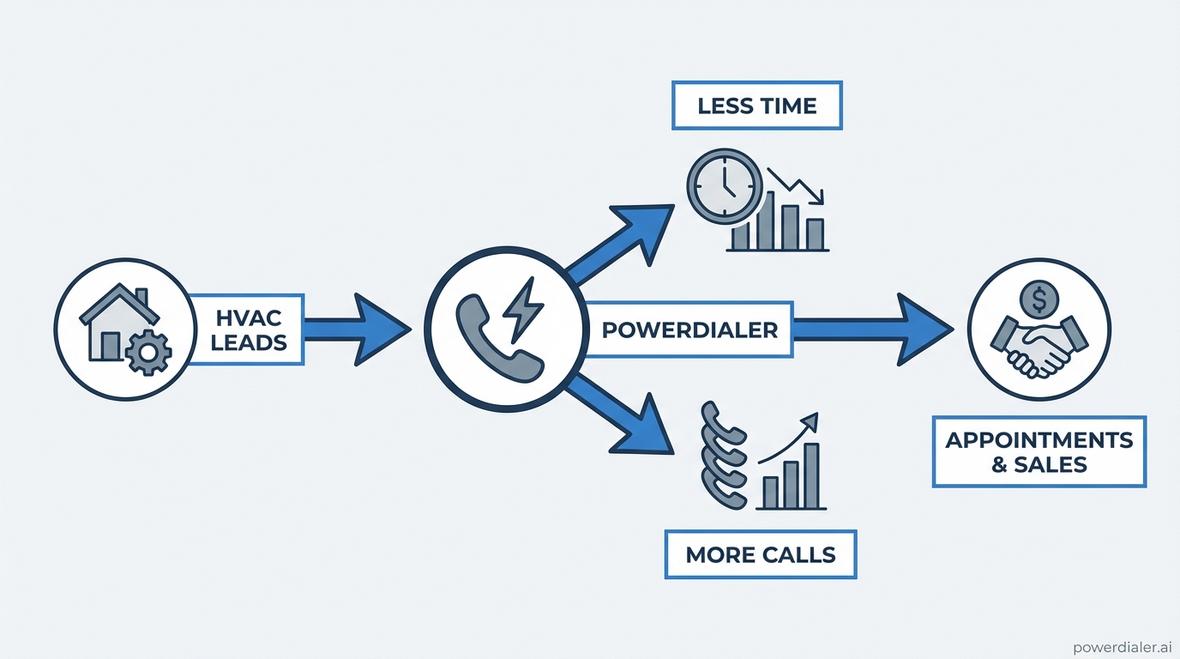
When implementing a power dialer in your HVAC operation, the system follows a streamlined process: it imports your customer database, automatically dials numbers sequentially, detects answering machines and voicemails, and connects answered calls directly to your available service representative. This automation eliminates the 40-60 seconds typically spent on manual dialing per call, allowing HVAC teams to reach 3-4 times more customers in the same timeframe.
Advanced power dialers also integrate with your CRM system, automatically logging call outcomes, scheduling follow-ups, and tracking which customers need seasonal maintenance reminders or system replacement consultations.
Key Benefits of Power Dialers for HVAC Companies
The implementation of power dialing technology offers transformative benefits specifically tailored to the HVAC industry's unique sales and service cycle.
Dramatically Increased Productivity
HVAC service coordinators using power dialers can contact 200-300 customers per day compared to 50-80 with manual dialing. This productivity boost is critical during peak seasons when appointment scheduling needs to happen quickly. According to research on HVAC optimization, efficiency improvements in HVAC operations can lead to significant performance gains, with some systems achieving 20% cooling savings through better management practices.
For HVAC businesses, this translates to more maintenance appointments scheduled, more estimates delivered, and ultimately more systems installed or serviced. The time savings compound across your entire team, enabling smaller crews to handle larger service territories.
Optimized Seasonal Campaign Management
HVAC businesses operate on predictable seasonal cycles spring AC tune-ups, summer emergency calls, fall furnace checks, and winter heating maintenance. A power dialer for HVAC enables you to execute targeted campaigns efficiently. You can segment your customer database by system age, last service date, or equipment type, then rapidly contact hundreds of customers with timely maintenance reminders.
For example, before the summer heat arrives, you can contact all customers whose AC units are 8+ years old with proactive replacement consultations, or reach everyone who skipped last year's maintenance with special offers. This strategic outreach prevents system failures and generates predictable revenue streams.
Enhanced Connect Rates with Local Presence
One of the most powerful features for HVAC companies is local presence dialing, which displays a local area code matching your customer's location. Research consistently shows that customers are 3-4 times more likely to answer calls from local numbers compared to unknown or toll-free numbers.
For HVAC businesses serving multiple cities or regions, local presence dialing is invaluable. When a Dallas homeowner sees a 214 area code or a Phoenix resident sees a 602 number, they're far more likely to answer thinking it might be a local service provider or neighbor, rather than a telemarketer.
Automated Voicemail Drop for Follow-Ups
With auto voicemail drop functionality, your HVAC team can leave pre-recorded messages instantly when calls go to voicemail. Instead of manually leaving the same 'It's time for your annual AC tune-up' message 50 times per day, the system drops a professionally recorded voicemail in one second and moves to the next call.
This feature is particularly valuable for maintenance reminders, follow-ups after estimates, and seasonal promotional campaigns. Your team maintains consistent messaging while maximizing talk time with customers who actually answer.
Specific HVAC Use Cases for Power Dialers
Let's examine how different types of HVAC businesses can leverage power dialing technology to address their unique operational challenges.
Residential HVAC Service Companies
Residential HVAC contractors face the challenge of maintaining relationships with hundreds or thousands of homeowners who need annual maintenance but often forget to schedule. A power dialer for HVAC enables systematic outreach programs: spring AC check-up campaigns targeting all customers who haven't had service in 12+ months, furnace tune-up reminders before winter, filter replacement reminders every 90 days, and system replacement consultations for equipment reaching end-of-life.
By implementing automated calling campaigns, residential HVAC companies can transform from reactive 'emergency-only' service providers to proactive maintenance partners, creating predictable revenue and reducing costly emergency calls.
Commercial HVAC Contractors
Commercial HVAC projects involve longer sales cycles, multiple decision-makers, and higher-value contracts. Power dialers help commercial contractors stay in consistent contact with facility managers, property owners, and building management companies. The technology enables regular touchpoints with prospects who requested quotes months ago, seasonal check-ins with existing commercial clients about system upgrades, and rapid response to RFP opportunities by quickly assembling project teams.
Commercial HVAC sales representatives using power dialers can maintain active conversations with 3-4 times more prospects simultaneously, ensuring opportunities don't slip through the cracks during lengthy decision processes.
HVAC Equipment Wholesalers and Distributors
Wholesalers and distributors serving HVAC contractors can use power dialers to maintain relationships with hundreds of contractor accounts. Use cases include notifying contractors about new product arrivals, promoting seasonal equipment specials, conducting outreach to inactive accounts who haven't ordered recently, and gathering feedback on product satisfaction and needs.
For distributors managing large contractor networks across multiple territories, power dialers with analytics and reporting capabilities provide visibility into which accounts are being contacted, response rates, and revenue opportunities by region.
Essential Power Dialer Features for HVAC Businesses
When selecting a power dialer for HVAC operations, certain features deliver outsized value for the industry's specific needs.
CRM and Service Management Integration
Your power dialer should integrate seamlessly with your existing HVAC business software. Whether you use ServiceTitan, Housecall Pro, Jobber, or another CRM platform, integration ensures call data, appointment scheduling, and customer history sync automatically. This eliminates double data entry and provides your team with complete customer context before each conversation.
When a customer answers, your service coordinator should immediately see their system type, last service date, warranty status, and previous interactions enabling personalized, informed conversations that build trust.
Call Recording and Quality Assurance
For training new service coordinators and ensuring consistent customer communication, call recording is invaluable. Review calls to identify best practices for handling objections about maintenance costs, listen to how top performers schedule appointments, and ensure your team communicates warranty terms and service agreements accurately.
Call recordings also provide protection in case of customer disputes about quoted prices or service terms, giving you a complete record of what was communicated.
Intelligent Call Routing
Different customers have different needs, and your power dialer should route calls appropriately. Emergency service requests should connect to dispatchers immediately, maintenance inquiries can go to service coordinators, and high-value system replacement opportunities should route to experienced sales representatives.
Advanced systems like PowerDialer.ai can route calls based on customer value, system type, or previous purchase history, ensuring the right team member handles each conversation.
Advanced Voicemail Detection
Not all voicemail detection is created equal. The best power dialers use AI-powered voicemail detection that accurately distinguishes between answering machines, voicemail systems, and actual humans even when there's background noise or unusual greeting messages.
Poor voicemail detection wastes time by connecting representatives to answering machines or, worse, hanging up on real customers. Accurate detection is critical for HVAC businesses where every customer conversation represents potential revenue.
Implementing a Power Dialer in Your HVAC Business
Successfully deploying power dialing technology in your HVAC operation requires thoughtful planning and execution.
Customer Database Preparation
Before launching your power dialer, clean and segment your customer database. Remove disconnected numbers, update contact information from recent service calls, segment customers by system age and last service date, categorize by equipment type (residential AC, commercial chillers, furnaces, heat pumps), and identify high-value opportunities (systems 10+ years old, customers who declined quotes, lapsed maintenance agreements).
Quality data is the foundation of effective power dialing. A clean database ensures your team spends time talking to reachable customers with genuine HVAC needs.
Developing Effective Call Scripts
Create call scripts tailored to different HVAC scenarios. Your maintenance reminder script should emphasize system longevity and energy savings, emergency service scripts need to convey urgency and availability, system replacement consultations should focus on efficiency improvements and rebate opportunities, and follow-up scripts after estimates should address common objections.
Scripts should sound natural, not robotic. Train your team to use them as frameworks that guide conversations while allowing personalization based on each customer's specific situation. You might also explore script optimization tools to refine your messaging.
Training Your Service Coordination Team
Invest in comprehensive training before your team starts using the power dialer. Cover the technical operation of the dialing system, best practices for handling increased call volume, objection handling specific to HVAC services, appointment setting and calendar management, and how to recognize upsell opportunities during routine calls.
Remember that power dialers increase call volume significantly your team will have more customer conversations per day, which can be mentally demanding. Build in appropriate breaks and set realistic daily targets.
Regulatory Compliance and Best Practices
HVAC businesses must comply with telecommunications regulations when using power dialers. Maintain an internal 'Do Not Call' list of customers who request no contact, respect calling hour restrictions (typically 8 AM to 9 PM local time), obtain consent before adding customers to automated calling campaigns, and honor opt-out requests immediately.
For more details on call compliance, review guidelines on TCPA compliance to ensure your HVAC business stays within legal boundaries while maximizing outreach effectiveness.
Measuring Power Dialer Success in HVAC Operations
Track these key metrics to evaluate your power dialer's impact on your HVAC business performance.
Critical KPIs for HVAC Power Dialing
Contact Rate: The percentage of calls that reach a live person. HVAC businesses should target 30-40% contact rates with properly cleaned databases and local presence dialing. Appointment Set Rate: The percentage of conversations that result in scheduled service appointments. Top HVAC service coordinators achieve 25-35% appointment rates on maintenance reminder campaigns. Cost Per Appointment: Calculate total calling costs (dialer subscription, staff time) divided by appointments scheduled. Power dialers typically reduce cost per appointment by 50-70% compared to manual dialing. Revenue Per Hour of Calling: Track the revenue generated from appointments scheduled during power dialing sessions. This reveals which campaigns and call scripts deliver the highest ROI.
By monitoring these metrics through your analytics dashboard, you can continuously optimize your calling strategies and identify which customer segments respond best to outreach.
Calculating ROI for Your HVAC Power Dialer
Most HVAC businesses see positive ROI from power dialers within 60-90 days. Calculate your potential ROI by comparing your current manual dialing results (calls per day, appointments scheduled, conversion rate to completed jobs) with projected power dialer performance (3-4x more calls per day, higher contact rates with local presence, increased appointment setting from more conversations). Factor in the monthly subscription cost and the average value of maintenance appointments and system installations your calling generates.
For example, if your power dialer enables one additional system installation per month at $5,000 average value, and your subscription costs $200/month, your ROI is substantial. You can explore pricing options to find a plan that fits your HVAC business size and calling volume.
Advanced Power Dialing Strategies for HVAC Growth
Once you've mastered basic power dialing, implement these advanced strategies to maximize results.
Predictive Maintenance Campaigns
Use your service history data to identify customers whose systems are approaching failure based on age and service patterns. Create targeted calling campaigns offering proactive system evaluations before breakdowns occur. This positions your HVAC company as a trusted advisor rather than just a service provider, and these proactive conversations convert to system replacements at 2-3 times the rate of cold outreach.
Seasonal Load Optimization
HVAC businesses experience extreme seasonal demand fluctuations. Power dialers help smooth revenue by using slow seasons to schedule future maintenance appointments, contacting customers early about seasonal equipment needs, and building a pre-scheduled service pipeline before peak seasons hit.
By filling your calendar 2-3 weeks in advance through systematic calling campaigns, you stabilize technician utilization and revenue throughout the year.
Geographic Territory Expansion
Power dialers with local presence dialing make geographic expansion much easier. When you enter a new market, you can display local area codes even if your office is elsewhere, building trust with new customers from day one. This allows HVAC companies to test new territories without immediately establishing physical locations, then expand based on response rates and appointment conversion data.
Choosing the Right Power Dialer Platform for Your HVAC Business
Not all power dialers are created equal. Here's what HVAC businesses should prioritize when selecting a platform.
Industry-Specific Features
Look for power dialers built with HVAC businesses in mind, offering integration with major HVAC service management software, appointment scheduling functionality, and support for seasonal campaign management. Generic sales dialers may lack the specific workflows HVAC companies need to succeed.
Scalability and Growth Capacity
Choose a platform that grows with your business. Whether you're a two-person residential HVAC shop or a 50-technician commercial contractor, your power dialer should accommodate your current size while supporting expansion. Cloud-based solutions offer the most flexibility, allowing you to add users and calling capacity as your business grows without hardware investments.
Support and Training Resources
Evaluate the vendor's customer support quality and training resources. Implementation support to get your team up and running quickly, ongoing technical support for troubleshooting, industry best practices and optimization guidance, and regular platform updates and feature improvements should all be part of your vendor relationship.
A power dialer is only as valuable as your team's ability to use it effectively strong vendor support accelerates your time to results and maximizes your investment return.
The Future of Power Dialing in the HVAC Industry
As technology continues evolving, power dialers are becoming increasingly sophisticated with features specifically valuable to HVAC businesses.
AI-Powered Conversation Intelligence
Next-generation power dialers incorporate AI sales coaching that analyzes customer conversations in real-time, suggesting optimal responses to objections, identifying upsell opportunities during maintenance calls, and predicting which customers are most likely to schedule appointments based on conversation tone and content.
This AI assistance helps newer HVAC service coordinators perform at the level of experienced veterans, accelerating training and improving overall team performance.
Predictive Analytics for Equipment Failure
By analyzing patterns across thousands of customer interactions and service records, AI-powered systems can predict which customers' HVAC systems are most likely to fail soon. This enables highly targeted outreach campaigns offering proactive system evaluations and replacements before emergency breakdowns occur creating win-win scenarios where customers avoid discomfort and your business secures planned installations rather than reactive emergency calls.
Omnichannel Communication Integration
Modern power dialers are expanding beyond voice calls to incorporate SMS follow-ups after calls, email campaign coordination with calling efforts, and integration with customer service portals. This omnichannel approach ensures consistent touchpoints across all communication methods, meeting customers where they prefer to engage while maintaining centralized records of all interactions.
Frequently Asked Questions About Power Dialers for HVAC
Is it legal to use a power dialer for HVAC customer outreach?
Yes, power dialers are legal when used in compliance with telecommunications regulations. HVAC businesses can call existing customers for service reminders and maintenance without restrictions. For outbound sales to new prospects, maintain a 'Do Not Call' list, respect calling hour restrictions, and obtain consent where required. Review cold calling laws to ensure your campaigns remain compliant.
How much does a power dialer cost for an HVAC business?
Power dialer pricing typically ranges from $50-$150 per user per month, depending on features and calling volume. Most HVAC businesses with 2-5 service coordinators invest $200-$500 monthly. This investment typically pays for itself within weeks through increased appointment scheduling and improved technician utilization. Many vendors offer free trials, allowing you to test the system before committing.
Can power dialers integrate with my existing HVAC business software?
Most modern power dialers offer integrations with popular HVAC service management platforms including ServiceTitan, Housecall Pro, Jobber, FieldEdge, and others. API connections sync customer data, call outcomes, and appointments automatically between systems. Check with your power dialer vendor about specific integrations for your software stack.
How long does it take to train HVAC staff on power dialers?
Most HVAC service coordinators become proficient with power dialers within 1-2 days of training. The user interfaces are designed for simplicity the primary learning curve involves mastering increased call volume and refining conversation techniques rather than technical system operation. Ongoing coaching and script optimization typically continue for 2-4 weeks as your team develops best practices.
What's the difference between power dialers and predictive dialers?
Power dialers call one number at a time per agent, connecting them only when someone answers. Predictive dialers call multiple numbers simultaneously based on algorithms predicting agent availability. For HVAC businesses, power dialers are typically more appropriate because they ensure no customer calls are dropped and allow for more personalized, consultative conversations. Predictive dialers work better for high-volume transactional outreach, while HVAC sales and service require relationship-building conversations.
Conclusion
A power dialer for HVAC is no longer a luxury it's a competitive necessity for heating, ventilation, and air conditioning businesses looking to maximize customer contact, streamline service scheduling, and grow revenue. By automating the repetitive task of manual dialing, your HVAC team can focus on what they do best: building relationships with customers and delivering exceptional service experiences. Whether you run a residential maintenance company, commercial contractor operation, or HVAC equipment distributorship, power dialing technology delivers measurable ROI through increased productivity, higher connect rates, and more scheduled appointments. As you evaluate power dialer solutions, prioritize platforms with HVAC-specific features, robust integrations, and scalability to support your growth. The HVAC businesses that embrace this technology today will dominate their markets tomorrow, while competitors continue wasting time on manual dialing. Ready to transform your HVAC outreach? Explore how PowerDialer.ai can help your business connect with more customers and grow your service and installation revenue in 2026 and beyond.