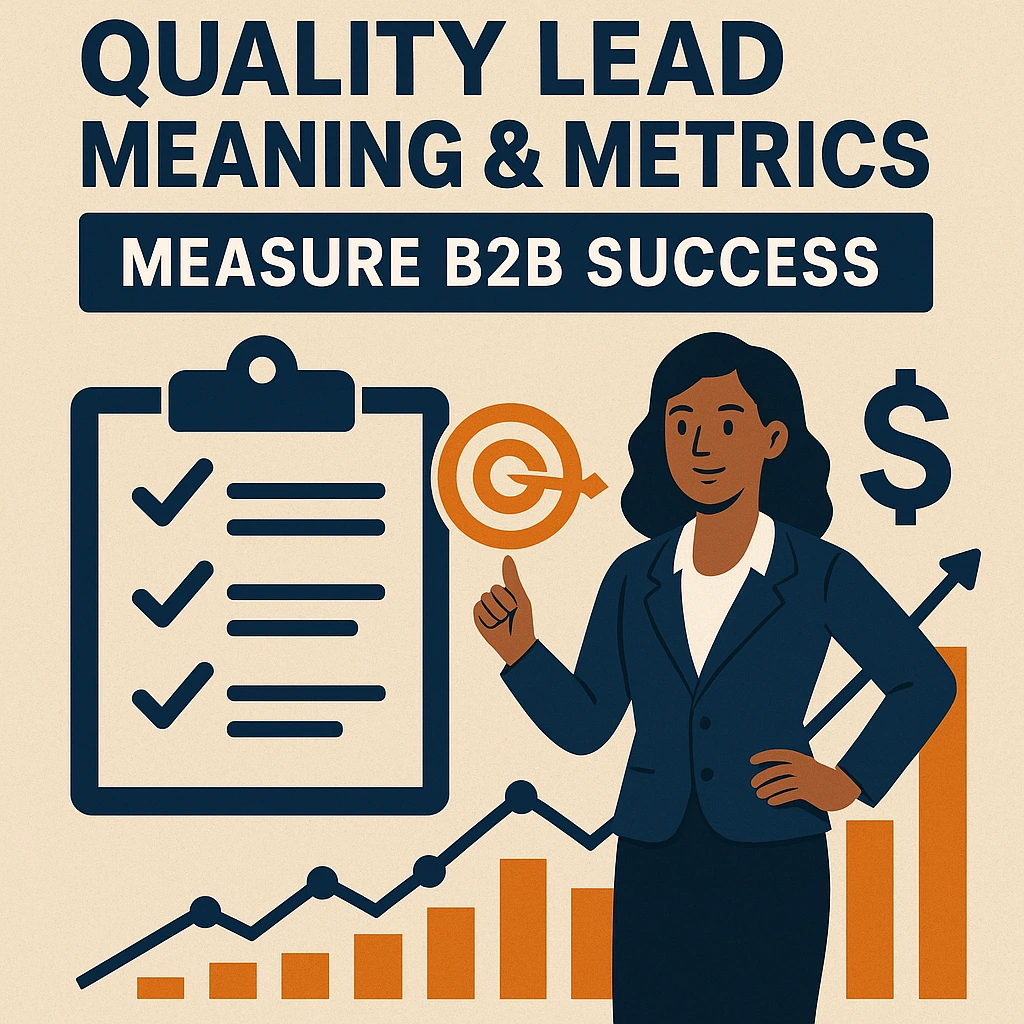
What Quality Lead means in B2B marketing can totally change how your sales pipeline performs. A quality lead isn't just a prospect; it's a person who fits your ideal customer profile and clearly shows buying intent, with real conversion potential.
Most businesses are focused on quantity: more leads, more forms, more calls. That usually means wasted effort, because the real success lies in measuring lead quality and buyer behavior, then optimizing your strategy around the leads that convert.
The following will explain in detail what a quality lead really is, how to measure it using reliable lead quality metrics, and the steps to create a consistent data-driven lead-scoring system that aligns marketing and sales teams.
What is a Quality Lead?
A qualified lead is a possible customer whose profile is in line with that of your target audience and who still shows interest in your product or service; the readiness to act is present. For B2B lead qualification, this includes:
- Fit: The lead fits your ICP in company size, industry, job title, and location.
- Intent: The lead has demonstrated buyer intent through actions like visiting pricing pages, downloading whitepapers, or requesting demos.
- Readiness: The lead is at the right stage of the sales funnel and open to sales conversations.
In other words, a quality lead should fit into the BANT framework: Budget, Authority, Need, and Timeline. They are leads who can and want to be paying customers, but aren't just passive contacts.
Quality vs. Quantity in Lead Generation
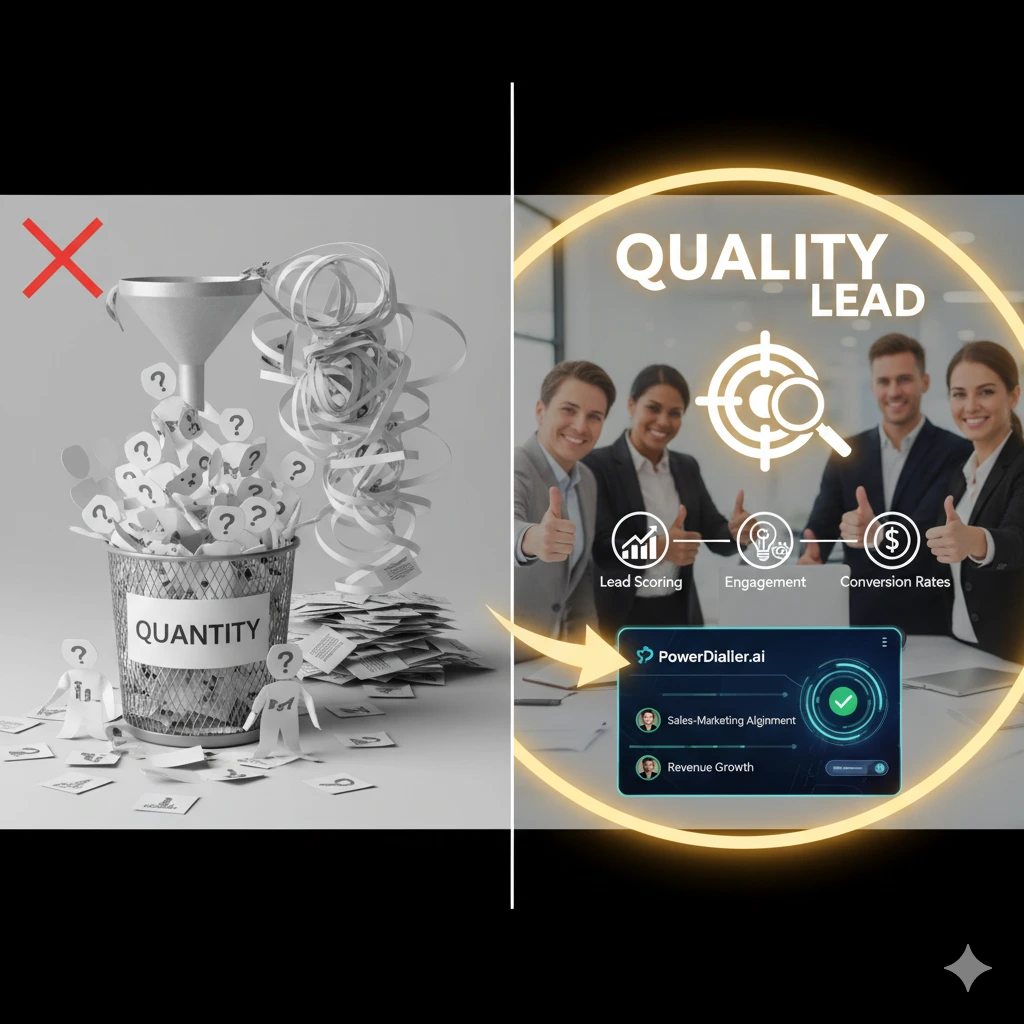
It is easy to believe that the generation of thousands of leads means growth, but that is a deception. A company swamped with low-quality leads will be spending more time filtering instead of selling.
Quality leads mean better results and efficiency. Here's why fewer, high-quality leads are superior to a large volume of unqualified ones:
Higher lead conversion rate
- Shorter Sales Cycle
- Improved customer relationships
- Stronger ROI
Quality leads are the ones that move faster through the nurturing process and usually bring in more predictable revenue. Your team will waste less time chasing uninterested contacts and more time closing deals.
Why Measuring Lead Quality Matters
Sales and ROI Impact
Lead quality offers insight into which prospects are most worth pursuing. By having the sales and marketing teams adhere to one lead-scoring system, they enable themselves to better focus on those that have the highest potential.
Precise lead quality metrics directly enhance:
Sales Funnel Efficiency
- Customer Acquisition Cost - CAC
- Return on investment is involved
- Companies that constantly measure and focus on the quality of leads show a rise in conversion rates of as high as 50%.
Lead Qualification: Common Mistakes
So many companies make the mistake of only measuring engagement-like email opens or ad clicks; while useful, these don't necessarily indicate buying intent.
Other common mistakes include:
- Not acting upon the intent signals of demo requests or trial sign-ups
- Overlooking demographic information, such as job role or company size
- Poor alignment of MQL and SQL definitions among teams
Key Metrics to Measure Lead Quality
1. Lead Scoring System
A lead scoring system defines and assigns a value to every single lead, based on predefined criteria. The higher the score, the closer a lead is likely to get to conversion.
Scoring can be based on:
- Behavioral activity: Website visits, downloads, webinar attendance
- Firmographic data: Industry or business type
Example:
- +10 points for downloading an eBook
- +15 points for visiting pricing pages
- +20 points when demo booked
- This data-driven approach ensures that your sales team focuses on the leads that matter.
2. Lead-to-Customer Conversion Rate
Quite simply, your conversion rate will tell you about how well your leads are converting to customers. A high rate means your marketing team is bringing in perfect-fit leads for your ICP.
3. Customer Lifetime Value - CLV
CLV quantifies how much revenue a customer would provide throughout their lifetime. Quality leads would generally last longer, buy more, and even refer others, proving their real business value in the process.
4. Engagement & Intent Data
Email opens, downloads, demo requests, and other such activities are indicative of conversion potential. The leads that show deep engagement with your content are more likely to move down the funnel.
5. Source and Channel Performance
They are not all created equal: Not all lead sources are equal. Keep track of which channels your quality leads come from-organic search, LinkedIn Ads, email campaigns, or referrals. This will help with optimizations needed in budget placement and strategy focus.
How to Build a Lead Scoring Model
Step 1: Define Your ICP
Use CRM data to identify patterns among your best customers: company size, industry, job title, etc.
Step 2: Set Scoring Criteria (Behavioral + Demographic)
Combine quantitative with qualitative information. Be able to attach values to actions, such as webinars attended, and characteristics, like relevant industry.
Step 3: Align the marketing and sales teams
This will ensure good alignment within both teams on when a lead qualifies, whether MQL or SQL. That helps avoid misunderstandings at handoff and thus increases conversion rates.
Step 4: Apply Automation Tools, CR, M, and AI Scoring
Tools like HubSpot, Salesforce, and PowerDialer.ai have made predictive lead scoring easier by incorporating AI to analyze engagement patterns and automatically score leads in real time.
Set up a demo with PowerDialer.ai and understand how AI-based scoring will help improve the accuracy of sales by saving hours of manual effort.
Best Practices to Improve Lead Quality
Align the Content with Buyer Journey: Create stage-specific content, such as awareness-stage blogs, consideration-stage case studies, and decision-stage demos.
- Employ targeted outreach and segmentation: Segment audiences based on firmographics, needs, and engagement.
- Periodic Review and Revision of the Scoring Models: Update quarterly based on market fluctuations.
Tools & Platforms to Track Lead Quality
- CRM Systems: Automation tools in marketing, such as Marketo or Pardot, are great for running efficient nurturing campaigns.
- AI-powered Lead Scoring Platform: PowerDialer.ai provides predictive insights through real-time scoring for quick identification of conversion-ready leads.
- The responsibility of managing all customer data and touchpoints lies with systems like HubSpot, Salesforce, and Zoho.
Click here to schedule a demo with PowerDialer.ai and learn about automation that makes tracking lead quality simpler and more effective.
Common Challenges in Measuring Lead Quality
- Inconsistent Data Tracking: The absence of CRM data leads to improper scoring.
- Poor Alignment Between Sales & Marketing: Misaligned definitions of MQL/SQL are the reason for lead leakage.
- Overemphasizing Vanity Metrics: Likes and views don't equal intent. Now, it's time to shift the focus to metrics such as demo bookings and visits to the pricing page.
- Additional Tips to Better Qualify Leads: Apply the BANT framework early: Budget, Authority, Need, and Timeline. Employ AI-driven predictive lead scoring. Nurture leads them through till they can trust you. Bottlenecks in the sales funnels should be monitored. Personalize your content and messages to increase conversions.
Conclusion
Understanding what a quality lead actually is-perhaps most importantly-means more than the definition; it's about how it drives real business outcomes. Lead quality metrics, refining your lead-scoring system, and aligning your teams are ways your business can focus on leads with real revenue potential. With quality leads, the sales cycles are shorter, relationships stronger, and your pipeline more predictable. Whether you're a startup or scaling enterprise, measuring and improving lead quality is the key to ensuring your long-term success.
PowerDialer.ai is ready to help automate and optimize every step in the process of qualifying leads. Book a free demo with PowerDialer.ai today and focus on leads that truly matter.
FAQs
Q1. What is a quality lead in B2B marketing?
Quality leads fit your customer profile, show buying intent, and possess high conversion potential.
Q2. What are the top metrics of lead quality?
Lead scoring, conversion rate, CLV, and engagement intent.
Q3. How do you improve lead quality over time?
Refine targeting, nurture leads, and utilize automation tools like PowerDialer.ai.
Q4. What’s the difference between MQL and SQL?
Whereas an MQL is marketing-engaged, an SQL is verified by sales as ready to buy.
Q5. Which of the following best measures lead quality?
CRMs like HubSpot or Salesforce are used, along with AI-driven insights from PowerDialer.ai.