Call recording compliance is much more than a legal checkbox; it's a business imperative. As companies increasingly expand their reach globally and handle customer calls across borders, knowing how to record and store those conversations legally is critical. The goal isn't just to follow the call recording laws but also to build customer trust and protect sensitive information.
From customer support to call recording for sales teams, each company that records calls needs to know the line separating lawful monitoring from privacy violations. Only by following global call recording regulations and developing good practices in data protection can legal risks be lowered while improving call quality and team performance.
This guide covers everything related to Call Recording Compliance, from laws and best practices to how tools like PowerDialer.ai make it easy to be compliant.
What is call recording compliance?
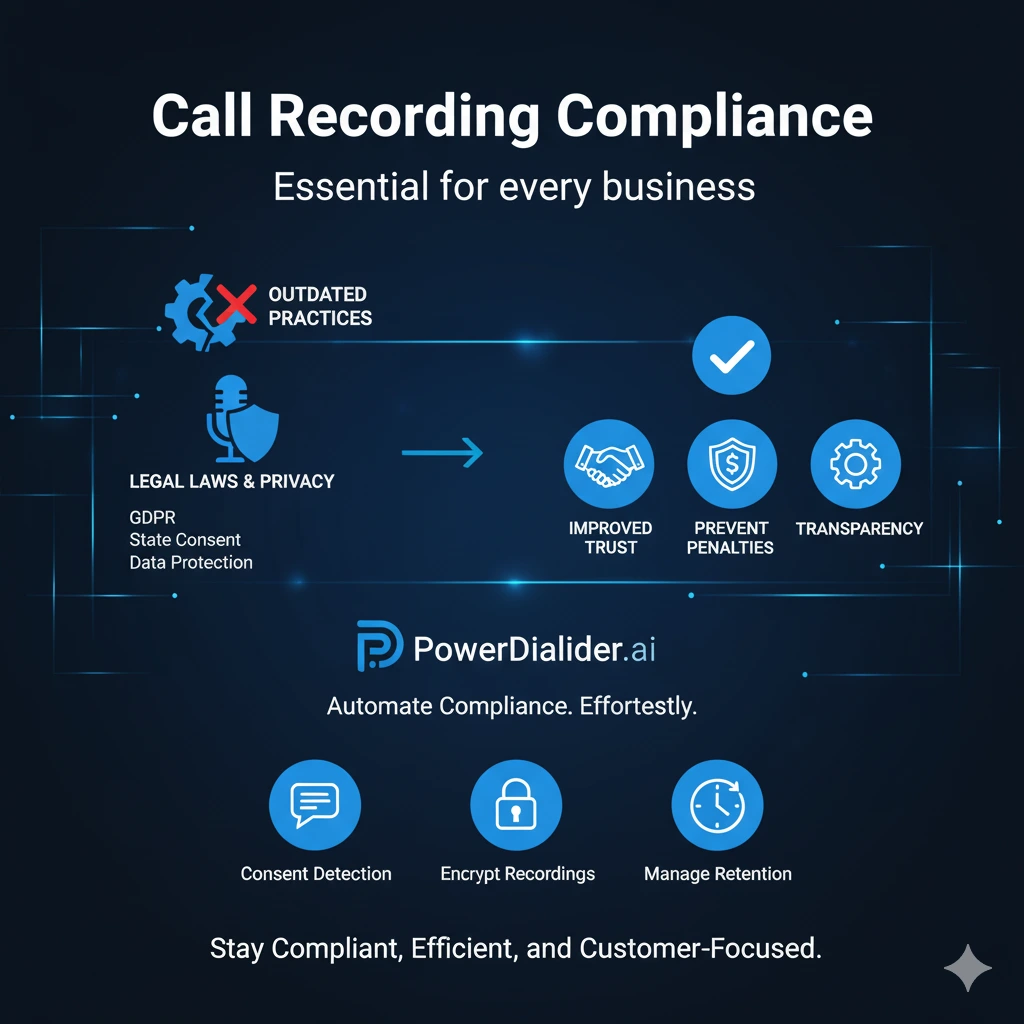
Call Recording Compliance is all about observing national and international legal requirements regarding audio recording, which specify the way in which businesses are allowed to record, store, and use customer calls. It involves acquiring consent for recording, securing stored data, and observing privacy frameworks like GDPR or PIPEDA.
Enterprises should support formal procedures to protect call recording data, provide encryption for it, and establish retention policies. These standards form part of the broader data privacy laws that are meant to protect customer information and enhance transparency.
Why Compliance Matters for Businesses
Non-compliance could imply lawsuits, heavy fines, and loss of consumer confidence. On the flip side, compliance serves to ensure trust in a business's dealings, thereby unlocking recorded calls for quality assurance, agent training, and dispute resolution.
Not only do strong business call recording policies prevent violations, but they also help in further developing your global call compliance strategy, keeping your brand trusted and transparent.
Global Call Recording Laws Explained
One-Party vs Two-Party Consent Laws
- One of the biggest differences in compliance is one-party consent versus two-party consent laws.
- One-party consent states allow recording if one participant knows it; examples are New York or Texas.
- The consent of all parties on a call is necessary in two-party consent states, such as California, Florida, or Pennsylvania.
- Other countries like India and Canada also follow consent-based systems. The EU has strict privacy protections in place under GDPR.
Call Recording Laws by Country
United States - Federal and State Consent Laws
Federal law requires one-party consent, although a few states require two-party consent. Always check the local state laws before recording any call.
United Kingdom - GDPR and Data Protection Act 2018
Recording calls in the UK requires a lawful reason under GDPR. Companies have to inform participants and store data securely.
European Union (GDPR)-Lawful Basis, Consent, and Data Subject Rights
GDPR requires obtaining clear consent or having a legitimate business purpose when recording. It also provides rights to customers for access or deletion of recordings.
Australia - Telecommunications (Interception and Access) Act
Recording without consent is considered illegal. Businesses must inform participants and receive consent regarding the recording.
Canada - PIPEDA Compliance and Consent Rules
PIPEDA requires that businesses provide the purpose of call recording and obtain consent from their customers. Customers have the right to refuse.
India – IT Act and Call Center Recording Guidelines
The Indian IT Act allows call recording in a business context, provided participants are warned of the same in advance.
How GDPR Affects Call Recording and Data Privacy
Legal Basis for Call Recording
According to GDPR, a business can record calls only under certain circumstances based on legitimate reasons for which:
- Contractual necessity
- Legal obligation
- Legitimate business interest
- Customer consent
Every call shall have a predetermined purpose that aligns with privacy regarding call recording.
Data Retention and Security Requirements
GDPR requires organizations to securely store recordings and retain them no longer than is necessary. Strong encryption, password protection, and access restriction should be part of every checklist.
Best Practices for Call Recording Compliance
Obtain Clear and Documented Consent
Always let the customers know that calls are recorded. Add simple notices like, "This call may be recorded for training or quality purposes." Make sure customer call recording rules are followed consistently within your team.
Use Secure Call Recording Software
Legal call recording software like PowerDialer.ai ensures observance of encryption, consent tracking, and data storage laws. The platform automates compliance by detecting consent regions and handling secure data management.
Book a demo with PowerDialer.ai to see how compliance automation simplifies your business workflow.
Train Your Sales and Support Teams
Your staff should understand call monitoring compliance policies. Training helps avoid accidental violations and builds a compliance-first culture.
Regularly Audit and Review Policies
Laws are subject to change, so periodically revisit your business call recording policy. Perform internal audits and make any necessary adjustments with scripting, software, and retention policies.
Common Mistakes Businesses Make with Call Recording
- Not informing participants about recordings
- Storing recordings without encryption
- Disregarding local or country-specific laws
- Failure to establish call data retention laws or deletion procedures
How PowerDialer.ai Automatically Ensures Compliance
Compliance is embedded in every feature at PowerDialer.ai. For instance, our system:
- Auto-detects consent regions to avoid legal risks
- Offers flexible call monitoring options for managers
- Encrypts recordings and limits access
- Supports secure delete requests for compliance with worldwide privacy laws.
Equipped with these safeguards, businesses can confidently record, review, and analyze calls with complete call recording compliance.
Stay compliant and confident - book your demo at PowerDialer.ai today!
Conclusion
Also, it is not just about legal conformance; it is a pledge of transparency and respect for privacy. Identifying the right call recording best practices will grant your firm increased customer trust, reduce risk, and enhance the quality of communication in general.
Businesses that adopt smart tools like PowerDialer.ai will gain both legal protection and operational efficiency-a true win-win.
FAQs:
Q1: Is it legal to record customer calls without consent?
A: It depends on your country or state. Always check consent laws before recording.
Q2: How does my business stay compliant under GDPR?
A: Always have a lawful basis for recording and inform participants in advance.
Q3: How long can call recordings be stored?
A: Only for as long as needed for business or legal reasons. Define clear retention policies.
Q4: What happens if my company violates the call recording laws?
A: The consequences can include fines, lawsuits, and lost consumer trust.
Q5: What is the best software for compliant call recording?
A: AI-powered solutions, such as PowerDialer.ai, bring complete safety through encryption, regional compliance, and policy customization.