
A sales call preparation checklist is the foundation of every effective outreach strategy. It equips sales development reps (SDRs) with structure, clarity, and confidence before every call. Preparation separates top-performing SDRs from those still finding their footing.
For new SDRs, the early weeks are all about mastering the process, learning how to research, personalize, and handle objections effectively. This guide walks you through every step to ensure each call starts with purpose and ends with progress.
Why Sales Call Preparation Matters for SDRs
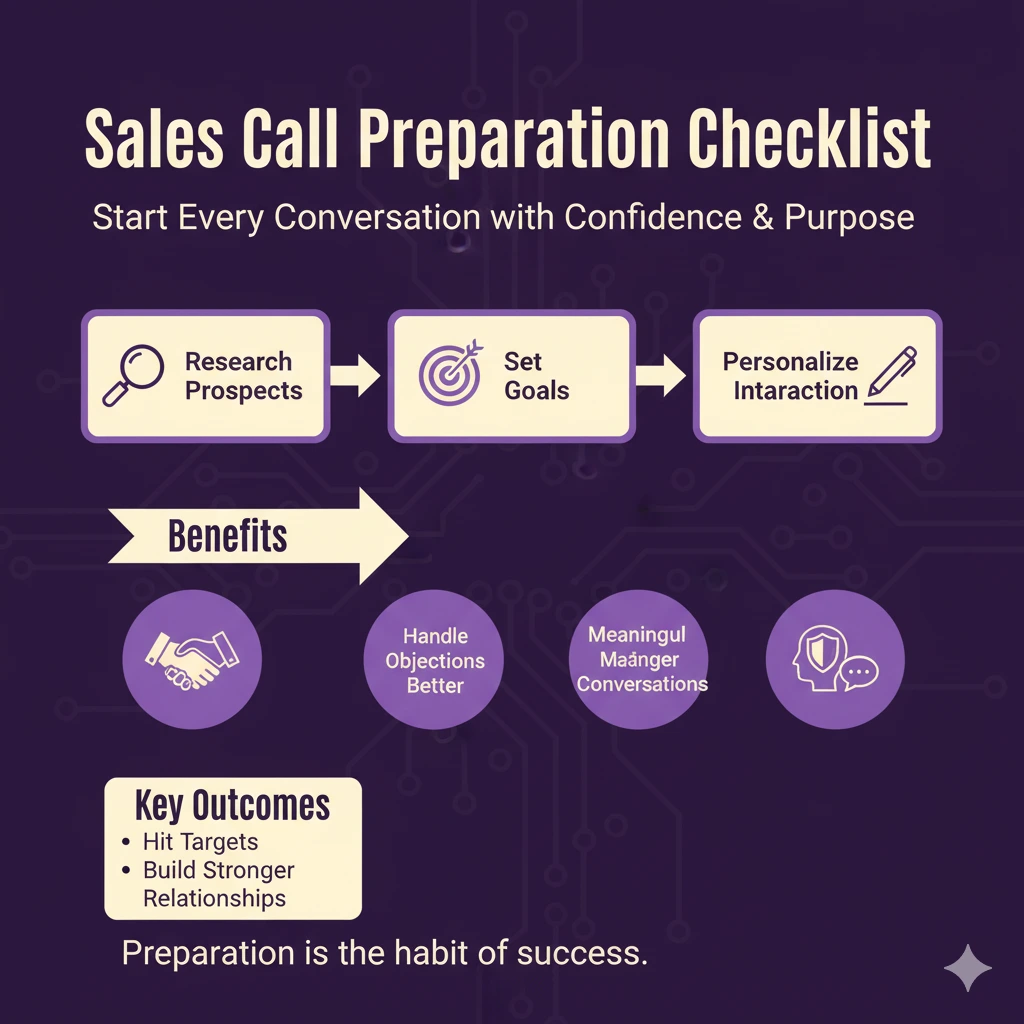
Every successful sales conversation starts with preparation. A structured sales call preparation checklist helps SDRs build confidence, reduce anxiety, and lead with insight rather than guesswork.
In today’s competitive environment, buyers are more informed than ever. They expect SDRs to know their business, their pain points, and what solutions fit. According to multiple B2B studies, well-prepared SDRs see up to 40% higher connect and conversion rates compared to those who rely on cold scripts or generic openings.
Confidence and preparation go hand in hand. A confident SDR enters a call with purpose, while an unprepared one risks sounding uncertain or irrelevant. The difference often comes down to one thing: how well they prepare.
Step-by-Step Sales Call Preparation Checklist
Step 1 – Research Your Prospect Thoroughly
Effective prospect research sets the tone for meaningful conversations. Start by using tools like LinkedIn, company websites, and your CRM to uncover key details, the prospect’s role, company size, industry challenges, and recent achievements.
Use a call research checklist to organize what you find:
- Company overview and target market
- Key decision-maker details
- The relevant product or service they offer
- Recent funding, hiring, or expansion news
This step transforms a cold call into a personalized, value-driven conversation. Remember: relevance builds trust faster than any pitch.
Step 2 – Define the Call Objective
Before dialing, know exactly why you’re calling. The best SDRs treat sales call planning like strategy sessions, not guesswork.
Decide what success looks like:
- Booking a product demo
- Qualifying the lead
- Learning about their decision timeline
- Scheduling a follow-up meeting
Keeping one clear objective per call helps you stay focused. Avoid trying to do everything in one conversation.
Step 3 – Personalize Your Opening
Personalization is the difference between being ignored and being heard. Start your call by referencing something specific about the prospect’s business.
Example: “I noticed your team recently expanded into new markets. How is that transition going so far?”
This shows you’ve done your homework. It’s not about flattery, it’s about relevance. Personalization immediately establishes credibility and earns you the right to continue the conversation.
Step 4 – Prepare Your Script and Key Talking Points
Great SDRs use call script preparation as a guide, not a crutch. Write down bullet points to structure your call:
- Key discovery questions
- Unique value proposition
- Proof points or success metrics
- Smooth transitions between topics
Your goal isn’t to read word-for-word but to stay organized and natural. The most effective scripts feel conversational and flexible.
Pro Tip: Rehearse your transitions and open-ended questions. It builds flow and reduces filler words like “uh” or “um.”
Step 5 – Anticipate Common Objections
Handling objections is part of every SDR’s job. Anticipate what you’ll hear most often and practice responses that tie back to benefits, not features.
Common objections include:
- “We already have a vendor.”
- “We don’t have a budget right now.”
- “Send me an email.”
Instead of defensive answers, use empathy and curiosity:
“That makes sense, many of our current customers said the same before realizing how much time they saved with our solution.”
Strong objection handling turns hesitation into opportunity. It also builds your credibility as a trusted advisor rather than a pushy salesperson.
Step 6 – Check Your Tech and Tools
Technical issues can ruin a great call. Before dialing, ensure your headset, CRM, and dialer are functioning perfectly.
Test your call platform, internet stability, and data visibility. Nothing looks worse than fumbling through screens mid-call.
Modern SDRs rely on tools like PowerDialer.ai to streamline outreach, track analytics, and boost connect rates. With built-in insights, you can monitor call outcomes, talk times, and conversion ratios, all from one dashboard.
Book a free demo with PowerDialer.ai to optimize your SDR workflow and simplify daily call operations.
Step 7 – Practice Active Listening
Strong SDRs talk less and listen more. Active listening is a skill, not a habit. Pay attention to what prospects say and how they say it.
Repeat or paraphrase their key points to show understanding:
“So what I’m hearing is that scheduling challenges are affecting your response times, is that right?”
Taking notes during calls shows professionalism and helps you tailor follow-ups effectively. Listening builds trust, and trust opens doors.
Step 8 – Prepare Follow-Up Templates
Follow-ups win deals. Have your templates ready for every scenario, whether it’s “no answer,” “callback,” or “next steps.”
Use automation within your CRM to schedule timely reminders and send personalized emails.
For example:
“Thanks for your time today, [Name]. As discussed, here’s a quick recap and next steps…”
Automation saves time while maintaining a personal touch. This step strengthens your reputation and keeps conversations progressing naturally.
SDR Mindset Before Every Sales Call
Stay Confident, Not Robotic
Preparation builds calm. Take a minute before each call to breathe, review notes, and visualize success. Confidence sounds natural; over-rehearsal sounds stiff.
Manage Time and Focus
Batch your outreach during peak hours and block time for high-intent leads. Avoid multitasking. A focused SDR connects more, books more, and performs better.
Review Previous Interactions
Before every call, revisit your CRM. Understand what’s already been discussed. Referencing a prior email or demo adds continuity and professionalism.
Common Mistakes New SDRs Make During Sales Calls
Lack of Research
Calling without understanding your prospect’s background leads to poor engagement. Preparation helps you sound relevant, not random.
Talking Too Much
Successful B2B sales call tips suggest that reps should talk only 40% of the time and listen 60%. Ask strategic questions instead of dominating the conversation.
Ignoring Next Steps
Never end a call without a clear CTA, whether it’s scheduling a demo, sending a follow-up, or confirming another meeting. Unclear endings lead to lost opportunities.
Tools and Templates to Simplify Call Preparation
SDR Tools You Should Be Using
Modern SDRs use technology to stay efficient:
- CRM Platforms: HubSpot or Salesforce for lead tracking and call notes.
- PowerDialer.ai: For performance analytics, call automation, and integrated tracking.
- Gong or OpenMic AI: For coaching, call reviews, and improvement insights.
Using the right tools enhances sales readiness and consistency across your team.
Try PowerDialer.ai to boost connect rates and automate call reporting.
Sales Call Preparation Templates
Use these templates to stay organized:
- Pre-Call Checklist: Confirm goal, prospect data, and tool setup.
- Call Research Template: Record company info, roles, and insights.
- Objection Handling Sheet: Prepare confident responses to common pushbacks.
Templates ensure structure, and structure drives results.
How Managers Can Support SDR Call Preparation
Great teams don’t just happen; they’re built through consistent coaching.
Managers play a key role in reinforcing preparation habits:
- Conduct weekly mock calls or AI-assisted roleplays.
- Review real call recordings for feedback and tone improvement.
- Use analytics dashboards to identify trends and training needs.
Supportive leadership turns preparation into a team culture, not just a task.
Conclusion – Build Habits, Not Scripts
Preparation isn’t about memorization; it’s about confidence, knowledge, and adaptability. A detailed sales call preparation checklist gives SDRs the tools to lead smarter conversations and build lasting relationships.
When SDRs research effectively, listen actively, and follow up consistently, success becomes predictable. Preparation transforms effort into performance.
Start mastering your calls today. Structure your checklist, track your performance, and rely on smart automation to stay efficient.
Book a free demo with PowerDialer.ai to see how automated analytics and call tracking can help your SDR team close more deals faster.
FAQs
Q1. What is sales call preparation?
Sales call preparation means researching prospects, setting clear goals, and organizing key notes before making a sales call.
Q2. Why is preparation important for SDRs?
Preparation helps SDRs sound confident, identify needs quickly, and handle objections effectively, leading to more booked meetings.
Q3. What tools can help with sales call preparation?
Use CRMs like HubSpot or Salesforce, PowerDialer.ai for analytics and automation, and Gong for call coaching.
Q4. How long should SDRs spend preparing for a call?
Ideally, spend 5–10 minutes researching each prospect. Complex B2B accounts may require a deeper pre-call strategy.
Q5. What should an SDR do after a call?
Record notes in your CRM, set follow-up tasks, and send a recap email summarizing next steps and key takeaways.