The right call-tracking metrics can make the difference in performance for your sales team. In today's fast-paced outbound environment, knowing what to measure and how it's measured is important. These metrics not only showcase your team's productivity but also improve sales dialing efficiency by pinpointing what works and what doesn't.
Modern tools like PowerDialer.ai make this process simpler by providing real-time analytics, spam number detection, and number health monitoring. The analytics from PowerDialer.ai let sales leaders visualize performance trends, track every call outcome, and drive data-informed decisions that improve connection rates and conversions.
Why Call Tracking Metrics Matter in Sales Dialing
Call Tracking and Sales Productivity: The Connection
For the SDRs and their managers, knowledge of call-tracking metrics is like having a roadmap through better productivity: if you understand what your call connect rate, talk time, and follow-up ratios are, you can work on fine-tuning your workflow to avoid wasteful dials. In tracking the numbers, you will be sure that your outbound strategy is strong, efficient, and precisely targeted at connecting with more prospects in less time.
Data-driven decision-making means better sales outcomes.
Precise data allows managers to find bottlenecks and improve the performance of their teams. By using the analytics of a dialer, you will be able to see which reps convert quicker, which calls are taking too much time, and which time slots are providing maximum connection success. This kind of insight transforms guesswork into strategy that creates a clear path toward higher revenue and better customer experiences.
Top call tracking metrics you should be measuring
1. Call Volume and Activity Metrics
Track total dials per rep and per day. Comparing dialing activity tracking across your team will show you who puts in the most consistent effort. Measure call attempts versus actual connections to fine-tune your daily calling strategy and find the gaps in contact quality.
2. Call Connection Rate (CCR)
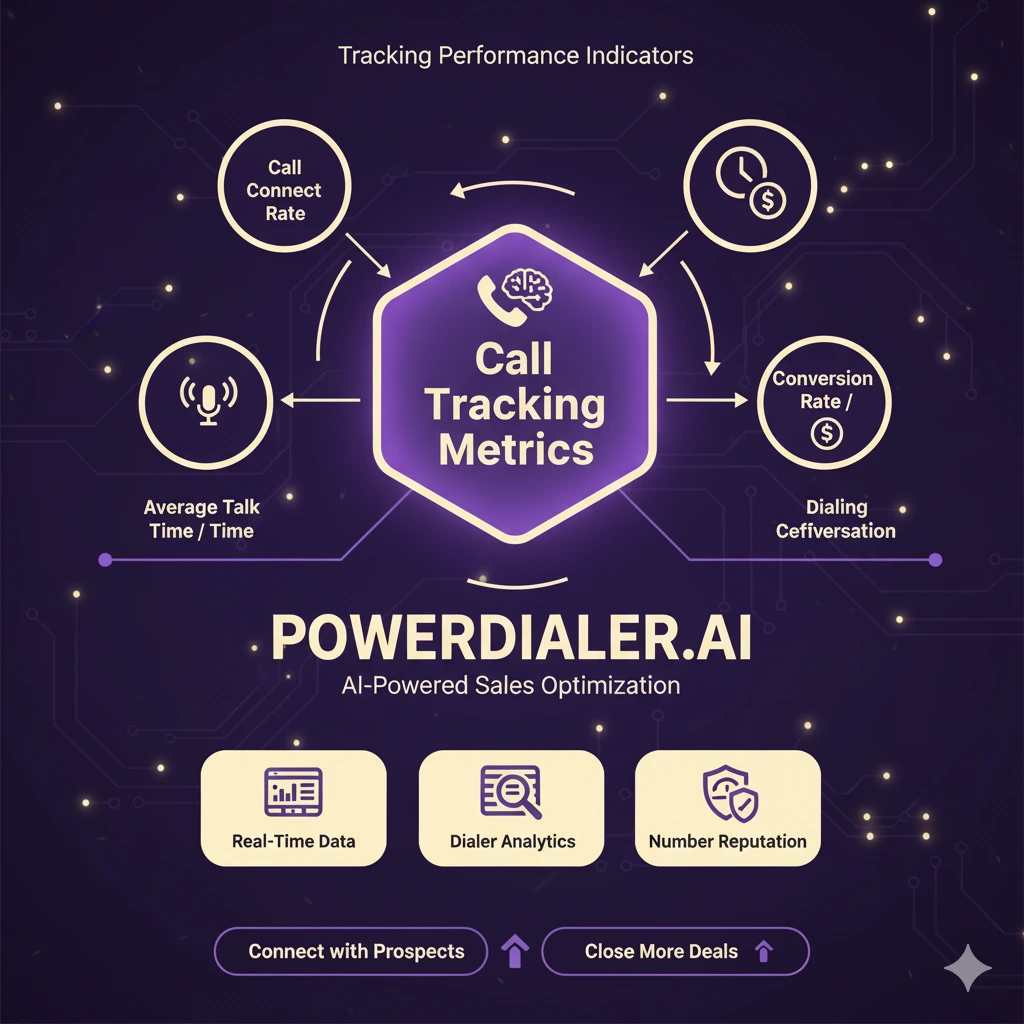
The CCR is the number of calls sent from you that are actually connected to a live person. A small CCR points out issues with the timing, bad lead lists, or numbers flagged as spam. Some tools, such as the Phone Health feature of PowerDialer.ai, help track and improve number reputation for more successful call connections.
3. Average Talk Time (ATT)
Average Talk Time, or Average Handle Time, reflects the level of engagement and how effective your calls are. If it's too short, it might show a lack of interest. If it is too long, it might indicate some sort of inefficiency. PowerDialer.ai analytics track ATT automatically for benchmarking top performers to help improve call quality.
4. Conversion Rate per Call
This measures how many calls convert to demos, meetings, or closed deals. A higher conversion rate per call means your reps are targeting the right prospects and delivering strong pitches. Use this to refine messaging and find out what converts.
5. First Call Resolution (FCR)
First Call Resolution refers to the resolution of issues or objections at the first interaction. High FCR would thus show better training, trust-building, and efficient communication—factors that are important for the success of sales.
6. Call Disposition Metrics
Your call outcome ratio consists of the call outcomes: answered, voicemail, no response, follow-up required. These will help you pinpoint unproductive trends to adjust your outreach cadence and drive more meaningful conversations.
7. Agent Efficiency Metrics
That includes idle time, wrap-up time, and agent performance analysis. Efficient reps better allocate their time between calls and spend more time talking to prospects, closing more deals. These metrics will help leaders find where additional coaching or process changes need to take place.
How to Track Call Metrics Effectively
Using automated dialer analytics tools
Manual tracking can't keep up with the demands of selling today, and teams are leaning on dialer analytics tools like PowerDialer.ai, which automatically track each call made, visualize performance dashboards, and flag issues such as low connect rates or spam labeling.
Book a demo today with PowerDialer.ai and let AI-powered analytics revolutionize outbound calling for your team.
Integration of Metrics with CRM Systems
By integrating the call tracking data from SDR into CRMs like HubSpot or Salesforce, the view of all interactions becomes unified. It connects each call outcome to leads, notes, and follow-up reminders to create a full-circle look at sales performance.
Building a Call Metrics Dashboard
Create visual dashboards showing the trends in connect rates, talk times, and conversions. Set realistic, motivational goals based on weekly or monthly reports highlighting the top performers.
Improving Sales Dialing Efficiency Through Data
Identify Peak Calling Hours
Analyze your call data for the best times of day/days of the week that connect rates are high; then schedule your team around those hours to maximize results.
Optimize Number Reputation
Spam labeling can ruin even the best of campaigns. With PowerDialer.ai's Phone Health, you'll be able to monitor caller ID reputation, detect spam risks, and keep your numbers trusted and clean.
Coach Reps with Real-Time Insights
Incorporate talk-to-listen ratio data into coaching sessions along with call recordings. Support your reps in striking a great balance between speaking and listening for better rapport-building and more productive conversations.
Quick Tips for Boosting Sales Dialing Efficiency
- Clean your call lists regularly.
- Monitor the daily call quality assessment.
- Employ auto-dialers for parallel and power dialing.
- Analyze dropped call patterns and retry intelligently.
- Identify top performers and reinforce their motivation.
Conclusion
The idea with call tracking metrics is pretty straightforward: it's not about the numbers, but about making your sales process smarter and more effective. By monitoring the right KPIs, you can unlock trends and improve rep performances to help you ultimately drive consistent pipeline growth. PowerDialer.ai equips your team with the means to track calls, analyze trends, and improve each conversation through real-time insights with AI-driven analytics. Book a demo today and see for yourself how you can change your outbound calling efficiency.
FAQs
Q1. What are the main call tracking metrics for sales teams?
Key metrics include: call volume, connect rate, talk time, conversion rate, and call disposition trends.
Q2. How does call tracking metrics enhance the efficiency of sales dialing?
They help managers understand things such as top-performing reps, best times to call, and other issues regarding low connections or idle times.
Q3. Can AI tools help in tracking and analyzing sales call metrics?
Yes, some platforms use AI analytics, like PowerDialer.ai, that track calls in real time to identify spam risks and optimize performance.
Q4. How do I visualize the data from call tracking?
Use a dashboard with charts and KPIs, segmented by rep, time, and outcome, for easy-to-understand and actionable data.
Q5. How frequently does call tracking data need to be reviewed?
Review daily or weekly to allow consistent coaching and performance improvement.