
What Is a Virtual Number?
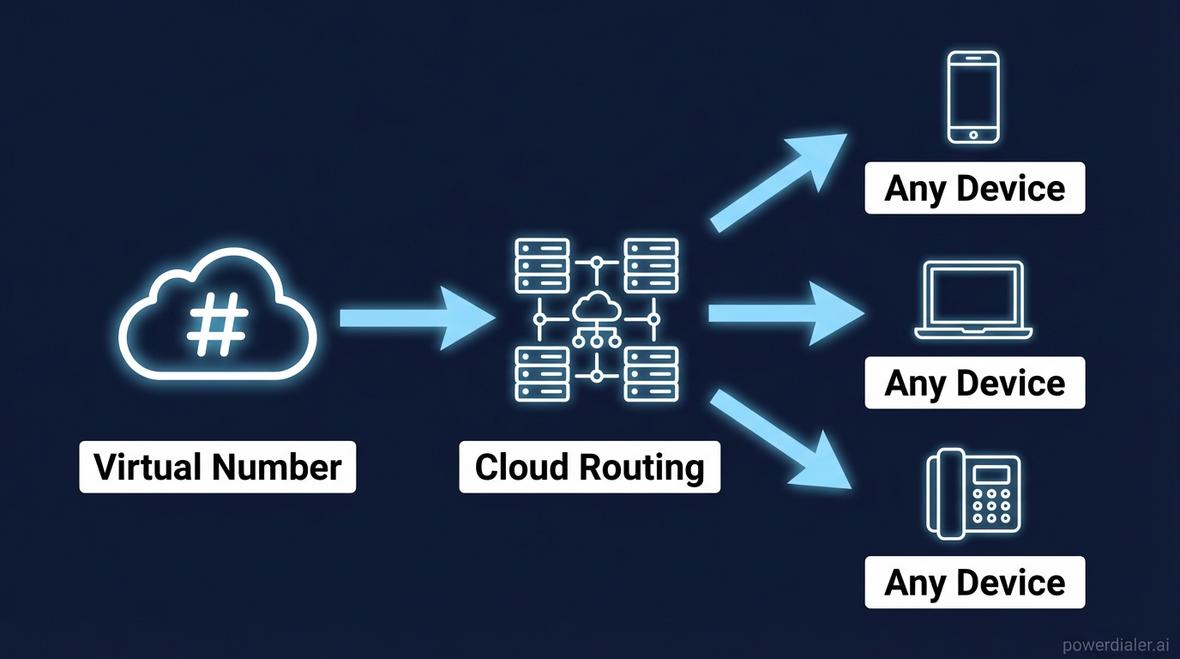
A virtual number is a cloud-based phone number that isn't tied to a specific physical phone line or device. Unlike traditional landlines, a virtual number operates through the internet and can be routed to any device whether it's a smartphone, laptop, or desk phone. This flexibility allows B2B sales teams, customer support centers, and remote businesses to maintain a professional presence without the constraints of legacy telephony infrastructure.
Virtual numbers are particularly valuable for outbound sales operations because they enable local presence dialing, which significantly improves answer rates. When prospects see a familiar area code, they're more likely to pick up, creating more opportunities for meaningful conversations. For sales development representatives (SDRs) and sales teams using dialers, virtual numbers have become an essential tool to maximize connect rates and streamline outreach.
How Virtual Numbers Work
Virtual numbers leverage Voice over Internet Protocol (VoIP) technology to transmit voice calls over the internet rather than through traditional copper wires. When someone calls your virtual number, the call is routed through a cloud-based system that forwards it to your designated device based on pre-configured rules. This process happens instantaneously, ensuring seamless communication regardless of your physical location.
Cloud Routing Infrastructure
The backbone of virtual numbers is cloud routing infrastructure. This system uses data centers distributed across multiple geographic locations to ensure reliability and low latency. When a call comes in, intelligent routing algorithms determine the optimal path based on factors like recipient availability, time of day, and call priority. For call center software users, this means calls can be distributed across team members efficiently without manual intervention.
Device Flexibility
One of the most powerful features of virtual numbers is their ability to ring on any device. Sales professionals can answer business calls on their mobile phone while traveling, switch to their desktop during office hours, and even route after-hours calls to voicemail all using the same business number. This flexibility is critical for sales teams using PowerDialer.ai, where representatives need to maintain consistent accessibility while managing high call volumes.
Types of Virtual Numbers
Virtual numbers come in several varieties, each designed to serve specific business needs and geographic requirements.
Local Virtual Numbers
Local virtual numbers display area codes associated with specific cities or regions. For example, a company based in Austin can use a 512 area code to appear local to prospects in that market. Research shows that 78% of businesses report scheduling meetings due to cold calls, and local presence significantly enhances this success rate by building immediate trust and familiarity with prospects.
Toll-Free Numbers
Toll-free virtual numbers (800, 888, 877, etc.) allow callers to reach your business without incurring charges. These numbers are ideal for customer support lines, sales inquiries, and national marketing campaigns. They project professionalism and make it easy for prospects across different regions to contact your business without worrying about long-distance fees.
International Virtual Numbers
For businesses operating globally, international virtual numbers provide local presence in foreign markets without establishing physical offices. Companies can acquire numbers in countries like the United Kingdom, Germany, or Australia, enabling them to conduct business as if they were local entities. This capability is particularly valuable given that 70-80% of B2B sales interactions now occur via remote and digital channels.
Key Benefits of Virtual Numbers for Sales Teams
Virtual numbers deliver multiple strategic advantages that directly impact sales performance and operational efficiency.
Improved Connect Rates
When sales reps use virtual numbers with local area codes that match their prospects' locations, answer rates can increase by 30-50%. Prospects are naturally more inclined to answer calls from recognizable local numbers rather than unfamiliar out-of-state or toll-free numbers. This psychological advantage is crucial in competitive markets where every connection counts.
Professional Brand Presence
Virtual numbers allow businesses of any size to project a professional image. Startups can establish credibility by using dedicated business lines instead of personal cell phones, while enterprises can maintain consistent branding across multiple departments and geographic markets. This professionalism extends to voicemail greetings, call routing, and after-hours handling.
Cost Effectiveness
Traditional phone systems require significant upfront investment in hardware, installation, and maintenance. Virtual numbers eliminate these costs entirely, operating on subscription-based pricing models that scale with your business. Sales teams can add or remove numbers instantly without technician visits or equipment purchases, making virtual numbers ideal for startups and rapidly growing organizations.
Scalability and Flexibility
As your sales team grows, virtual numbers scale effortlessly. Adding new team members simply requires assigning them a virtual number through your provider's dashboard a process that takes minutes rather than days. This scalability is particularly valuable for seasonal businesses or companies experiencing rapid growth phases.
Advanced Analytics and Tracking
Modern virtual number systems provide detailed call analytics including call duration, answer rates, peak calling times, and conversion metrics. These insights enable sales managers to optimize sales cadences, identify high-performing time windows, and coach representatives based on actual performance data rather than subjective assessments.
Virtual Numbers in Modern Sales Operations
The integration of virtual numbers with sales technology has transformed how teams approach outbound prospecting and customer engagement.
Local Presence Dialing Strategy
Local presence dialing uses virtual numbers to automatically display area codes that match each prospect's location. When an SDR in California calls a prospect in New York, the system automatically presents a 212 or 917 area code. This strategy capitalizes on the trust factor associated with local numbers, significantly improving answer rates and reducing immediate hang-ups.
Integration with Power Dialers
Virtual numbers reach their full potential when integrated with power dialer technology. This combination automates the dialing process while maintaining the local presence advantage. Representatives can focus entirely on conversations rather than manually dialing numbers, dramatically increasing daily call volumes. According to research, 64% of teams using virtual sales tools met or exceeded revenue targets compared to only 50% of those who didn't adopt such technologies.
Multi-Channel Communication
Virtual numbers aren't limited to voice calls. Modern systems support SMS messaging, allowing sales teams to send follow-up texts from the same number used for calls. This creates consistent touchpoint experiences and enables multi-channel sales cadences that combine calling, texting, and email outreach for maximum effectiveness.
Choosing the Right Virtual Number Provider
Selecting a virtual number provider requires evaluating several critical factors to ensure alignment with your sales objectives.
Essential Feature Considerations
Look for providers that offer call recording for quality assurance and training, voicemail-to-email transcription for efficient message management, and advanced routing options including time-based forwarding and round-robin distribution. Integration capabilities with your existing CRM system are equally important to maintain seamless data flow between platforms.
Geographic Coverage
If your sales operations span multiple regions or countries, verify that your provider offers adequate coverage in those areas. International businesses should prioritize providers with robust offerings across target markets, ensuring consistent call quality and local number availability.
Reliability and Uptime
Phone systems are mission-critical infrastructure. Evaluate providers based on their uptime guarantees (aim for 99.9% or higher) and redundancy measures. Understanding their disaster recovery protocols and backup systems helps ensure business continuity even during technical issues.
Compliance and Security
For industries with regulatory requirements like healthcare or financial services, ensure your virtual number provider supports necessary compliance standards such as HIPAA for healthcare communications or PCI-DSS for payment-related conversations. Data encryption, secure call recording storage, and audit trails are essential security features.
Virtual Numbers Across Industries
Different industries leverage virtual numbers in unique ways to address specific operational challenges.
Real Estate
Real estate agents use virtual numbers to maintain professional boundaries between personal and business communications. Agents can display different numbers for listings in various neighborhoods, tracking which properties generate the most inquiries. This data-driven approach helps optimize marketing spend and listing strategies. Explore more about real estate industry solutions.
Healthcare
Healthcare providers utilize virtual numbers for appointment reminders, telehealth consultations, and patient follow-ups. The ability to maintain HIPAA-compliant communications while offering flexible contact options improves patient satisfaction and reduces no-show rates.
Financial Services
Financial advisors and loan officers benefit from virtual numbers by establishing local presence in markets they serve remotely. The professional image combined with call recording capabilities supports compliance requirements while enabling relationship-building conversations with clients.
Education
Educational institutions and e-learning platforms use virtual numbers for admissions inquiries, student support, and enrollment campaigns. The ability to route calls to available counselors regardless of physical location ensures prospective students receive timely responses, improving conversion rates.
Implementation Best Practices
Successfully deploying virtual numbers requires thoughtful planning and strategic execution.
Strategic Number Selection
Choose area codes that align with your target markets rather than your physical office location. If you're prospecting in Chicago but based in Miami, prioritize 312, 773, or 847 area codes to maximize local connection. Maintain consistency by using the same number for follow-up communications to build recognition.
Team Training and Adoption
Ensure your sales team understands how to use virtual numbers effectively. Provide training on features like call forwarding, voicemail management, and SMS capabilities. Clear documentation and ongoing support facilitate smooth adoption and maximize return on investment.
Compliance and Legal Considerations
Familiarize yourself with calling regulations in your target markets, including TCPA requirements in the United States, GDPR in Europe, and similar regulations globally. Implement proper consent mechanisms, maintain do-not-call lists, and ensure your virtual number provider supports compliance features like call-time restrictions.
Performance Monitoring
Establish key performance indicators (KPIs) to measure virtual number effectiveness. Track metrics including answer rates by area code, call duration by region, conversion rates from different numbers, and cost per acquisition. Regular analysis enables continuous optimization of your dialing strategy.
The Future of Virtual Numbers
Virtual number technology continues evolving, with several emerging trends poised to reshape sales communication.
AI-Powered Intelligence
Artificial intelligence is being integrated into virtual number platforms to provide predictive dialing optimization, sentiment analysis during calls, and automated coaching recommendations. These capabilities help sales representatives improve performance in real-time and enable managers to scale coaching efforts across larger teams.
Enhanced Personalization
Future virtual number systems will offer deeper personalization, automatically adjusting caller ID presentation based on prospect behavior, preferences, and historical interactions. This level of customization will further improve connect rates and conversation quality.
Unified Communications Platforms
Virtual numbers are becoming central components of unified communications ecosystems that combine voice, video, messaging, and collaboration tools. This convergence enables seamless transitions between communication channels based on context and customer preference.
Frequently Asked Questions
How much do virtual numbers cost?
Virtual number pricing varies by provider and features, typically ranging from $10 to $30 per number per month. Enterprise plans with advanced features and higher call volumes may cost more. Many providers offer volume discounts for businesses requiring multiple numbers.
Can I port my existing business number to a virtual system?
Yes, most virtual number providers support number porting, allowing you to transfer your existing business numbers. The process typically takes 7-14 business days and ensures continuity for customers and contacts who already have your current number.
Do virtual numbers support international calling?
Most virtual number platforms support international calling, though rates vary by destination country. Some providers offer dedicated international plans or per-minute pricing for overseas calls. Verify international capabilities during provider selection if global communication is important to your operations.
Can multiple team members use the same virtual number?
Yes, virtual numbers can be configured to ring multiple devices simultaneously or in sequence. This feature is useful for sales teams, support departments, or businesses wanting to ensure calls are always answered by available team members.
How quickly can I set up virtual numbers?
Virtual number setup is typically instantaneous for local numbers in most regions. You can select, purchase, and configure numbers within minutes through provider dashboards. International numbers or special number types may require additional verification and take 1-3 business days.
Conclusion
Virtual numbers have become indispensable tools for modern sales operations, enabling teams to project professional presence, improve connect rates, and scale communications efficiently. As 80% of B2B interactions now occur digitally, adopting virtual number technology isn't optional it's essential for competitive advantage. Whether you're an SDR looking to improve daily call metrics, a sales manager optimizing team performance, or a business owner building scalable outbound systems, virtual numbers provide the foundation for effective communication strategies. By implementing best practices, choosing the right provider, and leveraging integration with platforms like PowerDialer.ai, sales teams position themselves for sustained success in increasingly digital markets.