
One of the most important stages of the sales process is the discovery call. That's your chance to deeply understand the needs, challenges, and goals of a prospect before you really pitch your product or service. If it goes well, a discovery call qualifies the lead, builds trust, and kick-starts a meaningful sales conversation toward conversion.
In B2B sales, discovery calls help weed out bad prospects, detect real opportunities, and give shape to an apt solution that can just meet the requirements of the client's business.
What is a discovery call?

A discovery call is basically the first structured conversation that a sales representative has with a potential customer once interest has been shown. The primary aim is to ascertain whether this prospect is a good fit for your offering, while secondly extracting information on the problems or pain points they endure and their buying intent.
The whole process of discovery in sales enables the teams to qualify the lead and prioritize where to focus their efforts. The representative listens, learns, and guides rather than pushes, forming the base for trust and long-term partnerships.
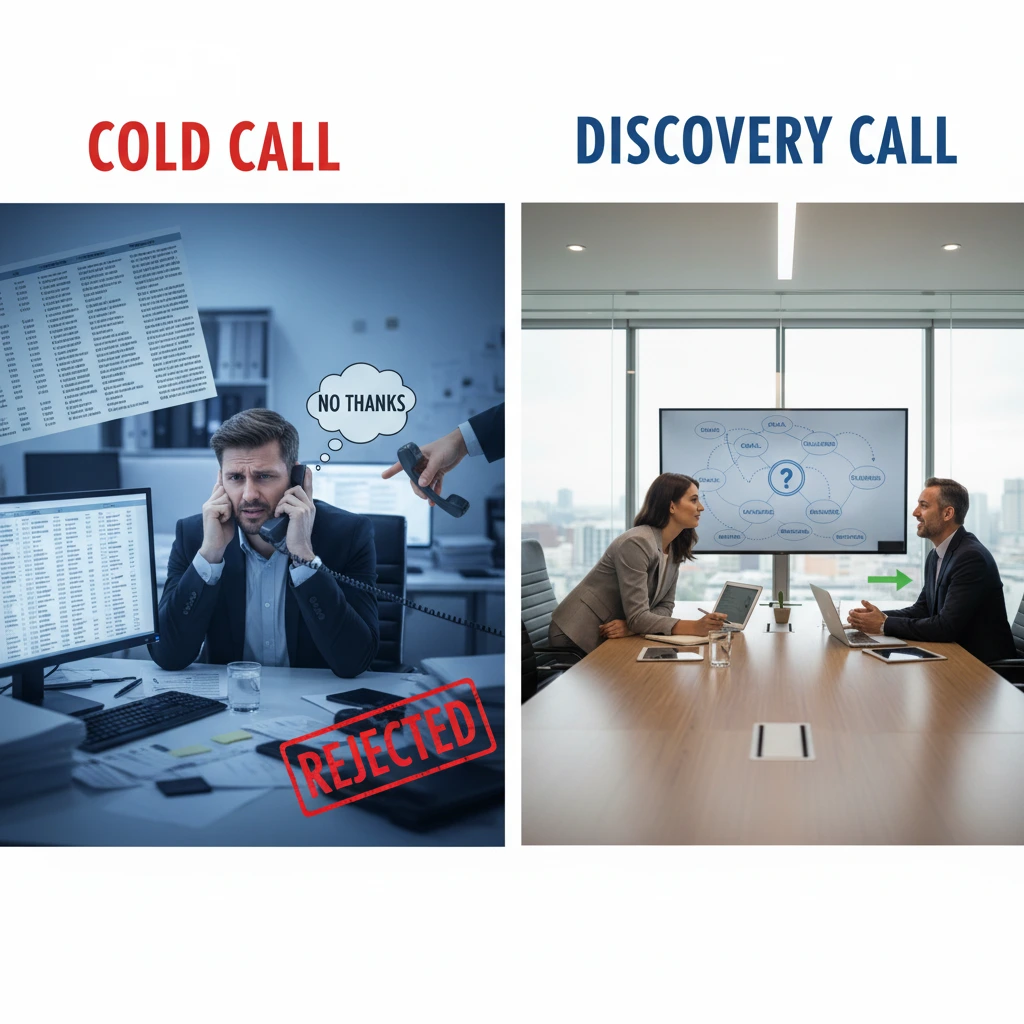
Difference Between a Cold Call and a Discovery Call
Well, in terms of cold call vs. discovery call, the difference is simple:
- A cold call is an outreach to a lead that has not expressed interest as of yet.
- A discovery call is one that follows after interest has been captured and digs further into qualifying the opportunity.
Both are important in a B2B sales pipeline. While a cold call sparks curiosity, a discovery call confirms the fit and readiness to buy.
Why Discovery Calls are Important in B2B Sales
Builds trust and credibility.
One platform where sales representatives can understand prospects better without hard-selling is the discovery call. It shows authenticity and lays the right grounds for further interactions.
Helps to locate pain.
Understanding real business problems allows you to tune your pitch and position your product as a solution, not just another offer.
Qualifies prospects efficiently.
This will allow you to sift through and choose high-value leads from those not ready to buy by strategically qualifying leads, saving your time and energy.
Saves Time for Sales Teams
Effective prospecting calls ensure that sales representatives focus only on genuinely interested leads, hence improving the overall conversion rates.
Discovery Call Framework: Step-by-Step Process
Step 1: Research the Prospect
Read the company's website, LinkedIn, and recent updates before the call. This gives you personalisation about them, which then will enable you to hold a less generic conversation.
Step 2: Prepare Your Questions
Customize the questions you will ask at the discovery meeting based on industry, role, and goals. Tailored questions demonstrate interest in preparation and professionalism.
Step 3: Set a Clear Agenda
Introduce the purpose of the call and how long it will take. This provides structure and sets the right expectations.
Step 4: Asking High-Quality Questions
Provide discovery call questions that are open-ended in nature to drive discussion. Focus on goals, challenges, budget, and timelines for making decisions.
Step 5: Listen actively
It denotes active listening, where one digs deeper for insight to build rapport. Jot down important points to follow up on later in the conversation.
Step 6: Summarize Key Points
Summarize the key points at the end to make sure the issues discussed were agreed upon mutually.
Step 7: Identify Next Steps
End with either a demo, a recap email, or a confirmation of the follow-up. This keeps the momentum alive through clear next steps.
Automate and schedule more qualified discovery calls using PowerDialer.ai. Book a free demo today and simplify your outbound sales process.
Discovery Call Questions That Actually Work
Warm-Up Questions
- “Currently, how are you managing [specific challenge]?
- "Can you tell me your role and priorities?
Problem-Focused Questions
- “What issues do you encounter with your present solution?
- "What's standing in your way from achieving your goals right now?
Goal-Oriented Questions
“What would success look like for you in the next quarter?”
“What would have the most impact on your team?
Decision-Making Questions
“Who else is involved in the buying process?
“What’s your typical decision timeline for tools like this?”
Discovery Call Best Practices
1. Do your research before calling.
Know your lead's business model, market, and recent activities.
2. Keep It Conversational
Avoid sounding robotic or over-rehearsed. A natural-sounding tone creates comfort.
3. Listen More, Talk Less
There is a golden rule in every sales call: let the prospect talk more.
4. Avoid Over-Selling
Understand first; sell later.
5. Record and Review Your Calls
Replaying your discovery calls will show you both strengths and where improvement is needed.
6. Make Each Conversation Unique
Mention particular pain points or goals to which the call will relate.
Discovery Call Example Sample Script
Example 1: SaaS Sales Discovery Call
- Rep: "Hello [Name], thanks for joining! Just before we get started, can you tell me a little about how your team currently tracks leads?
- Prospect: "At the moment, we use spreadsheets.
- Rep: “Got it, I hear that a lot. That setup can be quite time-consuming for many teams. What's your biggest challenge with that setup?
This approach fosters open sharing and helps you find a natural entry point for your solution.
Example 2: Marketing Agency Discovery Call
- Rep: "What marketing goals are you focusing on this quarter?
- Prospect: "We want to increase inbound leads.
- Rep: "Great - can you walk me through what's working and what's not?
Simple, human-centered questions create an easy flow in the discovery process.
Common Discovery Call Mistakes to Avoid
Not researching the prospect
Jumping in without background knowledge is a way to show disinterest.
Asking too many closed-ended questions
Yes-or-no questions limit depth.
Skipping the Qualification Step
Don't rush to pitch before fit confirmation.
Not Setting a Clear Next Step
Always provide an introduction to what happens next after the call, so that momentum is not lost.
Tools to Improve Your Discovery Calls
CRM and Call Recording Tools
Other tools, such as HubSpot, Pipedrive, and Salesforce, also allow you to manage leads and record conversations for analysis.
AI Call Assistants and Transcription Tools
Tools like Gong, Fireflies.ai, and Avoma give insights from call recordings that can help make improvements for the future.
Scheduling and Follow-Up Tools
Utilize Calendly, Loom, and Outreach to facilitate smooth scheduling and uphold consistency in communication.
Measuring the Success of a Discovery Call
- Lead Conversion Rate: Track the number of discovery calls that convert into demos or proposals.
- Call-to-Demo Ratio: A higher ratio shows better qualification and stronger communication.
- Sales Cycle Duration: Smaller cycles usually signify effective lead qualification and, thus, better discovery outcomes.
- Lead Qualification Score: Score the call on budget, authority, need, and timeline to evaluate the efficacy of the call.
Conclusion
A discovery call isn't just a meeting; it's the foundation of every great business relationship. By focusing on understanding rather than on selling, you'll be able to find real opportunities, qualify leads, and close deals much quickly.
Strong discovery calls lead to predictable sales growth. Begin improving your sales workflow today - book your PowerDialer.ai demo. And make every conversation count.
FAQs
What length of a discovery call is ideal?
Typically 20–30 minutes, depending on the product's complexity.
Should a discovery call be scripted?
Of course not, just use the discovery call script for guidelines, and keep the tone natural as you are having a conversation.
How do I prepare for a discovery call?
Research your prospect, prepare key questions to ask, and plan a clear agenda.
When should you schedule a discovery call?
Once a lead has shown interest or engaged with your marketing content.
What is the next step after a discovery call?
Send a recap email, summarize insights, and schedule a demo or proposal discussion.