
What is 3CX and Why It Matters for Sales Teams
In today's rapidly evolving sales landscape, unified communications platforms like 3CX have become essential tools for businesses seeking to streamline their calling, messaging, and conferencing capabilities. 3CX is a software-based private branch exchange (PBX) that offers Voice over Internet Protocol (VoIP) telephony, video conferencing, and live chat functionalities all integrated into a single, cost-effective platform.
For sales development representatives (SDRs), sales managers, and business owners operating in B2B sales environments, the choice of communication infrastructure directly impacts productivity, connect rates, and ultimately, revenue generation. While 3CX provides robust unified communications features, many sales-focused organizations discover that specialized power dialer solutions deliver superior results for outbound calling campaigns.
This comprehensive guide examines 3CX's capabilities, explores how it compares to dedicated sales dialing platforms, and helps you determine the optimal communication solution for your team's specific needs in high-velocity outbound sales environments.
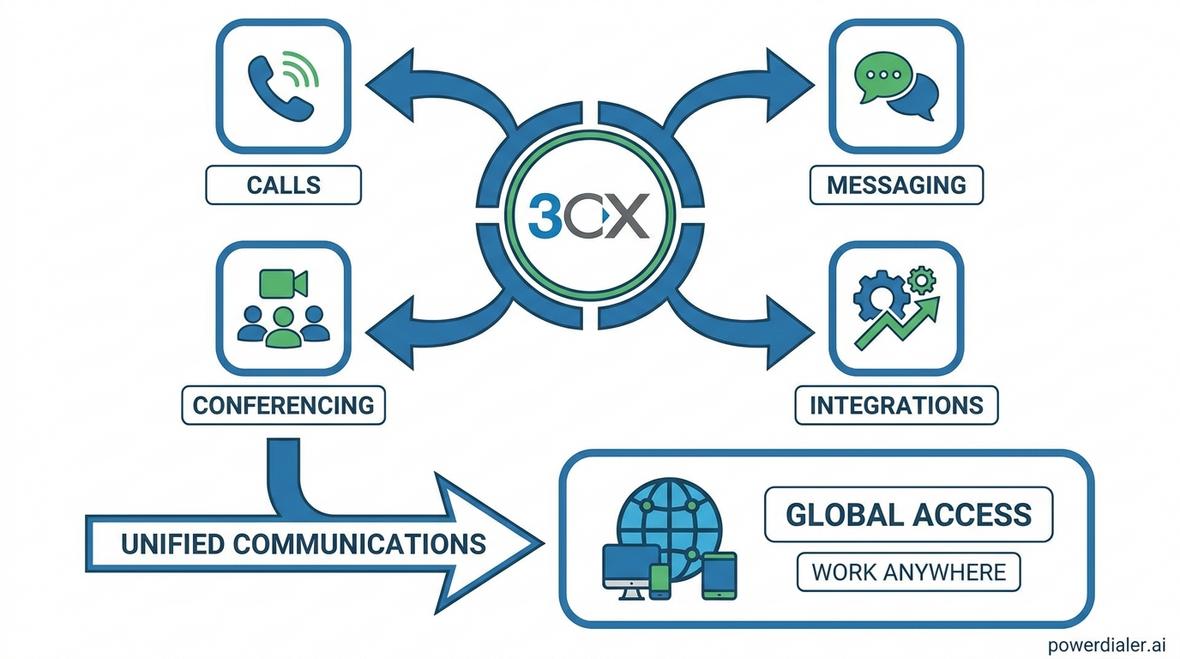
Core Features of 3CX Unified Communications Platform
The 3CX platform offers several capabilities designed to support general business communications across organizations. Understanding these features helps contextualize where the system excels and where specialized sales tools may provide better outcomes.
Voice Calling and PBX Functionality
3CX functions as a complete software-based PBX system, replacing traditional phone hardware with a flexible, internet-based solution. The platform supports unlimited extensions, call routing, call queuing, and interactive voice response (IVR) systems. These features make it suitable for inbound call centers and general office communications.
For outbound sales teams, however, the manual dialing approach inherent in traditional PBX systems even software-based ones creates significant inefficiencies. Research from HubSpot data shows that specialized outbound tools improve connect rates from 2% to 15-20% in B2B sales, highlighting the substantial performance gap between general communication platforms and purpose-built sales dialers.
Messaging and Web Conferencing
3CX integrates instant messaging and video conferencing directly into its platform, allowing teams to communicate through multiple channels without switching applications. This unified approach reduces communication fragmentation and supports both internal collaboration and external client interactions.
The platform's web conferencing features enable screen sharing, virtual meeting rooms, and participant management capabilities that support discovery calls and product demonstrations in B2B sales environments.
CRM and Business Application Integrations
One of 3CX's notable strengths lies in its integration capabilities with popular CRM platforms including Salesforce, Microsoft Dynamics, HubSpot, and Zoho CRM. These integrations allow sales representatives to make calls directly from CRM records and automatically log call activities.
While these integrations provide convenience, they typically lack the sophisticated analytics, AI-powered coaching, and automation features that dedicated sales analytics platforms offer. For data-driven sales organizations focused on optimizing every aspect of their outbound process, more specialized solutions provide deeper insights into team performance and prospect engagement patterns.
Global Access and Mobile Capabilities
3CX offers native mobile applications for iOS and Android, enabling sales professionals to make and receive business calls from anywhere. This 'work anywhere' capability has become increasingly important as remote and hybrid sales teams have become the norm across industries.
The platform's cloud deployment options eliminate the need for on-premises hardware, reducing IT overhead and enabling rapid scaling as sales organizations grow. This flexibility makes 3CX attractive for businesses transitioning from legacy phone systems to modern cloud communications.
Why Sales Teams Outgrow Traditional Communication Platforms Like 3CX
While 3CX excels as a general-purpose unified communications platform, sales organizations with aggressive outbound targets quickly encounter limitations that impact their team's efficiency and results.
The Manual Dialing Bottleneck
Traditional PBX systems, including 3CX, require sales representatives to manually select contacts and initiate each call. This process which includes looking up numbers, clicking to dial, waiting for connection, and navigating through gatekeepers or voicemail consumes the majority of a sales rep's day with non-selling activities.
According to industry data, sales representatives using manual dialing methods spend only 15-20% of their time actually conversing with prospects. The remaining 80-85% is consumed by dialing, waiting, leaving voicemails, and administrative tasks. This inefficiency directly translates to lost revenue opportunities and underutilized sales capacity.
Modern parallel dialing and predictive dialing technologies eliminate this bottleneck by automating the connection process and connecting representatives only when a live prospect answers, dramatically increasing talk time and overall productivity.
Absence of AI-Powered Sales Coaching
One of the most significant gaps in traditional communication platforms like 3CX is the lack of AI-driven sales coaching and conversation intelligence. While the platform can record calls, it doesn't provide real-time guidance, sentiment analysis, or automated performance feedback.
Sales organizations leveraging AI sales coaching capabilities see measurable improvements in conversion rates, objection handling, and overall team consistency. These systems analyze thousands of successful sales conversations to identify winning patterns and provide personalized coaching recommendations to each representative.
Limited Sales-Specific Analytics
While 3CX provides call duration reports and basic usage statistics, it lacks the sophisticated sales performance metrics that data-driven organizations require. Modern sales leaders need visibility into connect rates by time of day, geographic performance variations, individual rep velocity metrics, and conversion funnel analytics.
Advanced heatmap analytics reveal optimal calling windows, while call disposition tracking helps identify where prospects drop out of the sales process. These insights enable continuous optimization that traditional communication platforms simply cannot provide.
PowerDialer.AI: The Sales-Optimized 3CX Alternative
For organizations whose primary communication need centers on outbound sales rather than general business communications, PowerDialer.AI represents a purpose-built alternative designed specifically for high-velocity sales environments.
Multiple Automated Dialing Modes
Unlike 3CX's manual dialing approach, PowerDialer.AI offers three distinct automated dialing modes optimized for different sales scenarios:
- Power Dialing: Automatically dials the next number as soon as a call ends, eliminating dead time between conversations
- Parallel Dialing: Simultaneously dials multiple numbers and connects the rep only when a live person answers, maximizing talk time
- Predictive Dialing: Uses AI algorithms to predict agent availability and optimal dial rates, ensuring representatives always have conversations queued
These automated approaches can increase daily conversation volumes by 300-400% compared to manual dialing methods, directly impacting pipeline generation and revenue outcomes.
AI-Powered Features That Drive Performance
PowerDialer.AI integrates artificial intelligence throughout the sales workflow, providing capabilities that traditional platforms like 3CX cannot match:
- Real-time Conversation Intelligence: AI monitors calls in progress and provides live suggestions for objection handling, next-best questions, and closing techniques
- Automated Call Summaries: After each conversation, AI generates detailed summaries and action items, eliminating manual note-taking
- Sentiment Analysis: Machine learning algorithms detect prospect interest levels and emotional states, helping reps adjust their approach dynamically
- Voice Cloning for Voicemail: AI can generate natural-sounding voicemails in a rep's voice, saving time while maintaining personalization
These capabilities transform sales conversations from transactional interactions into strategically guided engagements that consistently improve conversion rates.
Comprehensive Sales Analytics and Reporting
While 3CX offers basic call reporting, PowerDialer.AI provides the depth of analytics that modern sales organizations require for continuous optimization. The platform tracks over 40 different performance metrics, including:
- Connect rates by day, time, and geographic region
- Average conversation duration and quality scores
- Conversion rates at each stage of the sales funnel
- Individual rep performance benchmarking
- Campaign effectiveness comparisons
- Speed-to-lead metrics for inbound follow-up
These insights enable sales managers to identify coaching opportunities, optimize calling schedules, and make data-driven decisions about territory assignment and resource allocation. Organizations using these analytics typically see 25-40% improvements in overall team productivity within the first quarter of implementation.
Native CRM Integrations Built for Sales
PowerDialer.AI offers deep, native integrations with leading CRM platforms including Salesforce, HubSpot, Pipedrive, and others. Unlike 3CX's basic click-to-dial functionality, these integrations provide bi-directional data synchronization that:
- Automatically logs all call activities, recordings, and outcomes to CRM records
- Updates lead statuses based on call dispositions
- Triggers automated follow-up sequences based on conversation results
- Enriches contact records with data gathered during calls
- Provides CRM-based reporting on dialing activities and results
This seamless integration eliminates administrative overhead and ensures that sales data remains accurate and actionable across the entire tech stack. For organizations operating in B2B sales, real estate, or financial services, this level of integration is essential for maintaining compliance and visibility.
Industry-Specific Use Cases: When to Choose Sales Dialers Over 3CX
Different industries have unique communication requirements that influence whether a general platform like 3CX or a specialized sales dialer represents the better investment.
Real Estate and Mortgage Professionals
Real estate agents and mortgage brokers face intense competition and time-sensitive opportunities. In these industries, speed-to-lead represents a critical success factor contacting a new lead within five minutes increases conversion probability by 900% compared to waiting just 30 minutes.
While 3CX could handle the basic calling needs, it lacks the velocity and automation that real estate professionals require. Purpose-built solutions with speed-to-lead analytics and automated voicemail drop capabilities ensure no opportunity slips through the cracks due to manual process delays.
Healthcare and Pharmaceutical Sales
Organizations in healthcare and pharmaceutical industries face strict compliance requirements around call recording, data security, and documentation. While 3CX offers basic call recording, it doesn't provide the HIPAA-compliant infrastructure and detailed audit trails that regulated industries require.
Specialized sales platforms designed for these sectors include built-in compliance frameworks, secure cloud storage, and granular permission controls that satisfy regulatory requirements while still delivering the automation and analytics that drive sales performance.
B2B Technology and SaaS Sales
B2B technology sales cycles involve multiple stakeholders, complex product demonstrations, and lengthy evaluation periods. Sales teams in this space require not just communication tools, but complete sales engagement platforms that coordinate multi-touch campaigns across phone, email, and social channels.
While 3CX handles the communication component, it lacks the campaign orchestration, sequence automation, and multi-channel coordination that B2B sales organizations need. Integrated platforms that combine intelligent dialing with email cadences and social touchpoints deliver significantly higher pipeline conversion rates in complex B2B environments.
Cost Comparison: 3CX vs. Specialized Sales Dialers
When evaluating communication platforms, total cost of ownership extends beyond simple per-seat licensing to include implementation, training, productivity impact, and opportunity cost.
3CX Pricing Structure
3CX offers several pricing tiers based on simultaneous call capacity rather than user count. Their pricing typically ranges from free (for very limited use) to several thousand dollars annually for enterprise deployments. However, these costs don't include:
- SIP trunk charges for actual calling (carrier fees)
- Implementation and configuration services
- Advanced features that require premium licensing
- Integration development for specialized workflows
- Ongoing support and maintenance
For a 10-person sales team making 100+ calls daily, the all-in monthly cost typically ranges from $200-500, depending on call volumes and feature requirements.
Sales Dialer ROI Calculation
While specialized sales dialers may appear more expensive on a per-seat basis, the productivity multiplier they provide dramatically improves ROI. Consider this comparison for a typical 10-person SDR team:
- Manual Dialing (3CX): 30-40 conversations per rep per day, 300-400 team conversations daily
- Automated Dialing (PowerDialer.AI): 80-120 conversations per rep per day, 800-1200 team conversations daily
This 2-3x increase in daily conversations directly translates to 2-3x more qualified opportunities generated from the same team size. For most B2B organizations, a single additional closed deal per month more than justifies the incremental technology investment.
Sales leaders can calculate their specific ROI using tools like the dialer ROI calculator, which factors in current team size, average deal size, and conversion rates to project financial impact.
Implementation Considerations and Integration Complexity
The implementation process and technical requirements differ significantly between general communication platforms and specialized sales tools.
3CX Setup and Configuration
Implementing 3CX typically requires technical expertise, particularly when configuring SIP trunks, setting up call routing rules, and integrating with existing business systems. Organizations often engage implementation partners or dedicate internal IT resources to the deployment process.
The implementation timeline for a mid-sized organization typically spans 2-4 weeks, including user provisioning, phone number porting, and integration configuration. Training requirements focus primarily on system administration rather than end-user adoption, as the calling interface remains relatively straightforward.
Sales Dialer Deployment
Modern sales dialer platforms prioritize rapid deployment and user adoption. PowerDialer.AI, for example, offers guided onboarding processes that enable teams to begin making calls within hours rather than weeks.
CRM integration typically requires only OAuth authentication rather than complex API development, and pre-built templates for common use cases accelerate time-to-value. The focus shifts from technical configuration to sales process optimization helping teams structure their calling campaigns, segment their prospect lists, and establish performance benchmarks.
Migration Path: Moving from 3CX to a Sales-Optimized Platform
Organizations currently using 3CX for sales activities can transition to specialized dialing platforms without disrupting ongoing operations.
Phased Migration Strategy
A typical migration follows this approach:
- Pilot Program (Week 1-2): Select 2-3 representatives to begin using the new platform alongside existing systems, validating functionality and identifying integration requirements
- Performance Validation (Week 3-4): Compare pilot group results against control group using 3CX, measuring connect rates, conversation volumes, and conversion outcomes
- Team Rollout (Week 5-8): Gradually transition additional team members based on pilot learnings, providing training and support throughout
- Optimization (Week 9+): Fine-tune calling strategies, campaign structures, and analytics dashboards based on accumulated performance data
This phased approach minimizes risk while allowing organizations to validate ROI before full commitment. Many organizations maintain 3CX for general office communications while transitioning sales-specific activities to specialized platforms, leveraging each system's strengths.
Contact List and Recording Migration
Migrating contact databases and historical call recordings from 3CX to a new platform typically involves CSV export/import processes for contact data and file transfer for recordings. Most modern platforms provide migration support and data mapping assistance to ensure smooth transitions without data loss.
How to Choose Between 3CX and Specialized Sales Dialers
The optimal choice depends on your organization's primary objectives and use case priorities.
Choose 3CX If You Need:
- A unified communication platform for both sales and non-sales departments
- Basic calling, conferencing, and messaging capabilities across the organization
- Primarily inbound call handling with limited outbound requirements
- A PBX replacement focused on cost reduction rather than sales optimization
- Self-managed infrastructure with internal IT administration
Choose a Specialized Sales Dialer If You Need:
- Maximum outbound calling efficiency and conversation velocity
- AI-powered coaching and real-time conversation intelligence
- Deep sales analytics and performance optimization capabilities
- Automated workflows that eliminate repetitive manual tasks
- Purpose-built CRM integrations designed for sales workflows
- Measurable ROI through increased pipeline generation
For organizations primarily focused on outbound sales and lead generation particularly in competitive industries like HVAC services, automotive dealerships, or marketing agencies specialized sales dialers deliver substantially better outcomes than general-purpose platforms.
Future Trends in Sales Communication Technology
The sales technology landscape continues to evolve rapidly, with several emerging trends reshaping how organizations approach outbound communication.
Advanced AI Integration
Artificial intelligence capabilities in sales tools are expanding beyond basic automation to include predictive analytics, natural language processing, and autonomous task execution. Next-generation platforms will increasingly handle routine sales activities independently, allowing human representatives to focus exclusively on high-value strategic conversations.
Automated Compliance Management
As regulations around business calling continue to tighten including TCPA requirements, STIR/SHAKEN protocols, and international data privacy laws sales platforms are integrating automated compliance management. These systems ensure that every call adheres to applicable regulations without requiring manual verification, reducing legal risk while maintaining operational velocity.
Unified Omnichannel Orchestration
The future of sales engagement extends beyond voice calling to coordinate touchpoints across email, SMS, social media, and video. Platforms that intelligently orchestrate multi-channel campaigns based on prospect behavior and engagement patterns will deliver superior results compared to single-channel solutions.
Frequently Asked Questions About 3CX and Sales Dialers
Can I use 3CX effectively for outbound sales calling?
While 3CX can technically support outbound calling, it lacks the automation, AI features, and sales-specific analytics that purpose-built dialers provide. Teams using 3CX for outbound sales typically achieve 2-3x fewer daily conversations compared to those using specialized platforms, directly impacting pipeline generation and revenue outcomes.
Does 3CX integrate with CRM systems like Salesforce or HubSpot?
Yes, 3CX offers integrations with major CRM platforms including Salesforce, HubSpot, and Microsoft Dynamics. However, these integrations provide basic click-to-dial and call logging functionality rather than the deep bi-directional synchronization, automated workflow triggers, and advanced analytics that native sales dialer integrations offer.
What is the typical cost difference between 3CX and specialized sales dialers?
While 3CX may appear less expensive on a per-seat basis (typically $15-30/user/month plus carrier charges), specialized sales dialers deliver 2-3x more daily conversations through automation and AI. This productivity multiplier typically generates ROI within 30-60 days despite higher nominal costs, making them substantially more cost-effective for sales-focused organizations.
Can I run both 3CX and a sales dialer simultaneously?
Yes, many organizations maintain 3CX for general business communications while using specialized platforms like PowerDialer.AI specifically for sales activities. This approach leverages each system's strengths—3CX for office-wide communication infrastructure and dedicated sales dialers for revenue-generating outbound activities.
How long does it take to implement a sales dialer compared to 3CX?
Traditional 3CX implementations typically require 2-4 weeks for configuration, SIP trunk setup, and integration development. Modern sales dialers like PowerDialer.AI offer rapid deployment with teams making calls within hours through streamlined onboarding, pre-built CRM integrations, and guided configuration wizards designed for sales workflows rather than general IT infrastructure.
Conclusion
While 3CX serves as a capable unified communications platform for general business needs, sales organizations seeking to maximize outbound efficiency, connect rates, and revenue generation require specialized tools purpose-built for high-velocity sales environments. The automation, AI-powered coaching, and sophisticated analytics offered by platforms like PowerDialer.AI deliver measurable ROI through dramatically increased conversation volumes and improved conversion rates. For SDRs, sales managers, and business owners focused on outbound lead generation, the choice between general communication platforms and specialized sales dialers represents a strategic decision that directly impacts pipeline growth and competitive positioning in increasingly demanding markets.